Russia’s Foreign Minister Sergey Lavrov recently held a landmark meeting with his Afghan counterpart following Russia’s official recognition of the Taliban government, marking a significant geopolitical shift in regional diplomacy. This historic encounter, held under the auspices of the seventh Moscow Format consultations, signals Moscow’s intent to deepen engagement with Afghanistan’s new rulers and reshape the narrative around Afghanistan’s future stability and regional security.
Russia’s Bold Recognition of the Taliban Government
After years of ambiguity and cautious diplomacy, Russia became the first major power to officially recognize the Taliban government in Afghanistan in July 2025. This move was preceded by Russia’s removal of the Taliban from its list of terrorist organizations in April 2025, a crucial legal step that cleared the way for formal recognition and opened channels for official diplomatic engagement.
The decision reflects Moscow’s pragmatic approach toward regional stability, security, and influence. By acknowledging the Taliban as Afghanistan’s legitimate governing authority, Russia aims to fill the strategic void left by the West’s withdrawal in 2021 and position itself as a key power broker in South Asia and Central Asia.
Lavrov-Meets Afghan Counterpart: A Diplomatic Milestone
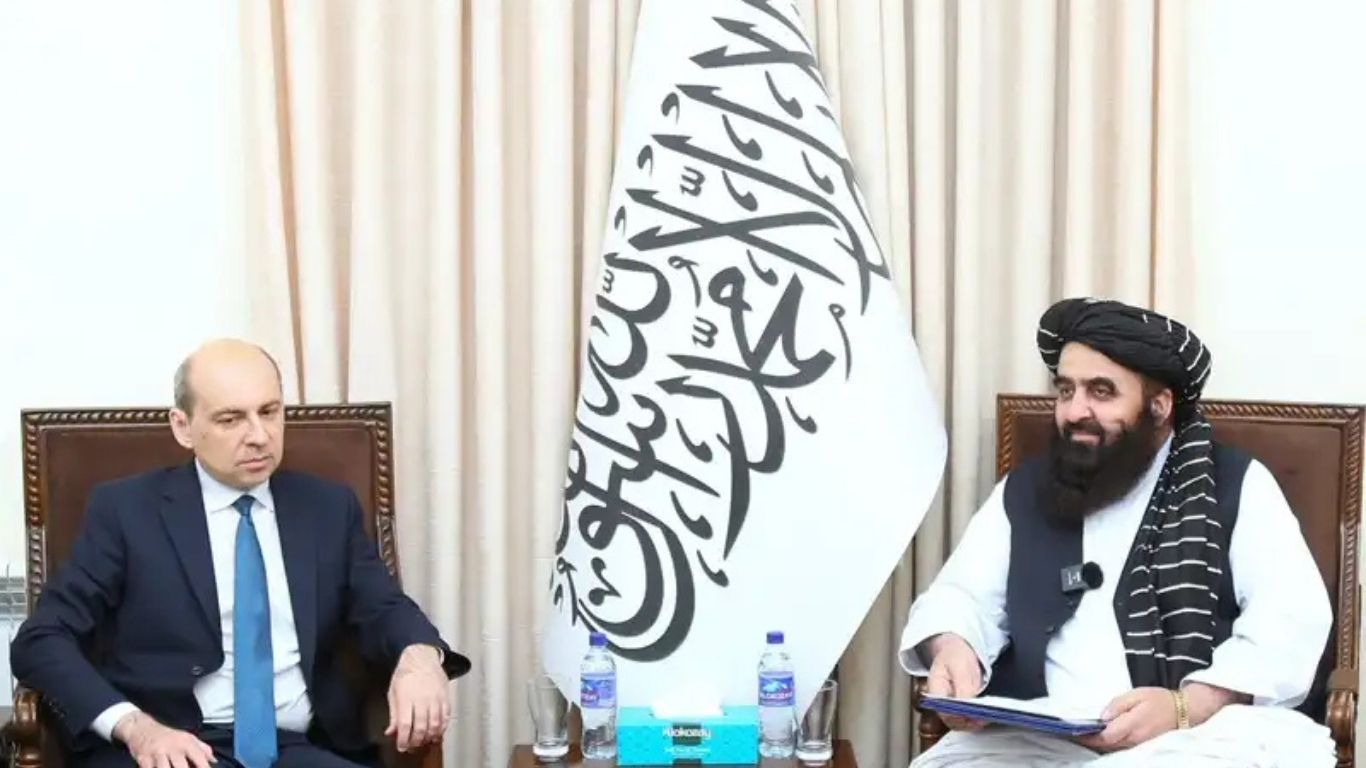
On October 7, 2025, Sergey Lavrov engaged in high-level talks with Afghanistan’s acting Foreign Minister Amir Khan Muttaqi in Moscow. This meeting was part of the broader Moscow Format consultations involving regional powers focused on Afghanistan’s political future, security environment, and humanitarian outlook.
Lavrov underscored Russia’s call for the West to revise its hostile policies towards Afghanistan, criticizing sanctions that continue to cripple the Afghan economy and financial sectors. He appealed for lifting restrictions on Afghan sovereign assets and urged the international community to take responsibility for post-conflict reconstruction.
Meanwhile, Muttaqi welcomed Russia’s recognition, emphasizing Afghanistan’s stance against foreign military presence and highlighting the country’s desire for economic, political, and diplomatic ties worldwide but with strict limits on external military influence.
Key Discussion Points and Outcomes
The Lavrov-Muttaqi meeting covered critical areas shaping Afghanistan’s future:
Security Cooperation: Both parties stressed counterterrorism efforts, particularly targeting ISIS-K, a common regional threat. Russia aims to bolster cooperation to prevent Afghanistan from becoming a breeding ground for extremist violence that could spill over into neighboring states.
Economic and Trade Relations: Lavrov indicated intentions to expand bilateral trade, develop infrastructure, and integrate Afghanistan into regional economic corridors linking Central, South, and West Asia. This reflects Russia’s broader Eurasian connectivity ambitions.
Humanitarian Assistance: Russia reiterated commitments to alleviate Afghanistan’s humanitarian crisis worsened by sanctions and drought, pledging ongoing aid to address food insecurity and healthcare needs.
Regional Stability and Geopolitical Balance: The meeting reaffirmed opposition to foreign military installations in Afghanistan, echoing joint statements by Moscow and regional powers including China, India, Iran, and Pakistan, condemning any new foreign military presence as destabilizing.
Geopolitical Implications for Afghanistan and the Region
Russia’s formal recognition and diplomatic outreach to the Taliban government signal a strategic recalibration that challenges Western policies and reflects Moscow’s desire to assert a multipolar world order. In filling the diplomatic vacuum post-Western withdrawal, Russia positions itself as a principal stakeholder capable of influencing Afghanistan’s trajectory and stabilizing a region long marked by conflict and uncertainty.
The move also aligns with coordinated regional efforts through the Moscow Format and Shanghai Cooperation Organization to promote peace, economic integration, and security cooperation with the Taliban regime, despite lingering concerns over governance and human rights issues.
Challenges and Opportunities in Russia-Taliban Relations
While the diplomatic breakthrough is historic, the path forward is marked by complex challenges. Russia must navigate tensions around Taliban governance, international sanctions, and global concerns regarding human rights, especially women’s rights. Moreover, Afghanistan’s fragile economy and security environment require substantive support beyond recognition and rhetoric.
However, this development opens doors for increased Russian investment in Afghan infrastructure and resource exploitation, offering potential economic benefits and strategic leverage. Continued dialogue and multilateral regional cooperation may underpin gradual normalization of Afghanistan’s international standing.