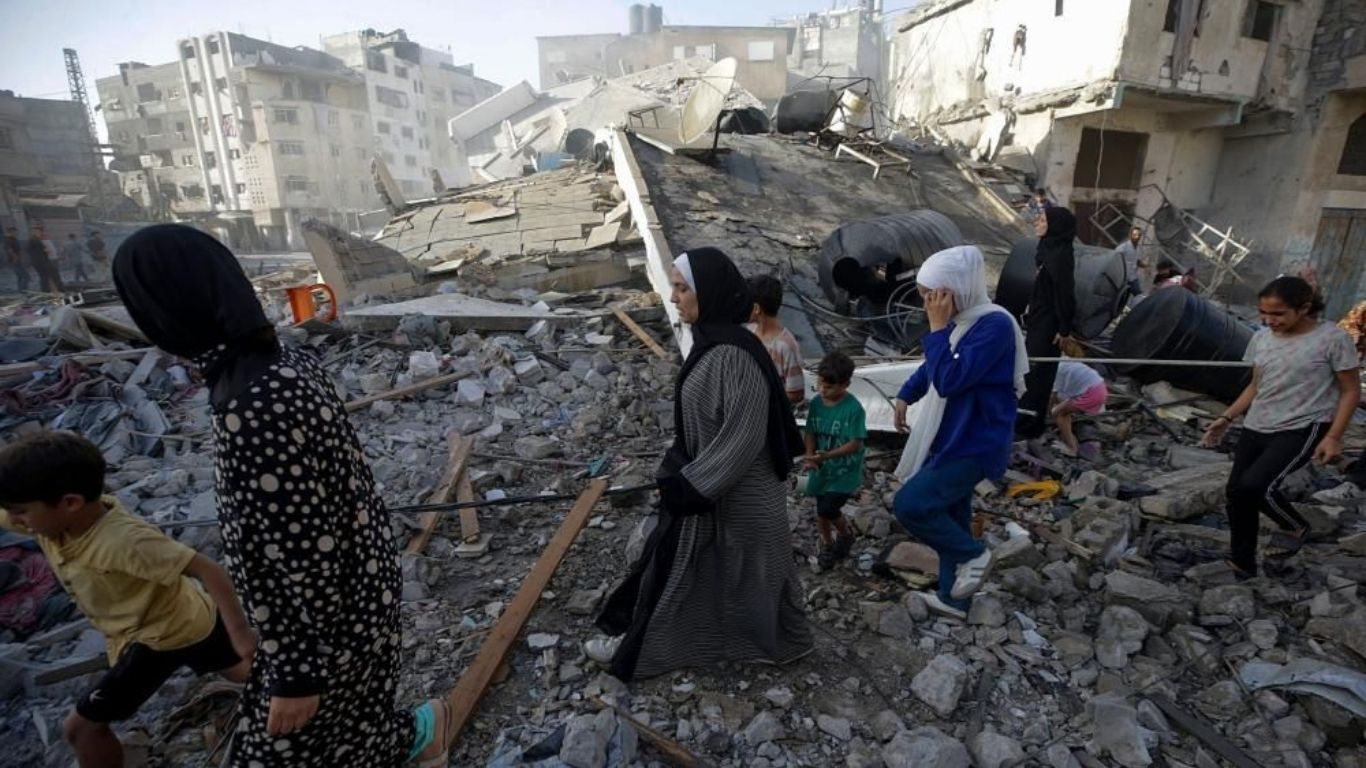
On October 5, 2025, President Trump publicly pressed both Hamas and Israel to accelerate progress on the Gaza peace plan he proposed earlier this year. Posting on his Truth Social platform, Trump emphasized that “time is of the essence” and warned bluntly that failure to move swiftly would lead to “massive bloodshed, something that nobody wants to see.” He noted that “very positive discussions” had taken place over the weekend with Hamas and multiple countries, including Arab and Muslim states, aimed at releasing hostages, ending the war in Gaza, and achieving lasting peace.
Trump’s urgency stems from the ticking clock on a conflict that has already resulted in devastating human loss and regional instability. The president stressed that a “first phase” of the peace plan should ideally be completed within the week and announced that technical delegations were meeting in Egypt to finalize details. His call to “move fast” functions as both a diplomatic push and an implicit warning that prolonged delays would invite intensified military escalation.
The Gaza Peace Plan: A Fragile Framework
Trump’s peace initiative, disclosed in late September 2025, revolves around a 20-point proposal seeking an end to hostilities, a hostage release, humanitarian aid access, and long-term political changes. Crucially, the plan demands Hamas relinquish power and disarm, an aspect the militant group has hesitated to fully endorse.
Despite Hamas’s partial acceptance, with the group agreeing to release all Israeli prisoners “according to the exchange formula” pending final negotiations, the roadmap remains fragile. Hamas insists that “field conditions” must be met before fully committing to disarmament or political withdrawal, signaling ongoing reservations.
Trump’s emphasis on a rapid timeline clashes with Hamas’s caution, exposing fault lines in the mediation process. The tenuous nature of the agreement is intensified by internal divisions within Hamas leadership and the complexities of coordinating between different negotiating parties, including Egypt’s mediators.
Geopolitical Undercurrents and Regional Dynamics
The conflict in Gaza and Trump’s high-stakes ultimatum must be understood within broader geopolitical dynamics involving Israel, the Palestinians, regional Arab states, and global powers. The ceasefire talks in Egypt symbolize a rare diplomatic convergence with hopes to break the cycle of violence.
Trump has leveraged unprecedented international involvement, engaging Arab and Muslim countries in dialogue with Hamas. This broad coalition reflects a shift toward regional diplomacy and a shared interest in stabilizing the volatile Middle East.
However, tensions remain simmering beneath the surface. Israel, led by Prime Minister Benjamin Netanyahu, faces pressure to accept peace conditions while addressing security concerns, and the militant group’s resistance to full disarmament signals continued volatility. Trump’s ultimatum adds a new layer of pressure, potentially accelerating decisions but also risking renewed conflict if parties feel cornered.
Global Reactions and International Stakes
Trump’s call for rapid progress drew mixed reactions globally. Supporters of the peace initiative hailed the president’s bold engagement and diplomatic activism, aiming to end a conflict marked by two years of bloodshed. The international community, including the United Nations and key global powers, cautiously backs efforts to secure hostages and restore peace.
Critics warn that Trump’s militant tone and firm deadlines might backfire. Hamas’s leadership, grappling with internal divisions and grassroots pressures, may perceive the ultimatum as coercion, possibly hardening their stance. Analysts also point to the delicate balance between urging action and respecting the complex socio-political realities in Gaza.
Human rights organizations urge all parties to prioritize civilian protection and humanitarian corridors. They warn that any resurgence of intensive fighting would lead to catastrophic consequences for Gaza’s millions of residents already bearing the war’s brunt.
The Hostage Crisis: The Heart of the Negotiations
Central to Trump’s peace plan is the immediate release of Israeli hostages held by Hamas since the October 7, 2023 attacks. This longstanding human tragedy severely complicates negotiations, with each side leveraging the hostages as political and strategic capital.
Hamas has agreed in principle to release all Israeli captives, including the living and deceased, contingent on conditions detailed in the exchange formula. The exact logistics and timing of this release remain key sticking points and are expected to dominate ongoing Egyptian-hosted discussions.
Trump’s determination to resolve the hostage crisis swiftly is intertwined with his broader push for ceasefire, viewing the humanitarian aspect as a vital confidence-building measure toward peace. The prospect of freeing hostages holds significant emotional and political weight on both sides and internationally.
Risks and Possible Outcomes
Trump’s ultimatum introduces a dual-edged gamble either accelerated progress toward peace or renewed and possibly intensified conflict. Failure to meet the tight timetable risks Israel launching large-scale military operations aiming to dismantle Hamas capabilities, which could escalate bloodshed exponentially.
Conversely, a breakthrough could usher in a historic ceasefire and eventual political solution, opening pathways for rebuilding Gaza and stabilizing the region. However, the path remains fraught with risks, including factional resistance inside Gaza, potential spoilers, and geopolitical rivalries.
Trump’s direct warning underscores the urgency but also highlights the fragile, high-stakes nature of Middle East peacemaking, where delays and mistrust have repeatedly fueled cycles of conflict.
The Moment of Reckoning
President Trump’s pointed message to Hamas to “move fast” or face “massive bloodshed” elevates the Israel-Gaza peace talks to a critical juncture. As negotiators converge in Egypt, the world watches a volatile region where hope and hostility collide. Balancing swift diplomacy with pragmatic patience remains the toughest challenge.
The unfolding Gaza peace effort bears not only on the region’s future but on President Trump’s legacy as a peacemaker. Will this ultimatum hasten a long-overdue ceasefire or intensify the flames of conflict? The coming days will reveal whether diplomacy or destruction becomes the next chapter in this devastating saga.