In the war’s 23rd month (as of late August 2025), Israel’s streets have again filled with demonstrators demanding an immediate ceasefire linked to a comprehensive hostage deal. The protest wave organized largely by the Hostages and Missing Families Forum and allied civil society groups reflects a deepening public conviction that freeing the captives must take precedence over open-ended military aims, and that a negotiated end to the fighting is now the only workable path.
The Latest Protest Flashpoints
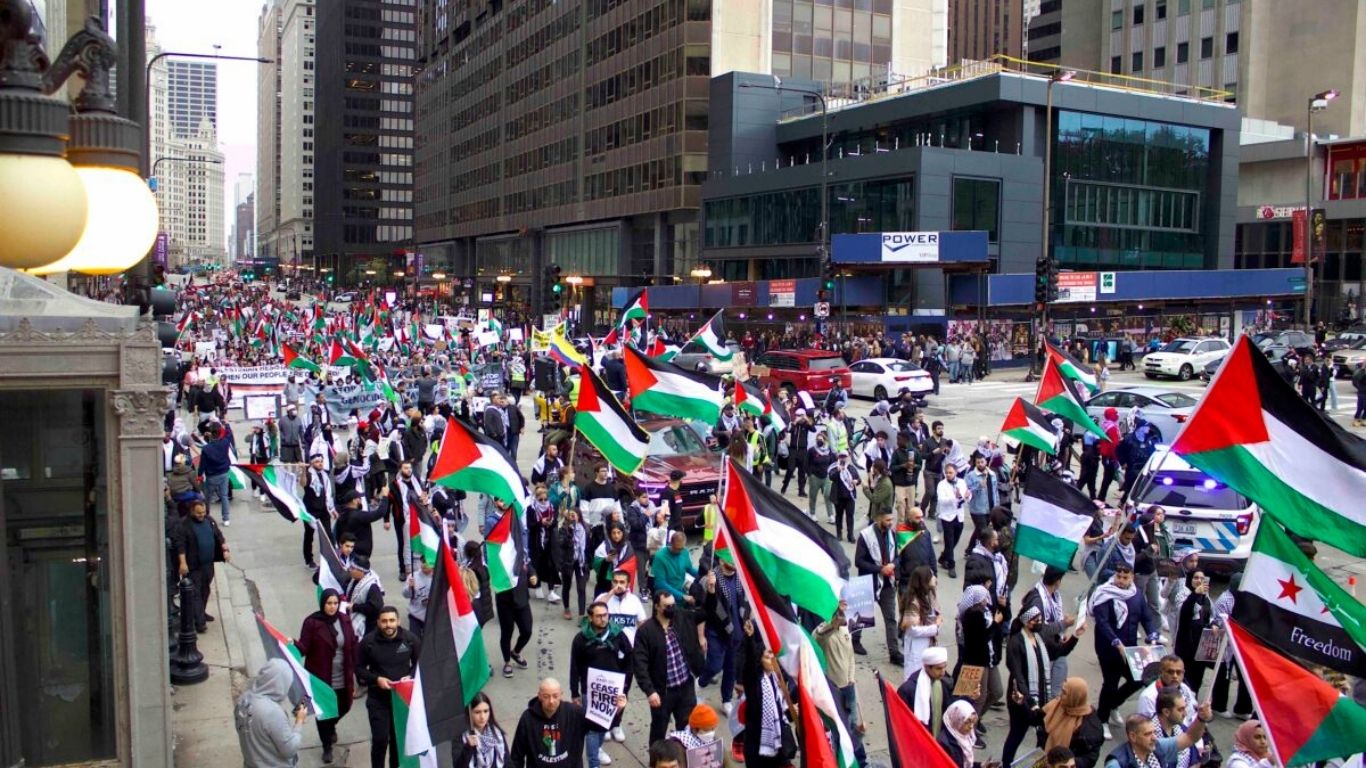
On August 17, 2025, protesters launched a nationwide “day of stoppage,” blocking major roads and disrupting business as they pressed the government to exchange prisoners and enter a ceasefire that would end the war. A week later, the movement escalated again with a coordinated “Day of Disruption,” closing arteries around Tel Aviv and Jerusalem and drawing large evening rallies in Kaplan and other squares. Organizers called additional strike days to sustain pressure on the cabinet. International media captured the breadth of the mobilization and its core demand: a war-ending deal tied to the hostages’ release.
Photo essays and live reports from European outlets the same week showed tens of thousands rallying, underscoring that protest momentum has not ebbed despite fatigue from two years of war.
What Protesters Want
The movement’s central plank is a comprehensive agreement that 1) brings home all remaining hostages (alive and deceased), 2) ends major combat through a sustained ceasefire, and 3) opens a path to Gaza’s reconstruction and a broader political track. Protest leaders repeatedly link their demand to the U.N. Security Council’s June 2024 endorsement of a three-phase framework offering a time-bound ceasefire, phased releases, and a transition toward permanent cessation of hostilities, a roadmap they say the government should accept and implement in full.
Why Now: Public Opinion Has Shifted
Surveys over the past year show a steady, measurable turn in Israeli public opinion toward ending the war in exchange for a comprehensive hostage deal. The Israel Democracy Institute (IDI) reported in January 2025 that a majority favored a deal to release all hostages “in return for an end to the war,” and by April 2025, 68% prioritized returning the hostages over toppling Hamas (25%). Mid-July polling found roughly three-quarters of Israelis backing a war-ending, single-phase deal. Subsequent polling reported by Channel 12 and the Times of Israel indicated majorities want the next step to be a hostage agreement rather than new offensives. These findings mirror broader international surveys noting Israeli fatigue and skepticism that more fighting can produce durable peace.
The Government’s Position and Its Critics
Prime Minister Benjamin Netanyahu has publicly insisted that combat will continue until Hamas is dismantled and all hostages are returned objectives he presents as mutually reinforcing rather than competing. Yet the government’s strategy faces growing domestic dissent from security figures and the hostage families, who argue that prioritizing large-scale operations jeopardizes the captives and prolongs national trauma. Defense voices cited by Israeli media have urged the cabinet to take a deal rather than risk the hostages’ lives in expanded offensives, concerns that have resonated with the protest movement.
The Diplomatic Framework Protesters Point To
The clearest internationally backed pathway remains the U.S.-supported, U.N.-endorsed three-phase plan outlined by President Joe Biden in May–June 2024. Phase I envisions a weeks-long ceasefire and significant prisoner-hostage exchanges, with a provision that the pause continues as long as negotiations advance. Phases II and III move toward a permanent cessation of hostilities, full hostage release, Israeli withdrawal, and large-scale reconstruction. Protesters argue that this is the only plan with broad international legitimacy and built-in mechanisms to prevent a return to full-scale war.
The Humanitarian Clock
The protests are also fueled by the worsening humanitarian situation in Gaza, which heightens international pressure on Jerusalem. Reports of famine conditions, renewed offensives, and curtailed aid corridors have intensified calls inside and outside Israel for an agreement that both frees hostages and halts the suffering. Protest leaders explicitly connect the moral imperative to rescue Israelis with the pragmatic need to ease an escalating humanitarian disaster that is further isolating Israel diplomatically.
Symbolism and Tactics
The movement borrows from Israel’s 2023–24 pro-democracy playbook, mass highway blockades, coordinated work stoppages, and evening rallies while centering the hostages’ faces and families. Coverage across global outlets (AP, TIME, The Guardian, Le Monde, Al Jazeera, CBS) has highlighted kitchen-table imagery (pots and pans), yellow ribbons, and solemn roll calls of the abducted. The message is deliberately simple: “Deal now.”
Risks and Counter arguments
Critics of a ceasefire-for-hostages bargain warn that it could entrench Hamas or leave Israel vulnerable to renewed rocket fire after a pause. Protesters respond that the U.N. plan’s sequencing of sustained negotiations during a maintained ceasefire, followed by a transition to permanent cessation, offers the best available guardrails against immediate relapse, and that indefinite war has diminishing returns. Analysts at established research centers have noted that, by mid-2024, both sides faced “diminishing gains from further fighting,” strengthening the case for a structured ceasefire.
The Hostage Tragedy as a Moral Spur
News of bodies recovered from Gaza keeps anguish raw and urgency high. The discovery of additional remains in late August 2025 alongside the still-unknown fate of others has hardened the movement’s insistence that time is working against the captives. For many Israelis, every delay is a gamble with the hostages’ lives and with national cohesion itself.
What Would an “Authentic” Deal Look Like?
Drawing on the U.N. framework and public proposals discussed since mid-2024, the core elements protesters back typically include:
Immediate, sustained ceasefire while talks proceed; the ceasefire continues if negotiations extend beyond the initial window.
Phased, comprehensive releases: women, elderly, and wounded first; all remaining hostages in subsequent stages; parallel releases of Palestinian prisoners.
Monitored military de-escalation leading to complete Israeli withdrawal tied to full compliance on hostage releases and security guarantees.
Humanitarian surge and reconstruction track, coordinated with international partners, accompanied by border and aid access arrangements.
Why This Movement Matters
Beyond the immediate goal of saving lives, the protest wave reflects a larger struggle over Israel’s strategic direction and democratic character. Prominent Israeli public intellectuals and sectors of civil society see the push for a ceasefire-hostage deal as inseparable from rescuing Israel’s global standing and reviving a credible political horizon after years of drift. That is why demonstrations explicitly link the hostages to a broader demand for accountable governance and a realistic endgame.
Bottom Line
By late August 2025, the balance of public sentiment has tipped toward a negotiated end to the war that returns the hostages and halts the fighting. Protesters have converted that sentiment into sustained, nationwide pressure strikes, blockades, and nightly rallies aimed squarely at forcing a decision. With an internationally endorsed roadmap on the table, the question is less whether a credible framework exists than whether Israel’s leadership will embrace it before more lives Israeli and Palestinian are irretrievably lost.