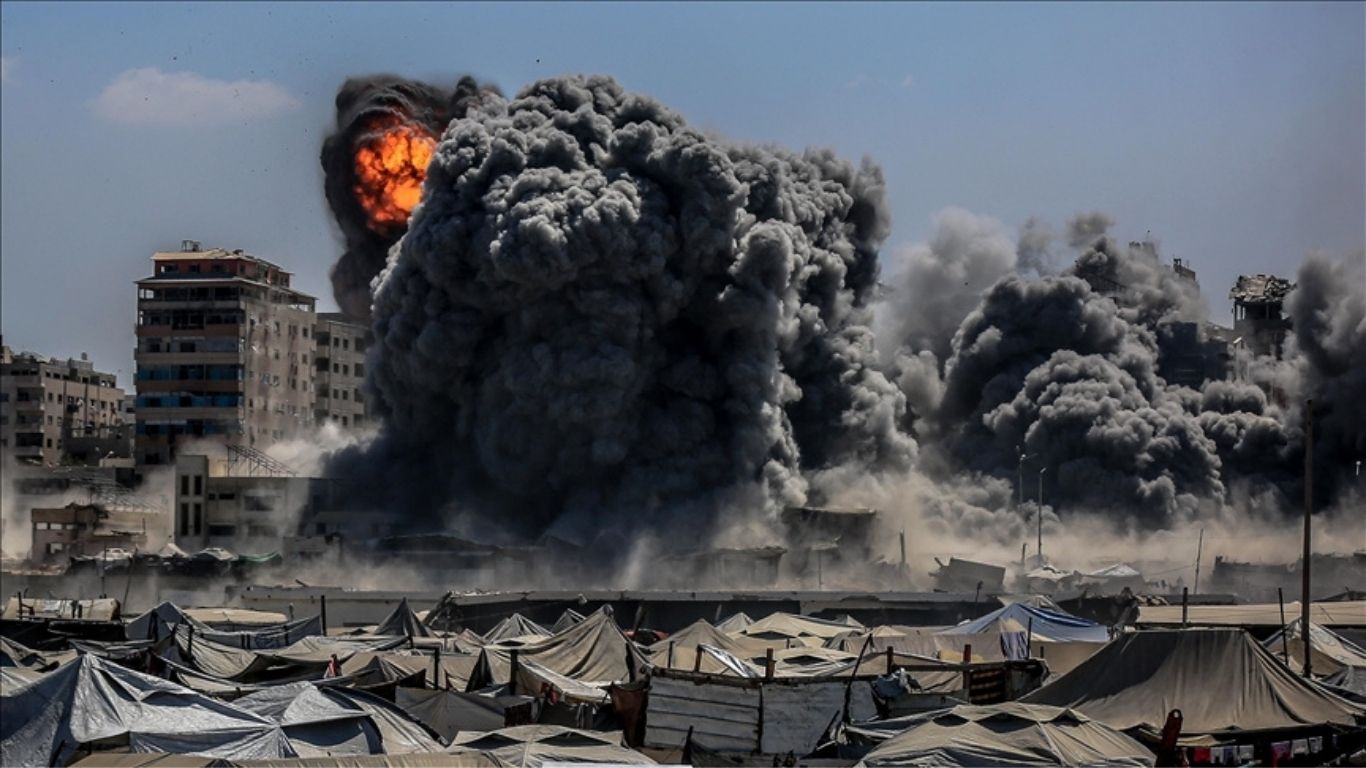
Israel’s new ground offensive into Gaza City framed as the next phase of Operation Gideon’s Chariots II marks one of the most significant escalations of the war in months. The Israel Defense Forces (IDF) describe the campaign as a strategic necessity: dismantling Hamas infrastructure, reclaiming urban strongholds, and consolidating control over northern Gaza. Yet the immediate humanitarian toll, the regional implications, and the long-term strategic uncertainties raise pressing questions about whether this offensive will deliver sustainable security or perpetuate cycles of instability.
Strategic Rationale: Why Gaza City Matters
From a military perspective, Gaza City is the centerpiece of Hamas’s operations. The IDF estimates that thousands of fighters remain embedded across neighborhoods and in vast tunnel systems. Controlling the city is therefore seen as essential to neutralizing Hamas’s ability to project power.
To achieve this, Israel has mobilized multiple divisions, integrating land, air, and naval firepower. Urban warfare, however, is among the most complex forms of combat. Fighting in densely populated areas demands overwhelming force to dislodge entrenched militants—a reality that inevitably puts civilians in harm’s way.
Humanitarian Consequences
The scale of displacement is staggering. Israeli officials claim that 350,000 people have fled Gaza City since evacuation orders were issued roughly one-third of the prewar population. U.N. agencies, however, estimate closer to 220,000. The discrepancy underscores the difficulty of monitoring movement under siege conditions, but the bottom line is clear: hundreds of thousands are now seeking refuge in overcrowded shelters, often without adequate water, food, or medical care.
Hospitals like Shifa are overwhelmed. Within hours of the offensive, dozens of bodies and scores of wounded arrived. Doctors reported “continuous bombardment,” underscoring the near impossibility of providing care in such conditions. Aid agencies warn that designating evacuation corridors does not equate to safety, as “safe zones” in southern Gaza remain precarious and undersupplied.
The humanitarian crisis is not collateral it is central. The offensive is reshaping the lives of hundreds of thousands, with long-term consequences for public health, economic survival, and political attitudes.
International and U.S. Involvement
The Biden administration through Secretary of State Marco Rubio has continued to affirm Israel’s right to self-defense while expressing concern over humanitarian costs. In Doha, Rubio thanked Qatar for its mediation efforts and reiterated support for hostage negotiations. Yet Washington’s stance remains consistent: rhetorical appeals for restraint paired with substantive backing of Israel’s strategy.
This dual approach exposes the U.S. to criticism. Allies in the Arab world and humanitarian organizations argue that by enabling the offensive, Washington shares responsibility for its human cost. Meanwhile, adversaries like Iran capitalize on the crisis to strengthen their narrative of Western hypocrisy.
Policy Implications and Risks
Humanitarian Backlash:
Civilian suffering in Gaza risks fueling greater hostility toward Israel and its allies, not only among Palestinians but across the wider region. This could complicate Israel’s strategic objectives by strengthening Hamas’s political legitimacy even as its military capacity is degraded.
Hostage Negotiations:
The offensive may harden Hamas’s stance on hostage deals, reducing incentives for compromise. Israel faces growing domestic pressure to secure the release of remaining captives, but the military campaign may narrow diplomatic channels.
Regional Stability:
Escalation in Gaza risks spillover effects, from renewed clashes in the West Bank to heightened tensions with Hezbollah in Lebanon. Prolonged fighting could also inflame regional protests and strain Israel’s normalization agreements with Arab states.
Post-Conflict Governance:
Even if Hamas is militarily weakened, Israel faces the question of governance. Without a viable plan for civilian administration, reconstruction, and security, Gaza could descend into further chaos creating conditions for militancy to reemerge.
Policy Recommendations
Integrate Military and Humanitarian Planning:
Any large-scale urban offensive should be paired with guaranteed humanitarian corridors and international monitoring. Failure to provide credible protection risks undermining Israel’s broader strategic goals.
Leverage International Mediation:
The U.S., Qatar, and Egypt should intensify coordinated diplomacy, not only for hostages but for sustained ceasefire mechanisms. Prolonged combat without political engagement risks indefinite conflict.
Plan for Post-Hamas Governance:
Israel and its allies need to articulate a clear vision for Gaza’s future governance, potentially under an international framework. Simply dismantling Hamas without a plan risks perpetuating instability.
Balance Security with Legitimacy:
Israel must weigh the tactical benefits of urban conquest against the strategic cost of international isolation. Excessive civilian casualties erode legitimacy, both globally and domestically.
Conclusion
Israel’s Gaza City offensive may yield short-term military gains. But without parallel humanitarian protections, diplomatic engagement, and a credible vision for Gaza’s future, those gains risk being offset by humanitarian catastrophe and long-term insecurity.
Military logic alone cannot resolve a conflict so deeply rooted in politics, identity, and displacement. Sustainable security will depend not just on battlefield victories, but on choices made after the smoke clears.