

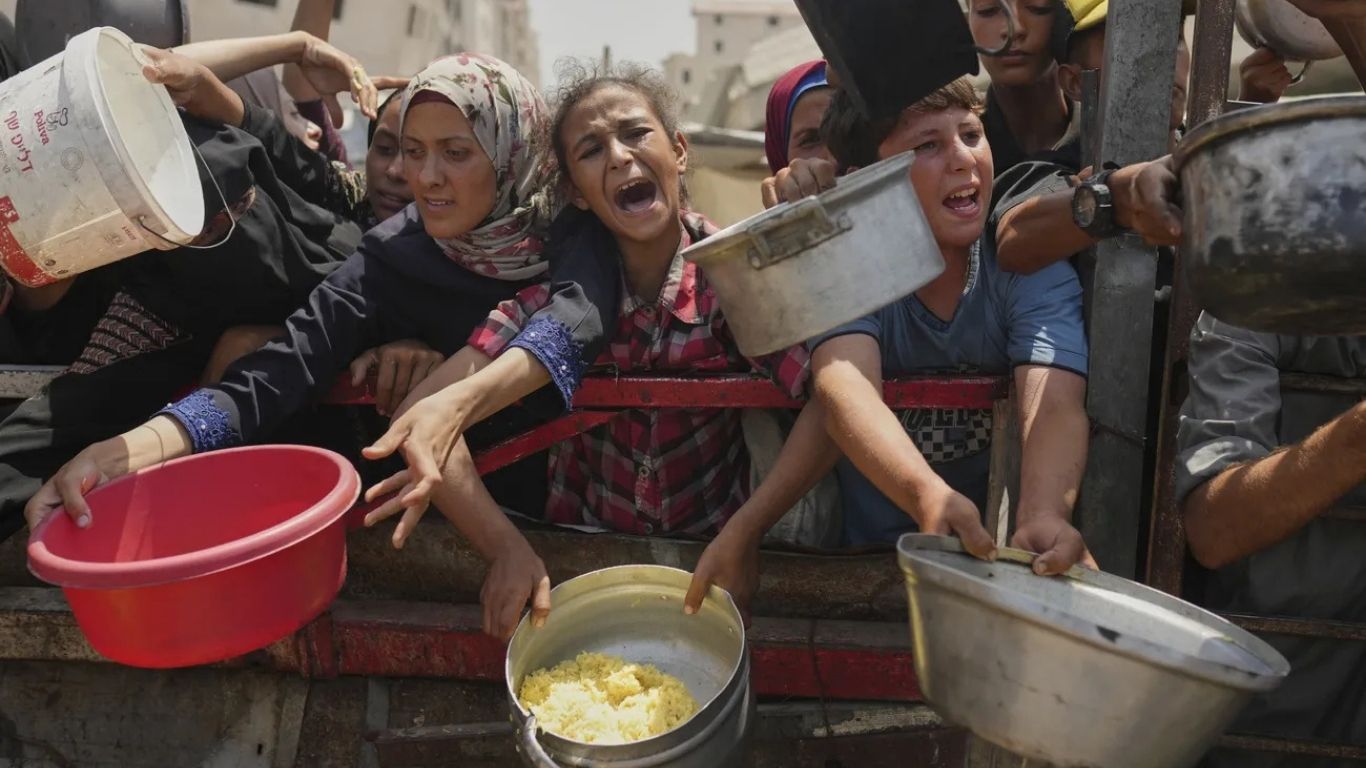
Gaza City and surrounding areas are now officially under famine, according to a new assessment by the Integrated Food Security Phase Classification (IPC), the UN-backed authority on global hunger. The classification IPC Phase 5 (Famine) marks a catastrophic turn in the territory’s 22-month war and signals the highest level of food insecurity on record in Gaza. The IPC warns that famine conditions are already present in Gaza City (Gaza Governorate) and are projected to spread south to Deir al-Balah and Khan Younis in the coming weeks without a dramatic change in access and aid operations.
How the IPC Reached a Famine Determination
The IPC’s famine declaration requires evidence of three conditions: extreme lack of food (food consumption gaps), acute malnutrition, and excess mortality. Its latest review, that validated by an independent Famine Review Committee, finds that those thresholds have been met in Gaza City and are worsening. The IPC estimates about 514,000 people, nearly a quarter of Gaza’s population, are in famine, with projections rising to around 641,000 people by late September if constraints persist. This is the first IPC-declared famine outside Africa since the system began, underscoring the crisis’s severity and uniqueness.
Why Conditions Collapsed So Quickly
Humanitarian agencies point to a lethal combination of factors: ongoing hostilities, severe restrictions on humanitarian access, damaged infrastructure, and the collapse of markets and public services. Health facilities report soaring acute malnutrition, particularly among children, while sanitation breakdowns and limited clean water amplify disease risks that make malnutrition deadlier. The World Health Organization says more than half a million people are already “trapped in famine,” and warns geographic spread is likely without a major operational shift that allows predictable, large-scale aid.
Contested Narratives and What the Data Shows
The famine declaration is already politically charged. Israeli officials dispute the IPC’s findings, describing them as biased and methodologically flawed. The IPC and UN humanitarian leadership, by contrast, characterize the catastrophe as preventable with adequate, sustained access and security guarantees for aid delivery. Whatever the political disagreement, the public health indicators sharp increases in acute malnutrition, hunger-driven mortality, and near-total market failure align with the IPC’s highest alarm level.
What “Famine” Means on the Ground
A famine classification is not a label, it is a snapshot of starvation, destitution, and death at scale. In practical terms, households in Gaza City are exhausting coping strategies: selling remaining assets, skipping meals for days, diluting infant formula, or relying on unsafe substitutes. Clinics report children with wasting (dangerously low weight for height), and caregivers face impossible choices between seeking food and sheltering from airstrikes. Aid groups warn that even when convoys enter, last-mile delivery is jeopardized by insecurity, damaged roads, and the absence of functional distribution systems.
What Must Happen Now
- Unfettered Humanitarian Access
The IPC and UN agencies stress that aid must move at scale and at speed through multiple corridors and crossings, with assured deconfliction and safe distribution points inside Gaza City and the central and southern governorates. Predictable, daily flows food, ready-to-use therapeutic foods (RUTF), clean water, fuel, and medical supplies are critical to reverse mortality trends. - Restoring Basic Services and Markets
Famine reversals require more than food parcels. Fuel for bakeries and hospitals, functional cold chains for nutrition commodities, and cash or voucher assistance (where markets can revive) reduce dependence on sporadic distributions and help stabilize prices. - Protection of Civilians and Aid Workers
Civilian protection and operational safety are prerequisites for last-mile delivery. Humanitarian corridors, cessations of hostilities, and reliable communications channels are essential to prevent convoy disruptions and enable outreach to cut-off neighborhoods. - Nutrition and Health Surge
Rapid deployment of community-based management of acute malnutrition (CMAM), therapeutic feeding centers, and measles/cholera vaccination where feasible can break the lethal interplay of disease and hunger, especially among children under five and pregnant and lactating women.
Narrow Window to Prevent Wider Collapse
Absent a step-change in access, the IPC projects worsening severity and geographic spread from Gaza City into central and southern areas by late September. That trajectory implies a rising death toll from hunger and disease, even if front-line violence fluctuates. Conversely, historical famines show that rapid policy shifts for example, opening multiple aid routes, guaranteeing convoy security, and restoring fuel/electricity for water and health systems can bend the curve within weeks, especially when combined with targeted nutrition programs for the most at-risk. The humanitarian community is aligned on what works; the challenge is purely operational and political.




