AI dubbing technology is transforming film and TV, breaking language barriers, and bringing foreign cinema to U.S. audiences. For decades, foreign-language films have struggled to break into the U.S. market. Despite global acclaim, only a handful of titles manage to find space in American theaters. The reasons are complex, ranging from distribution challenges to cultural differences, but language has always been the biggest barrier.
Now, an AI-powered dubbing technology promises to change that. By making actors appear as if they are speaking another language naturally, this innovation could open U.S. theaters to a wave of international films previously relegated to niche audiences.
Why Foreign Films Struggle in the U.S.
Maxime Cottray, Chief Operating Officer of Los Angeles-based studio XYZ Films, puts it bluntly: “America is not a culture which has grown up with subtitles or dubbing like Europe has.”
Traditionally, foreign films found limited success in coastal cities like New York or Los Angeles, often screened only in independent art-house theaters. Mainstream U.S. audiences, less accustomed to reading subtitles or watching poorly dubbed films, rarely engaged with international cinema.
But with AI now entering the picture, the dynamics are beginning to shift.
DeepEditor: AI Dubbing That Looks Real
The turning point came with the Swedish sci-fi film Watch the Skies, which premiered in U.S. cinemas in 2025 not as a subtitled or traditionally dubbed movie, but as a fully AI-enhanced release.
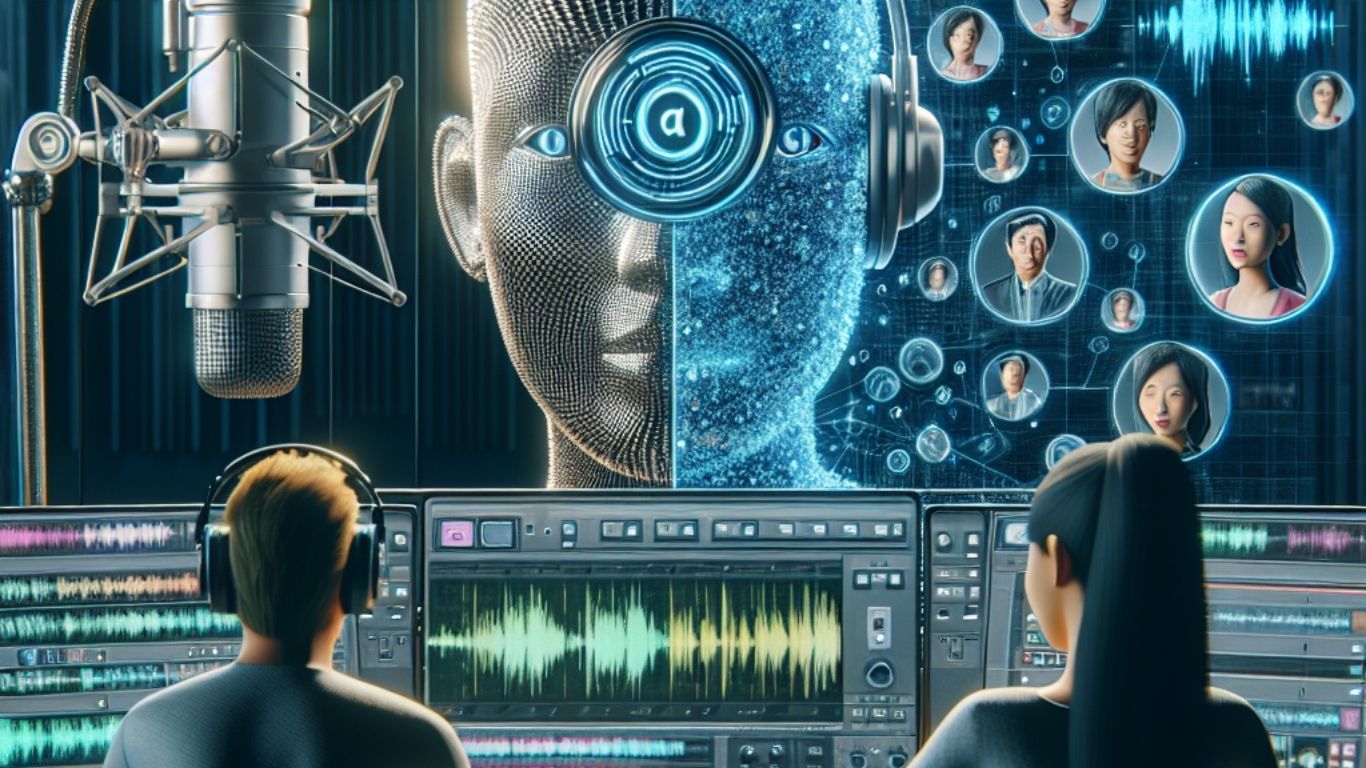
The technology behind it, called DeepEditor, was developed by London-based company Flawless, founded by filmmaker Scott Mann. Using advanced face recognition, 3D tracking, and landmark detection, the system manipulates actors’ lip movements so convincingly that audiences believe they are speaking English.
Cottray recalls seeing the results: “The first time I saw it two years ago, I thought it was good. But with the latest version, I was blown away. Most people wouldn’t even notice it’s dubbed.”
The English version of Watch the Skies was released in 110 AMC Theatres across the U.S. a milestone Cottray says would have been impossible without AI. “If it weren’t dubbed into English this way, it would never have been screened nationally,” he explains.
How Flawless Is Changing the Game
Scott Mann, best known for directing films like Heist and Final Score, says the idea for Flawless came from frustration with traditional dubbing.
“When I worked on Heist in 2014 with Robert De Niro, I saw how dubbing changed the entire performance when translated into another language. It no longer felt like the same film,” Mann says.
Determined to solve this problem, he and his team built a system capable of preserving actors’ original performances while still adapting them to new languages.
“DeepEditor doesn’t just swap lip movements,” Mann explains. “It captures the emotional performance, ensuring the integrity of the acting stays intact across languages.”
This means films can now travel globally without losing their artistic essence. It also slashes production costs Mann estimates AI dubbing costs only a tenth of traditional reshoots or redubs.
Streaming Platforms and a Booming Market
The rise of Netflix, Apple TV+, and other streaming giants has created unprecedented demand for international content. According to Business Research Insights, the global film dubbing market is projected to grow from $4 billion in 2024 to $7.6 billion by 2033.
Flawless already works with major streamers, offering AI dubbing solutions for films and TV shows. Mann believes this technology will unleash a flood of unseen global cinema for English-speaking audiences.
“There’s a treasure trove of incredible movies and series out there that people just skip because they don’t like subtitles or poorly dubbed versions,” he says. “This changes everything.”
Critics Raise Concerns Over Cultural Authenticity
Not everyone is convinced AI dubbing is the future. Neta Alexander, Assistant Professor of Film and Media at Yale University, warns that while the technology promises accessibility, it may also dilute cultural authenticity.
“If all foreign films are adapted to look and sound English, audiences risk losing the unique texture of language, culture, and gesture,” Alexander argues. “This could discourage cross-cultural literacy.”
She also raises concerns about accessibility. Subtitles, she notes, are essential not only for language learners but also for immigrants, the deaf, and the hard-of-hearing community. Replacing them with AI dubbing might exclude these audiences.
“Closed captioning is not just a workaround it’s a vital storytelling tool,” she emphasizes.
A Balance Between Technology and Tradition
Despite these concerns, Mann insists the goal of Flawless is not to erase languages but to empower filmmakers. Unlike AI voice generators that replace human actors, DeepEditor still relies on professional voice actors, blending human artistry with machine precision.
“What we’ve found is that if you give filmmakers and artists better tools, they use them creatively,” Mann says. “It’s about enhancing cinema, not replacing it.”
The Future of Global Cinema
The success of Watch the Skies suggests that AI-driven dubbing is not just a novelty but a genuine game-changer for Hollywood and beyond. By breaking language barriers, it opens U.S. theaters to international cinema in ways previously unimaginable.
Still, the debate continues: will AI dubbing create a monolingual film culture, or will it simply serve as a bridge that brings global cinema to wider audiences?
For now, the answer seems clear AI dubbing won’t replace subtitles or traditional dubbing entirely, but it will become an essential tool in the global entertainment industry.
Conclusion
AI is poised to revolutionize film dubbing, making it faster, cheaper, and far more convincing than ever before. While critics caution against cultural homogenization, the potential to expand access to global cinema is undeniable.
As Hollywood and streaming platforms embrace this technology, audiences may soon find it easier than ever to watch and truly experience films from every corner of the world.