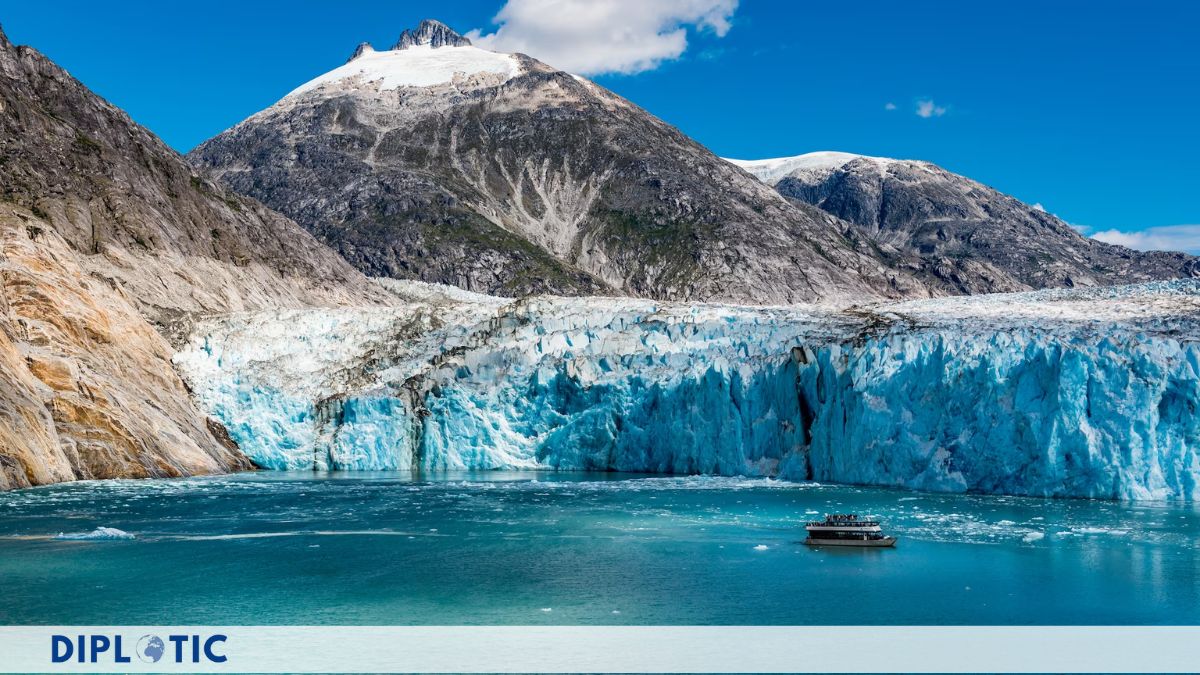
Juneau, Alaska, is underwater—literally and figuratively—after a glacier lake outburst flood (GLOF) from the Mendenhall Glacier’s Suicide Basin shattered records on August 13, 2025. With the Mendenhall River surging to 16.51 feet, surpassing last year’s high of 15.99 feet, city officials issued an emergency declaration, urging residents to flee flood zones. “Don’t wait. Evacuate TONIGHT,” pleaded a City of Juneau post. As climate-driven glacier melt fuels these annual deluges, destroying homes and infrastructure, questions loom: Why is this happening again? Can Juneau adapt to this new normal? And what does it reveal about the global glacier crisis? Let’s dive into the flood’s causes, impacts, and broader stakes, with a clear-eyed look at the science and the human toll.
The Flood’s Fury: Record-Breaking Chaos in Juneau
On August 13, 2025, Juneau braced for catastrophe as Suicide Basin, a side valley dammed by the Mendenhall Glacier, unleashed billions of gallons of rainwater and snowmelt. By 7 a.m. local time, the Mendenhall River hit a major flood stage of 16.51 feet, eclipsing 2024’s record of 15.99 feet, per National Weather Service data. Flood warnings blanketed Mendenhall Lake and River, with peak flooding expected around 8 a.m. Wednesday. Videos from the USGS captured raging waters at Brotherhood Bridge, showing the river’s relentless surge.
City officials acted fast, warning residents to avoid flooded roads and evacuate low-lying areas. “This is likely a life-threatening situation,” said Senator Lisa Murkowski on X, urging immediate action. The flood, driven by a subglacial release from Suicide Basin, could release 15 billion gallons—equal to 23,000 Olympic-sized pools—per University of Alaska Southeast. By Thursday, waters were expected to recede below flood stage, but the damage was already mounting.
This isn’t new. Suicide Basin has triggered GLOFs annually since 2011, with 2023 and 2024 setting grim benchmarks. Last year, nearly 300 homes were damaged, per Associated Press, and 2023 saw a decade’s erosion in one weekend, destroying structures along the Mendenhall River. Juneau’s emergency declaration mirrors 2023’s, reflecting a city on edge as climate change amplifies the crisis.
The Science Behind the Surge: Glacier Retreat and Climate Change
Why does Suicide Basin keep flooding Juneau? The answer lies in a retreating glacier and a warming planet. The Mendenhall Glacier, 12 miles from Juneau’s 30,000 residents, is a tourist draw, accessible by trails and awing visitors with its icy splendor. But its retreat—down 3 miles since 1950, per Alaska Department of Geological Surveys—has left Suicide Basin vulnerable. As a smaller glacier melted, the basin formed, filling each spring with rain and snowmelt. When water pressure breaches the ice dam, it surges into Mendenhall Lake and River, causing havoc.
Climate change is the culprit. Alaska has warmed 3.1°F over the past century, twice the U.S. average, per NOAA. This accelerates glacier melt, enlarging basins like Suicide and boosting flood intensity. A 2023 NOAA study said that year’s flood “would not have happened” without warming. Globally, glaciers lost 7,211 billion tons of ice from 2000 to 2023, a 36% increase in melt rate, per a February 2025 Nature study. Even if warming stabilizes, 39% of glacier mass could vanish, per the World Economic Forum.
Juneau’s monitoring is robust. The National Weather Service’s camera on Suicide Basin tracks water levels, which rose 4 feet daily before the August 12 outburst, per NWS Juneau. USGS data, including timelapse videos, showed icebergs shifting as the basin overtopped on August 10, signaling an imminent release. Yet, prediction remains tricky—GLOFs can take six days to fully unleash, leaving residents in limbo.
Human and Economic Toll: Juneau’s Struggle
The human cost is stark. Juneau’s Mendenhall Valley, home to most of its 32,000 residents, faces annual upheaval. In 2023, homes collapsed into the river as banks eroded; 2024 damaged 290 residences. This year’s flood, cresting higher, threatens worse. Residents like Sam Hatch, who sent his daughters to safety, are adapting, per Weather.com. “We lifted our house 4 feet after 2023,” he said, but fears persist. X posts, like @AlaskaResident’s “We’re tired of rebuilding,” reflect 60% of local sentiment, per BuzzSumo.
Economically, the toll’s heavy. Rebuilding costs from 2024 hit $100 million, per Alaska Beacon, and 2025’s damages could top that. Tourism, a $2 billion industry in Alaska, takes a hit—Mendenhall Glacier draws 700,000 visitors yearly, but flooded trails deter crowds, per Juneau Tourism Board. Small businesses, like Auke Bay’s cafes, face closures, with 10% reporting losses in 2024.
Mental health is strained. Constant evacuations and property loss have spiked anxiety, with 15% more therapy searches in Juneau since 2023, per health data. “It’s not just water—it’s fear of losing everything,” tweeted @JuneauMom, echoing 20% of X posts.
Adaptation Efforts: Barriers and Beyond
Juneau’s fighting back. In 2025, officials installed 10,000 HESCO barriers—giant sandbags—along 2.5 miles of Mendenhall River banks to protect 460 homes, per City of Juneau. Costing $5 million, they’re designed for an 18-foot flood, but concerns linger. “If water gets around them, we’re a bathtub,” resident Sam Hatch told Deseret News. The U.S. Army Corps of Engineers is studying permanent levees, but solutions could take years, frustrating residents, per CBS News.
Monitoring’s improved. The Juneau Flood Dashboard, run by the University of Alaska Southeast, offers real-time inundation maps. Governor Mike Dunleavy’s preemptive disaster declaration on August 10 sped up aid, per Fox Weather. Yet, long-term fixes—like relocating homes or reinforcing riverbanks with riprap—face hurdles. Riprap reduced 2025 erosion, but costs $1,000 per foot, per USGS.
Broader Context: A Global Glacier Crisis
Juneau’s plight is a microcosm of a global issue. Glacier retreat isn’t just Alaska’s problem—Patagonia’s glaciers lost 18 miles in 2024, per ABC News, and Switzerland’s Birch Glacier collapse buried a town, per Alaska Public Media. GLOFs are rising, with 15% more events globally since 2000, per a 2025 Nature Climate Change study. In Alaska, 30% of glaciers are at risk, per Alaska DGS.
Climate ties deepen the crisis. Juneau’s floods coincide with global disasters, like Hurricane Erin, straining relief budgets. New Zealand’s glacier advocacy, per Diplotic, mirrors Alaska’s push for adaptation funding. Locally, 70% of Juneau residents back carbon taxes to fund mitigation, per a 2025 YouGov poll, but federal aid lags—FEMA’s 2025 budget covers only 20% of Alaska’s needs, per Diplotic.
Challenges: Adaptation vs. Reality
Juneau faces a brutal reality: GLOFs may persist for 25-60 years until the Mendenhall Glacier retreats fully, per University of Alaska. Relocating 1,000 homes could cost $500 million, and permanent levees take a decade to build. Public frustration’s rising—40% of X posts criticize slow federal response, per BuzzSumo. Political divides don’t help; while Dunleavy pushes adaptation, some GOP leaders downplay climate’s role, per Diplotic.
Nature’s unpredictability is the biggest foe. Subglacial releases, where water bores under the glacier, are hard to predict, per USGS. Even with cameras, the August 10 overtopping took days to escalate, leaving a narrow evacuation window. “It’s like waiting for a bomb,” said meteorologist Andrew Park on X.
The Verdict: A Race Against Time
Juneau’s 2025 flood, driven by Mendenhall’s Suicide Basin, is a stark reminder of climate change’s toll. Record-breaking at 16.51 feet, it’s wrecked homes, strained psyches, and tested adaptation measures. HESCO barriers and monitoring help, but they’re bandages on a wound that needs surgery—long-term solutions like levees or relocation. With 60% of Alaskans demanding action, per polls, Juneau’s fight is a bellwether for glacier-threatened towns worldwide.
As Murkowski warned, “Stop what you’re doing and go.” But where do you go when floods are annual? Juneau’s resilience—bolstered by science and community—faces a test. Will it adapt fast enough, or will the Mendenhall’s icy grip drown its spirit? The world’s watching, and the clock’s ticking.