International condemnation mounts over Israel’s military takeover of Gaza City amid rising hunger, mass protests, and fragile ceasefire negotiations.
International condemnation surged on Saturday following Israel’s announcement of a large-scale military operation to seize control of Gaza City, as the war entered its 22nd month. The move, which comes amid a mounting humanitarian catastrophe, has drawn sharp criticism from allies and adversaries alike and ignited some of the largest anti-government protests seen in Israel in recent months.
While tens of thousands of Israelis filled the streets demanding Prime Minister Benjamin Netanyahu’s resignation and urgent action to secure the release of hostages, mediators scrambled to revive ceasefire negotiations. The high-stakes diplomatic push now involves the U.S., Egypt, and Qatar, raising faint hopes for an agreement that could end the war and withdraw Israeli forces from the enclave.
Revived Ceasefire Efforts
According to diplomatic sources, U.S. special envoy Steve Witkoff met with Qatar’s prime minister in Spain to discuss a new ceasefire framework being coordinated with Egypt. The proposal would reportedly secure the release of all hostages alive and dead in exchange for a permanent end to the war and a full Israeli withdrawal.
The urgency is palpable: Israeli officials believe 50 hostages remain in Gaza, with just 20 thought to be alive. Families of captives have intensified public pressure, with Einav Zangauker, whose son Matan is held by Hamas, urging the powerful Histadrut labor union to join a nationwide strike to “shut the country down” until the hostages are freed.
International Backlash to Israel’s Military Move
Nine nations including Germany, Britain, France, and Canada issued a joint statement condemning Israel’s takeover decision, warning it will worsen the “catastrophic humanitarian situation”, imperil hostages, and risk mass displacement.
In an even broader coalition, over 20 countries including Saudi Arabia, Turkey, Egypt, Qatar, and the UAE labeled the plan a “dangerous and unacceptable escalation”. Russia echoed these concerns, warning it would exacerbate the already dire conditions in Gaza.
The U.N. Security Council has scheduled an emergency meeting on Sunday to address the crisis.
Aid-Seekers Killed Amid Starvation Crisis
Reports from Gaza paint a grim picture. Health officials say Israeli forces killed at least 20 Palestinians seeking humanitarian aid on Saturday, including 11 adults who died from malnutrition-related causes within 24 hours. Witnesses described sniper and tank fire near the Netzarim corridor, forcing desperate crowds to scatter.
In the north, Israeli fire killed at least nine more as they attempted to collect aid at the Zikim crossing. The Israeli military has denied firing on civilians, but aid organizations and local health authorities describe the situation as chaotic, unsafe, and deeply insufficient.
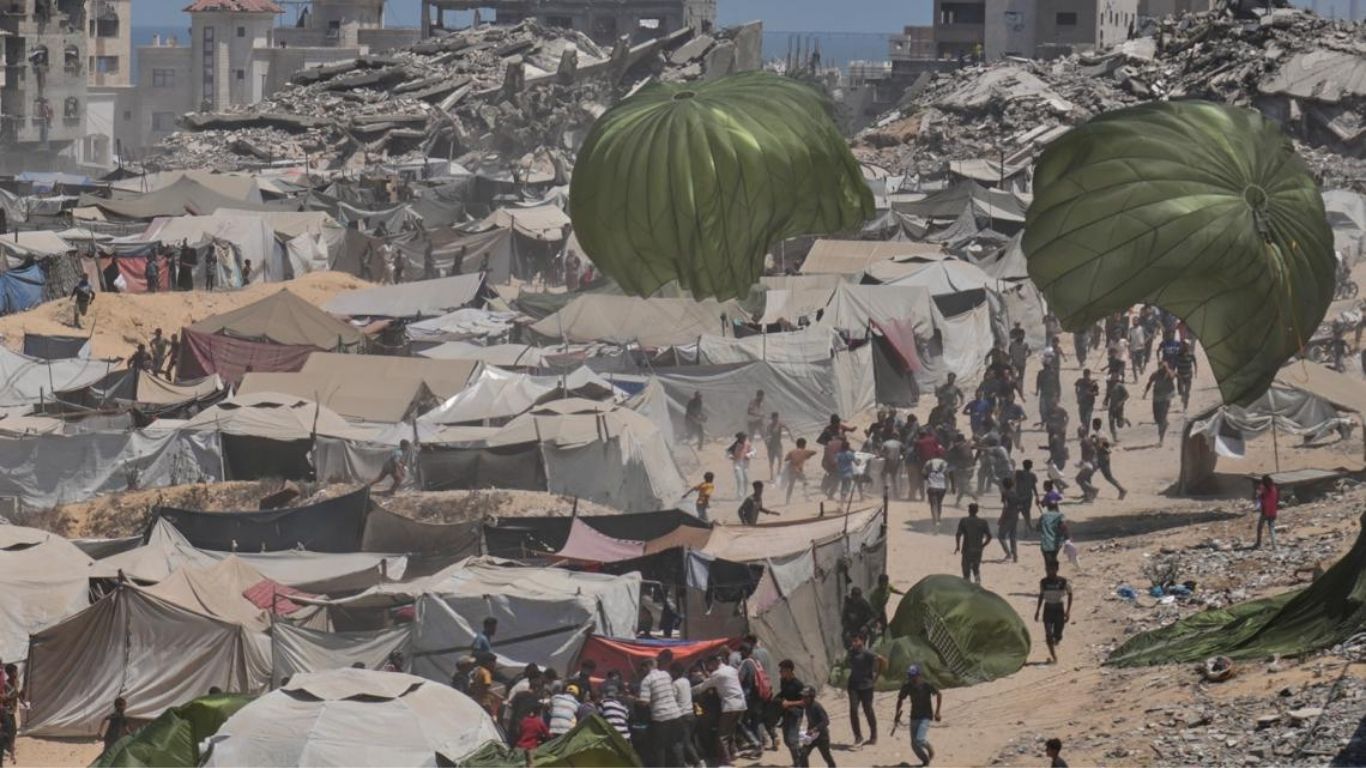
While airdrop operations now joined by Italy and Greece, continue, humanitarian groups stress these deliveries are costly, dangerous, and inadequate. “This way is not for humans, it is for animals,” said Mahmoud Hawila, injured while trying to secure an aid package.
Malnutrition Deaths Soar
The Gaza Health Ministry reports 114 adult deaths and 98 child deaths from malnutrition-related causes since the war began. Temperatures exceeding 90°F (32°C) have worsened the crisis, with families sleeping outdoors, collecting water before dawn, and struggling to survive in makeshift shelters.
Turkish Foreign Minister Hakan Fidan accused Israel of using starvation as a strategy to force Palestinians to abandon their land, a charge Israel denies. Israel maintains that Hamas diverts aid, though it has provided no evidence, while the U.N.-led aid system rejects the claim and calls for safe passage of truck convoys already queued at Gaza’s borders.
War Toll and Unresolved Disputes
Since the October 7, 2023, Hamas-led attack that killed around 1,200 Israelis and abducted 251 people, Gaza’s official death toll has reached 61,300. While Israel disputes these figures, it has offered no alternative count. The ministry says roughly half of those killed have been women and children.
The prolonged conflict, coupled with escalating hunger and displacement, has deepened divisions both within Israel and across the international community. With global pressure mounting and hostages’ lives hanging in the balance, the coming days may determine whether the flicker of ceasefire hope can survive in the shadow of military escalation.