

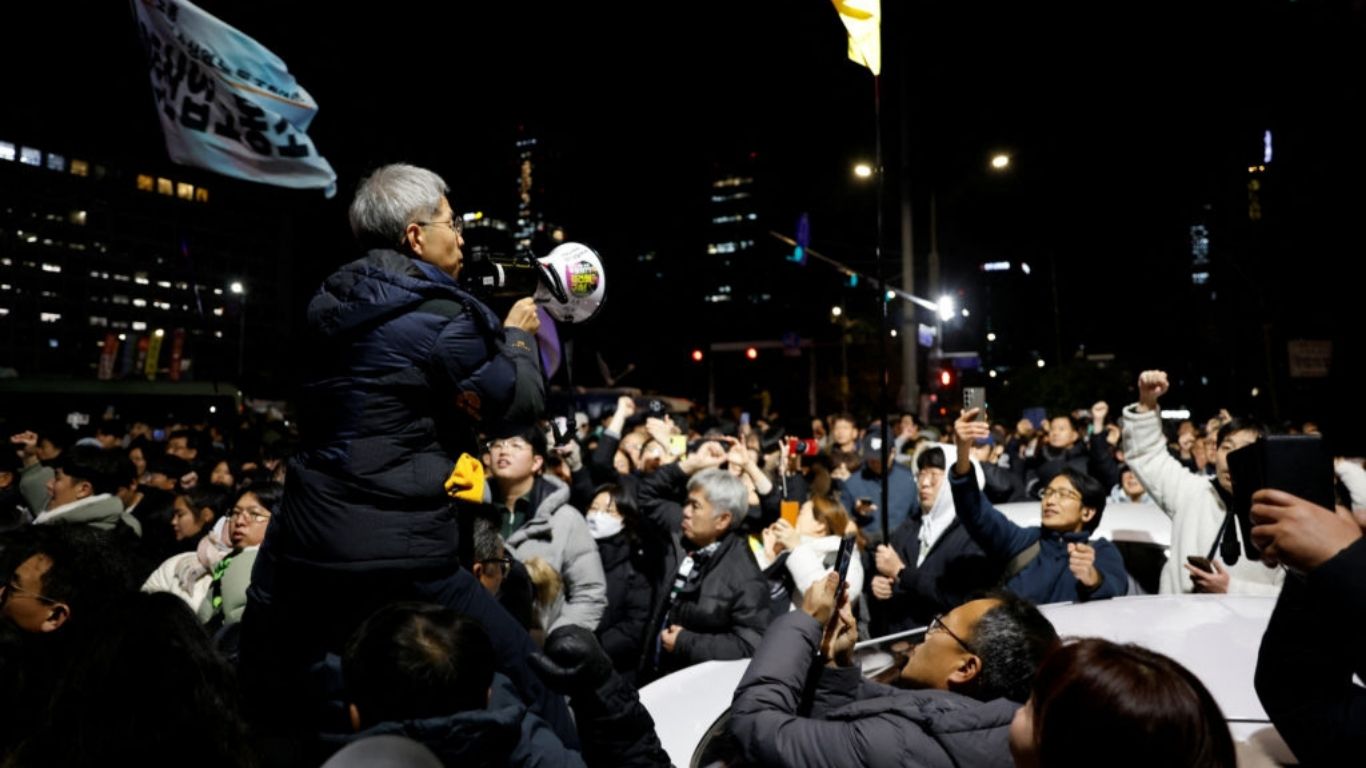
South Korea has taken a decisive step to fortify its democracy, revising martial law regulations in the wake of a dramatic political crisis that shook the nation’s foundations. The National Assembly’s move to restrict military and police powers within the legislative chamber is a direct response to the unprecedented events of December 2024, when former President Yoon Suk Yeol’s declaration of martial law triggered a constitutional showdown and exposed the fragility of democratic safeguards in Asia’s fourth-largest economy.
The December Crisis: A Nation on Edge
On December 3, 2024, as President Yoon Suk Yeol faced mounting political scandals and a paralyzed parliament, he invoked martial law a move unseen in South Korea since the era of military dictatorships. Citing threats from “anti-state” elements allegedly sympathetic to North Korea, Yoon ordered military forces to surround the National Assembly. The spectacle of lawmakers scaling the Assembly’s walls to convene and overturn the order became an instant symbol of democratic resistance.
Military standoff: Troops and armored vehicles blocked access to the legislature, raising fears of a return to authoritarian rule.
Lawmakers’ defiance: Elected officials risked personal safety to fulfill their constitutional duties, ultimately voting down the martial law decree.
Public outrage: The crisis ignited mass protests and international condemnation, underscoring the deep scars left by decades of military rule prior to South Korea’s democratic transition in the late 1980s.
Legal Reforms: Safeguarding Democracy
In response, South Korean lawmakers have enacted sweeping amendments to the martial law framework:
Unimpeded legislative access: The revised law explicitly prohibits any attempt to obstruct lawmakers from entering the National Assembly, ensuring the legislature’s independence even during national emergencies.
Restricted military and police presence: Security forces are now banned from entering the Assembly without the explicit approval of the speaker, closing a loophole that enabled last year’s standoff.
Accountability for abuse: The reforms are designed to prevent the executive branch from using emergency powers to undermine democratic institutions or suppress political opposition.
These changes represent a powerful assertion of civilian supremacy and a clear break from the country’s authoritarian past.
Political Fallout: Yoon’s Downfall and a New Leadership
The fallout from the December crisis was swift and severe:
Purge of senior officials: Key members of Yoon’s administration were ousted and detained for their roles in the martial law order.
Impeachment and trial: Yoon himself was impeached, removed from office, and now faces trial for insurrection—a rare and dramatic reckoning for a sitting president.
Party in disarray: The ruling People Power Party, once dominant, was left fractured and leaderless, paving the way for a snap election.
In June, opposition leader Lee Jae Myung emerged victorious, promising a new direction for the country.
A New Diplomatic Approach
Marking 30 days in office, President Lee Jae Myung signaled a significant shift in foreign policy. In a press conference, he pledged to pursue improved relations with North Korea, a stark contrast to Yoon’s hardline stance. This diplomatic overture could reshape inter-Korean dynamics and reduce tensions on the peninsula, though it faces skepticism from conservative factions and the newly emboldened opposition.
Ongoing Divisions and the Road Ahead
Despite the reforms, South Korean politics remains deeply polarized:
Opposition boycott: The People Power Party, now in opposition, boycotted the parliamentary vote confirming Lee’s prime minister, highlighting ongoing bitterness and the challenges of national reconciliation.
Public vigilance: Civil society and the media continue to scrutinize government actions, determined to prevent any backsliding into authoritarianism.
Conclusion
South Korea’s rapid and robust response to its recent political crisis demonstrates the resilience of its democratic institutions. By revising martial law rules and holding leaders accountable, the country has sent a powerful message: the era of military intervention in politics is over. Yet, the path forward remains fraught with division and uncertainty. The success of these reforms and the stability of South Korea’s democracy will depend on the willingness of all political actors to respect the rule of law and engage in constructive dialogue.




