As Israel and Iran engage in unprecedented direct hostilities, all eyes turn to Hezbollah, the Lebanese militant group once considered Tehran’s most potent proxy. Despite its depleted state after a devastating 2024 war with Israel, sources reveal Hezbollah has drawn critical “red lines” that could force it into the conflict: direct U.S. military intervention or the assassination of Supreme Leader Ali Khamenei. These triggers could transform a bilateral confrontation into a regional inferno.
Hezbollah’s Precarious Limbo: Weakened but Not Defeated
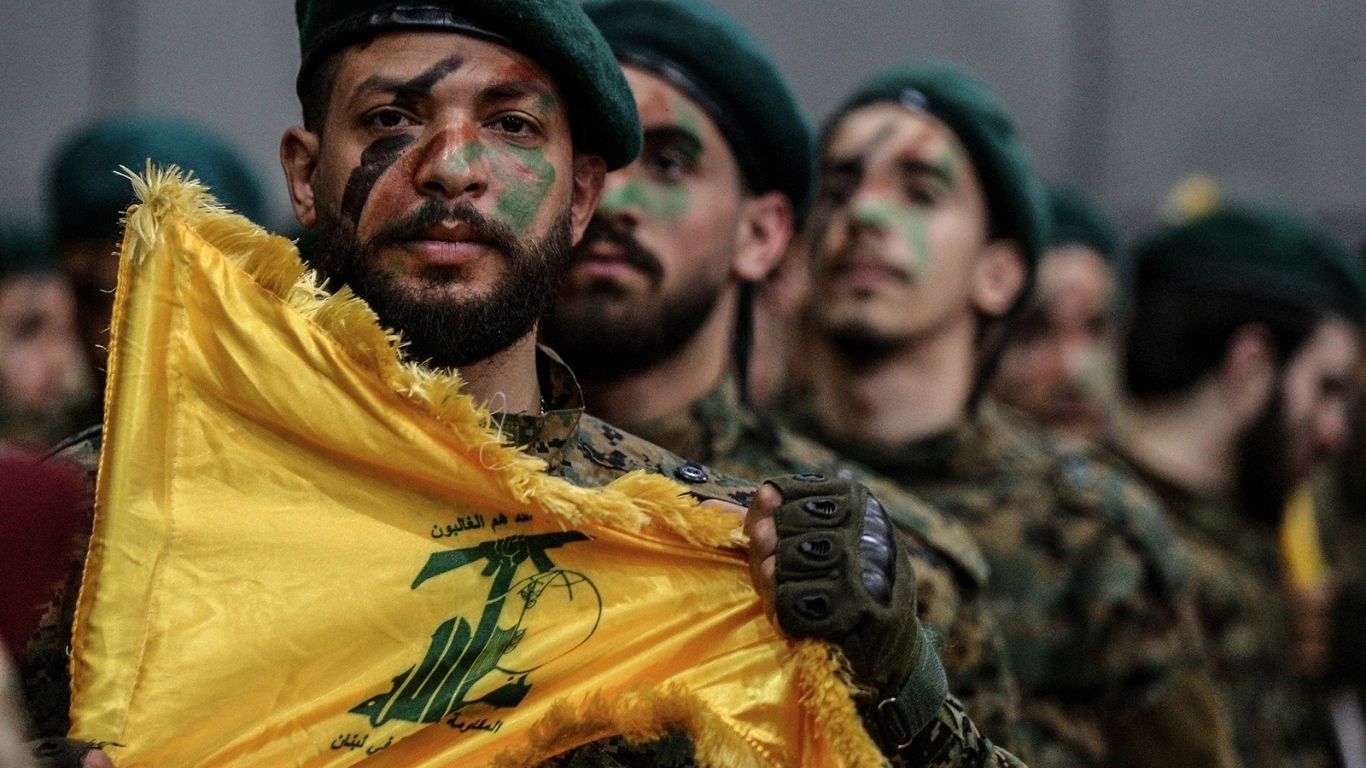
Severe Depletion: Israel’s 2024 offensive eliminated 4,000 Hezbollah fighters (15-20% of its forces), decimated its senior leadership, including Secretary-General Hassan Nasrallah, and destroyed vast weapon stockpiles. The group remains in active rehabilitation under Iran’s Islamic Revolutionary Guard Corps (IRGC), which is restructuring its command and logistics.
Public Restraint: Hezbollah insists it won’t initiate attacks against Israel or the U.S. after recent strikes on Iran, citing commitments to its November 2024 ceasefire. Lebanese President Joseph Aoun and Prime Minister Nawaf Salam have publicly pressured the group to avoid entanglement.
Covert Readiness: Despite public assurances, sources confirm Hezbollah retains “fighting capabilities and weapons out of reach of Israeli air,” with IRGC officers embedded in Lebanon to oversee military reorganization.
The Red Lines: When Rhetoric Meets Reality
Two scenarios could override Hezbollah’s current restraint:
Direct U.S. Military Action: A senior Iranian official warned Al Jazeera that U.S. strikes would trigger Hezbollah’s entry, threatening “unprecedented” attacks on naval forces. This aligns with Hezbollah sources stating American involvement crosses an “ideological red line”.
Assassination of Khamenei: Donald Trump’s threats against Iran’s Supreme Leader, claiming knowledge of his whereabouts while ambiguously stating “no plans to target him, for now,” have put Hezbollah on high alert. A source emphasized Khamenei’s killing would “shift the calculations” for intervention.
The Geopolitical Domino Effect
Iran’s Lifeline: Hezbollah isn’t merely a proxy but an ideological pillar of Iran’s “Axis of Resistance.” The IRGC views the Israel-Iran conflict as an “existential battle,” with Hezbollah’s potential entry serving as Tehran’s insurance against regime collapse.
Lebanon’s Fragile Politics: Hezbollah’s involvement would shatter Lebanon’s delicate post-war stability. The government has explicitly urged non-involvement, while 70% of Lebanese distrust the group and support disarmament. Renewed conflict could ignite domestic fury and Israeli re-occupation of southern territories.
U.S.-Israel Coordination Risk: Hezbollah accuses Washington of enabling Israeli strikes, warning that passive acceptance “will embolden this criminal entity”. The IDF is already bracing for possible attacks, noting heightened Hezbollah alertness post-U.S. strikes on Iranian nuclear facilities.
Why Restraint Prevails For Now
Strategic Exhaustion: Hezbollah lacks the capacity for sustained warfare. IRGC-backed rebuilding will take years, and Israel continues targeted strikes on its remnants.
Diplomatic Shields: Tehran’s outreach to Trump for negotiations even suggesting White House talks signals a preference for de-escalation. Hezbollah’s public condemnations of U.S./Israeli actions remain rhetorical, avoiding operational commitments.
The “Existential” Threshold: Experts note Hezbollah would only fully engage if Iran’s regime survival were at stake, a scenario not yet realized.
The Tinderbox Scenario: What Comes Next?
Should either red line be crossed, Hezbollah’s involvement would likely mirror its “support front” roles in Gaza and Syria: asymmetric strikes, drone attacks, and targeted raids rather than all-out war. However, this could:
Escalate U.S.-Iran clashes into a multifront conflict.
Destabilize Lebanon’s government, reigniting civil unrest.
Enable IRGC deeper operational control over Hezbollah’s remnants.
“Making enemies is easy; avoiding a regional war requires not crossing the red lines,” warns a Beirut-based security analyst, capturing the fragile calculus.
Hezbollah stands at a crossroads: its battered forces yearn for recovery, but its ideological bonds to Tehran could compel a high-stakes gambit. As Trump toys with strikes and Israel presses its advantage, the group’s next move hinges on whether Washington or Jerusalem missteps into its unforgiving red zones. For now, the tinderbox awaits a spark.