

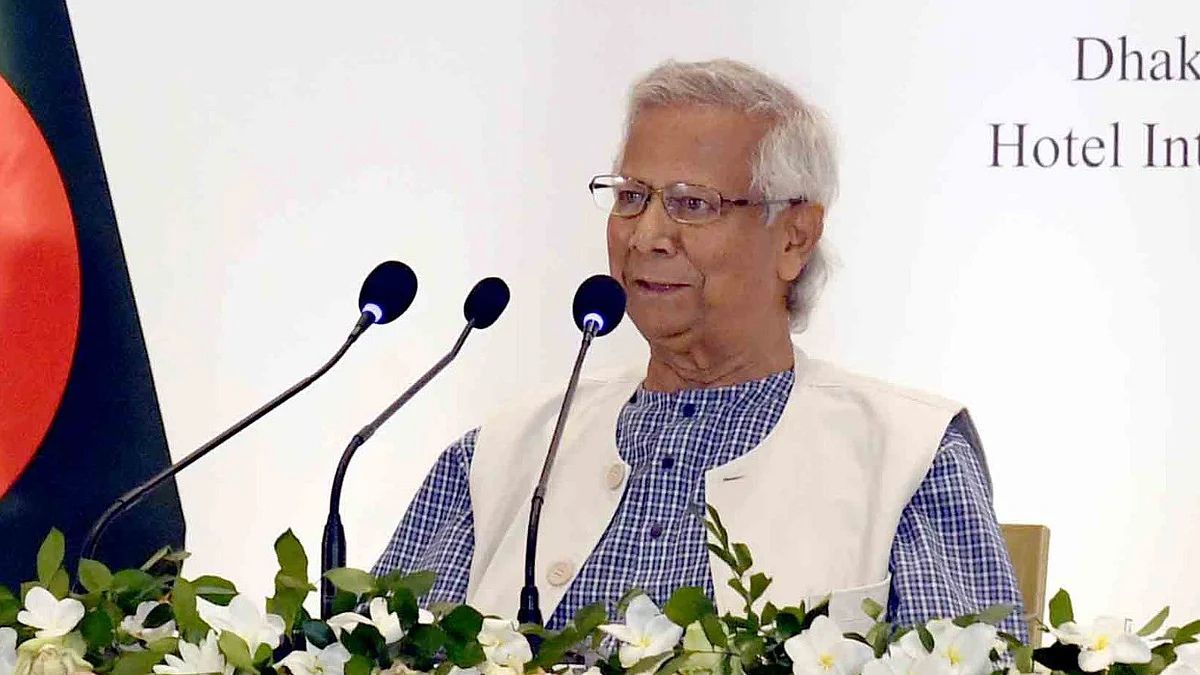
Bangladesh’s interim chief advisor Muhammad Yunus is reportedly considering stepping down from his post, nearly a year after taking charge following the ouster of former Prime Minister Sheikh Hasina in a mass public uprising. His possible exit comes at a time of heightened political unrest, with mounting pressure from both political rivals and public protests.
A senior student leader claimed on Thursday that Yunus, often dubbed the country’s de facto prime minister, had privately voiced deep concern over the continued impasse among political factions. “He said if he cannot do the work he was asked to do reform the system and prepare for fair elections then he may have to leave,” said Nahid Islam, head of the newly-formed National Citizen Party (NCP), in a statement to BBC Bangla.
Reform Promises Stalled
Upon assuming office, Yunus pledged sweeping reforms to pave the way for free and fair elections. However, nearly a year into his tenure, little headway has been made, and the absence of consensus among political stakeholders has left his administration in disarray. According to insiders, Yunus is increasingly frustrated and feels trapped between conflicting demands from rival political groups and growing public impatience.
In an unofficial meeting held on Thursday, Yunus reportedly told Islam he was “being held hostage by the situation and the protests,” expressing doubts about his ability to function effectively under such circumstances. “He feels there’s no point staying in office if he cannot implement the necessary reforms,” said Islam.
Rising Tensions Over Elections
One of the most pressing challenges before the Yunus administration is the timing and nature of upcoming elections. The opposition Bangladesh Nationalist Party (BNP), led by former Prime Minister Khaleda Zia, is demanding national elections by December this year. In contrast, the NCP insists reforms must precede any electoral process.
Massive rallies organized by BNP in Dhaka in recent weeks mark the first major protest against the interim government. BNP has threatened to withdraw support from Yunus’s leadership if a concrete election roadmap is not presented. “Elections without reform will only take us back to the same problems,” warned NCP chief Nahid Islam.
Sources say Yunus is contemplating delaying the elections until 2026, citing an unstable political environment. In internal discussions, he reportedly questioned whether law enforcement agencies could ensure a fair election amid fears of ballot tampering and unrest.
Both BNP and NCP have called for a reshuffle of Yunus’s advisory council. BNP has demanded the removal of key advisers, including Mahfuj, Asif, and National Security Adviser Khalilur Rahman, alleging partiality. The NCP, for its part, has accused the Election Commission of operating under BNP influence and demanded its immediate reconstitution.
Friction with the Military
Yunus’s strained relationship with the country’s military further complicates the political landscape. Bangladesh’s army chief, General Waker-Uz-Zaman, added to the pressure this week by calling for elections to be held in December. In a speech delivered at Dhaka cantonment, he criticized the interim government’s inability to stabilize the country. “Bangladesh is passing through a chaotic phase,” he said, highlighting the breakdown of civil administration and security structures.
The military’s growing dissatisfaction with the Yunus administration underscores the lack of institutional support for the interim leadership. Yunus’s failure to win over the military may prove critical to the longevity of his administration.
Disagreement Over ‘Humanitarian Corridor’
Another flashpoint is the controversial proposal to establish a “humanitarian corridor” connecting Chittagong to Myanmar’s Rakhine state. The initiative, aimed at delivering aid to conflict-hit areas, has been met with strong opposition from the military.
According to The Hindu, General Waker-Uz-Zaman unequivocally rejected the corridor plan during a high-level meeting, citing national security concerns. The army chief reportedly warned that such a move could jeopardize border stability. On the other hand, the Yunus administration argues the corridor is essential to address humanitarian needs in Rakhine, home to thousands of displaced Rohingya.
NCP leaders have urged the government to consult all political stakeholders before finalizing the project. “The government must not take unilateral decisions on such a sensitive matter,” said NCP secretary Akhter Hossain.
Yunus at a Crossroads
With political polarization deepening, administrative cohesion weakening, and public unrest on the rise, Muhammad Yunus finds himself at a political crossroads. His mandate to reform the system and ensure credible elections is increasingly being undermined by partisan strife and institutional deadlock.
As speculation over his resignation mounts, observers say the coming days will be crucial in determining whether Yunus can salvage his leadership or become another casualty of Bangladesh’s relentless political turbulence.




