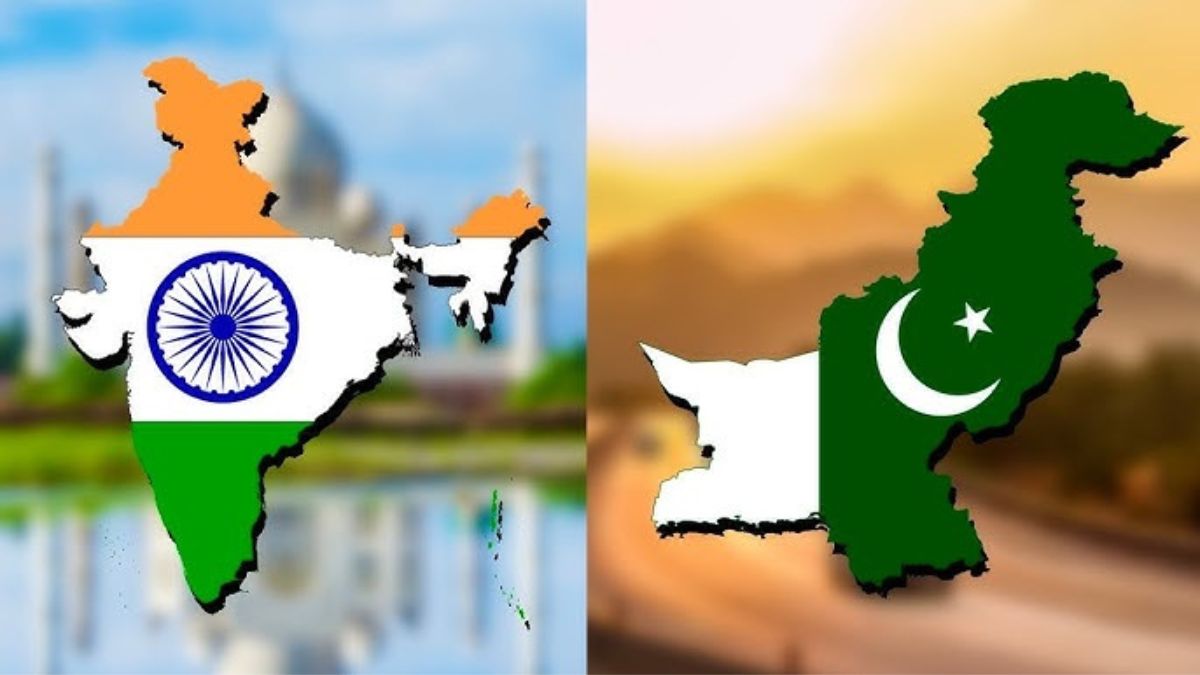
India and Pakistan agree to a fragile ceasefire after a tense military standoff but with India’s stern warning that future terror attacks will be treated as acts of war, the region teeters on the edge. Explore the deep legal, political, and military meaning of war, its triggers under international law, and how far this dangerous game could go.
What’s Really Behind the India-Pakistan Ceasefire?
India and Pakistan have agreed to a temporary cessation of hostilities across land, sea, and air effective 5 p.m. on Saturday, May 10. This announcement follows a wave of cross-border drone and missile activity, with India successfully repelling attacks and issuing a stern diplomatic warning: the next terrorist strike will be treated as an act of war.
This rare pause in hostilities comes ahead of a scheduled dialogue between the two nations’ Directors General of Military Operations (DGMOs) on May 12. While diplomatic on the surface, the move belies an undercurrent of tension not seen since the Kargil conflict or Operation Parakram.
But what does “act of war” really mean in today’s hyper-legal, nuclear-armed world?
The Legal Meaning of an ‘Act of War’: More Than Just Missiles and Troops
In popular imagination, war begins with explosions. But in legal and diplomatic frameworks, an act of war is a layered concept with specific conditions.
Under international law particularly the United Nations Charter armed conflict is governed by two key principles:
- Article 2(4) prohibits the use of force against the territorial integrity of any state.
- Article 51 allows nations the inherent right to self-defence in case of an armed attack.
However, not all violence qualifies. According to the International Court of Justice, minor skirmishes, isolated raids, or even covert strikes do not automatically justify war. The burden is on the state to prove two things:
- Necessity: Force must be essential to defend against an imminent threat.
- Proportionality: The response must be measured and appropriate to the attack.
This high bar complicates India’s recent declaration especially when dealing with non-state actors like cross-border terrorist groups.
Terrorism as a Trigger: The Murky Waters of State Responsibility
India’s declaration that any future terror attack will be considered an act of war is not just rhetoric it’s a strategic shift. But terrorism introduces unique legal ambiguity.
Internationally, the Declaration on Friendly Relations (1970) prohibits states from supporting terrorism, but proving direct state involvement remains difficult. India’s longstanding position is that Pakistan sponsors, protects, or turns a blind eye to terror groups targeting India, a claim that gained global traction after the:
- 2001 Indian Parliament attack
- 2008 Mumbai attacks
- 2019 Pulwama suicide bombing
If India successfully traces a future attack to Pakistani state support, it could invoke Article 51 to justify military retaliation under the right of self-defence, a move backed by recent legal interpretations and precedents like the U.S. response post-9/11.
War vs. Conflict: Why Formal Declarations Are Rare but Powerful
Though India has fought four wars since independence, none have involved a formal declaration of war since 1971. Why?
Because the cost of declaring war is monumental:
- Triggers international humanitarian law and the Geneva Conventions
- Imposes strict obligations regarding civilian protection, treatment of POWs, and military conduct
- Elevates global diplomatic scrutiny and potential UN Security Council action
Instead, nations including India prefer “surgical strikes,” air raids, and covert ops to maintain strategic ambiguity and legal flexibility.
Yet, if India follows through on its new red line, we could witness a historical shift in its security doctrine one that forces a rethinking of the global rules of engagement.
Inside India’s Constitutional War Machinery
India’s Constitution doesn’t provide a separate article for declaring war. Instead, it relies on:
- Article 352: Allows for a National Emergency in case of war or external aggression
- Article 74 & 75: The Union Cabinet must recommend such action to the President
- Article 53: Declares the President the Supreme Commander, though only in a ceremonial role
Once a National Emergency is declared, Parliament must ratify it within one month with a special majority, bringing democratic oversight to wartime decisions.
But beyond the Constitution lies a shadowy manual: the Union War Book.
The Union War Book: India’s Hidden Wartime Playbook
Originally drafted during British rule and updated last in 2010, the Union War Book is India’s classified operational blueprint for wartime governance. It details:
- Full-scale military mobilisation
- Emergency protocols across railways, civil aviation, health, and finance
- Suspension or curtailment of fundamental rights
- Specific wartime duties for each ministry
The last time it was nearly activated was during Operation Parakram in 2001–02 when nearly 500,000 Indian troops mobilised following the Parliament attack.
Global Diplomatic Risks: War in the Age of Nukes and 24/7 Media
A declared war between two nuclear-armed states isn’t just a regional issue it’s a global crisis. India and Pakistan’s conflict has historically drawn in international stakeholders, including:
- The United States (post-Kargil and post-2008)
- China (as a regional counterbalance)
- The UN Security Council
War today is no longer just a battlefield event; it’s a geopolitical earthquake that shakes alliances, markets, and diplomacy. Which is why modern states preferring deniable strikes over dramatic declarations.
But this new doctrine linking terrorism directly to war may force India to cross a diplomatic Rubicon if provoked again.
What Happens Next: De-escalation or Detonation?
India’s warning is unambiguous. Any future terror strikes, especially one with links to Pakistan, could ignite a response no longer couched in euphemisms like “surgical strike” or “precision retaliation.”
Whether this leads to another round of covert action, or a full-scale military confrontation, depends on several factors:
- Can India legally prove Pakistani involvement?
- Will global powers pressure Islamabad to crack down on terror networks?
- Will domestic political will support a sustained military operation?
For now, the ceasefire offers a narrow window for peace, but the region remains on high alert. The line between provocation and war has never been so clearly drawn.