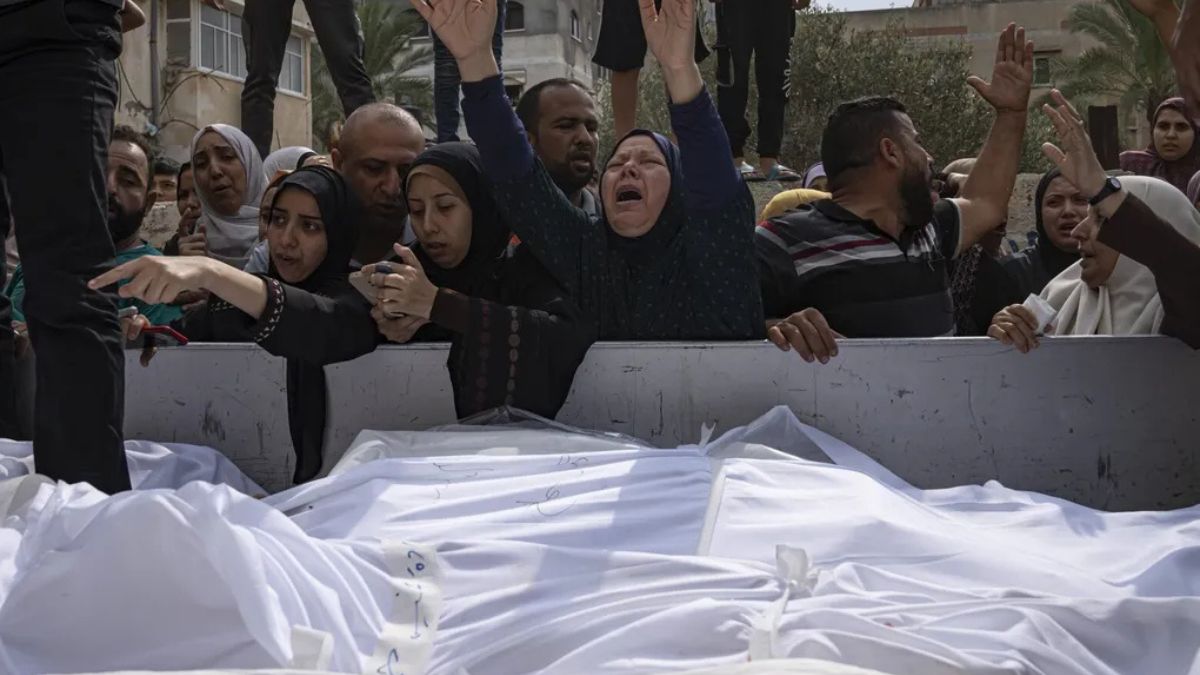
An escalation of aerial bombardments across the Gaza Strip, Israeli Airstrike killed at least 61 people from dawn on Wednesday, targeting densely populated civilian areas, schools, eateries, and refugee centers accommodating internally displaced Palestinians. Coupled with a well over two-month long siege, aerial bombardments have pushed Gaza into deteriorating humanitarian emergency, with catastrophic shortages of food leaving its denizens on the brink of starvation and its ruined healthcare system stretched to its limits to cope. Prolonged bombardment, characterized by witnesses as relentless, underscores deteriorating conditions inside the besieged enclave where 2.3 million Palestinians fight to live every day.
Deadly Attacks Target Civilian Facilities
One of the deadliest attacks consisted of an Israeli drone surveillance aircraft bombing al-Wehda Street in the city center of Gaza, firing missiles at both a restaurant and at an intersection 100 meters from each other. At least 17 were killed, converting one of the last locations where Palestinians are still able to obtain food into a bloodbath. Al Jazeera reporter Hani Mahmoud, reporting from the scene, left no question as to the brutal nature of the attack: “Tables and chairs are all scattered about, and ground is splattered with blood as a result of excessive bleeding.” At the junction, bodies “were soaked in blood and tore to shreds,” grim testimony to the brutality of the attack.
An additional Israeli strike struck al-Karama School in the Tuffah district of Gaza City, where it was serving as shelter for families, and killed 13 and injured others. Four bodies were extracted from the rubble of one of the schools struck earlier during the week in the central Gaza refugee camp of Bureij, the Palestinian Civil Defence authority reported, where at least 30 were killed. Additional casualties resulted from follow-up bombings at Jabalia in the north, Khan Younis in the south, and Deir el-Balah, as well as Bani Suheila in central and eastern Gaza, where they killed a farmer in Abasan gathering crops to help reduce food shortages.
The violence tore some families apart. In Khan Younis, eight, ranging from children to brothers and sisters to cousins, were killed in attacks in homes. Three, one of whom was one of the children, were killed in Deir el-Balah in the bombing of a tent shelter. A husband and wife were killed in Bani Suheila after their house was bombed. The magnitude of the damage left the communities shaken, with Mahmoud declaring Palestinians are “scrambling for cover” as airstrikes and bombings are targeting residential apartments and evacuation centers without discrimination.
The Speeds Up Starvation Crisis
The increased military attack coincides with an Israeli blockade, imposed since March 2, 2025, cutting access to Gaza of necessary supplies, such as foodstuffs, fuel, and medical supplies. Food stocks are low, according to relief organizations, with shortages of flour compounding existing critical shortages. A mother of six at one of the United Nations Relief and Works Agency’s centers said she and her six children had used up all food stocks save bread. “The State of Israel has to lift the blockade,” UNRWA tweeted, urging “international concerted action to stop this humanitarian emergency from unfolding at its next record level.”
The impact of the blockade extends even beyond food shortages. Gaza’s health care system is near collapse, with 88% of its beds occupied and with acute shortages of medical disposables. Attacks on farmers like the one killed in Abasan, too, complicate helping to ease the food shortage. “Not only do they live from hand to mouth as the result of forced starvation and dehydration, they [also] attempt to farm food, but they are denied, and they efforts are [deterred] by the ongoing attacks,” Mahmoud said.
Ceasefire Negotiations Break Down as Violence Intensifies Ceasefire negotiations have collapsed amid escalating violence. Egypt and Qatar, facilitated by the US, brokered the last truce but in a statement issued jointly on Wednesday reaffirmed their determination to work toward achieving a comprehensive truce to end the “unprecedented humanitarian crisis.” With the mediating nations condemning what they termed attempts to fuel the divide between the actors in the region, they recommitted to pressing on with concerted efforts. But one of the senior Hamas leaders described the negotiations as pointless, telling AFP, “There is no point to negotiate or discuss new truce proposals while there is hunger war and extermination war unfolding in the Gaza Strip.”
Israel, meanwhile, has ramped up threats of another, broader military attack in Gaza unless there is signed agreement of a truce. Threat is made despite the 19-month-long war already having claimed over 43,000 Palestinians, according to Gaza’s health ministry, with the true toll likely to be higher with bodies still trapped under rubble and yet to be accounted for. Blockade and military escalation have been the target of widespread international human rights condemnation with calls for international intervention to prevent further devastation.
A growingly profound humanitarian catastrophe
The renewed attack and ongoing blockade have imposed additional misery on Gaza’s citizens, already beset by nearly twenty years of violence and blockade. Destruction of civilian infrastructure like schools and shelter has raised concern about possible violations of international humanitarian law. There has been mounting calls for the International Court of Justice to bring Israel to justice for alleged war crimes, with humanitarian bodies warning Gaza’s reduction to “no-go zones” with 70% of land made uninhabitable as tantamount to an intentional attempt to alter the demographic and geographic makeup of the enclave.
The international community is under mounting pressure to act decisively. UNRWA’s call to lift the siege is part of broader calls for international powers to address the root causes of the emergency, the occupation and the blockade. With peace negotiations stalled and Israel’s military attack intensifying, hope of any easing of the situation appears to recede. For the people of Gaza, each passing day brings continuing misery—bombs, hunger, the death of loved ones—emphasizing the urgency to end one of the globe’s most entrenched conflicts.