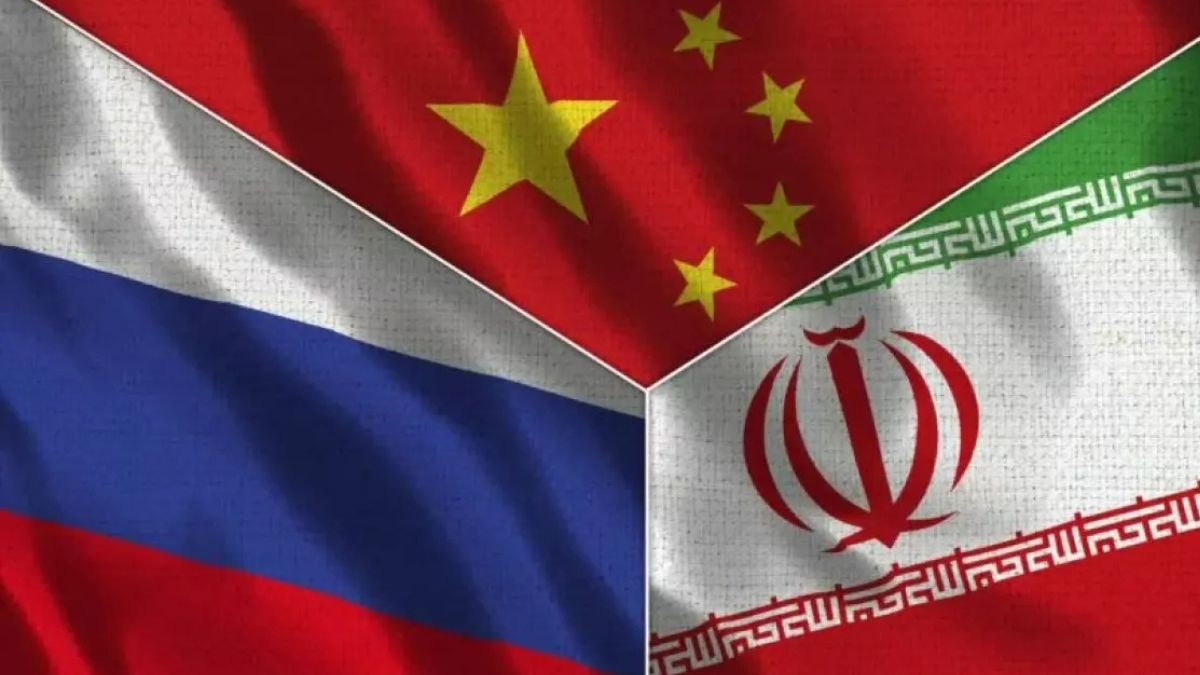
Discover how the powerful Russia–Iran–China alliance is reshaping global geopolitics. From strategic treaties to military drills and energy dominance, this trilateral alliance challenges Western hegemony and helps build a multipolar world order.
As the West doubles down on outdated power plays, a powerful trilateral partnership among Moscow, Tehran, and Beijing reshapes the 21st-century geopolitical landscape through strategic diplomacy, economic defiance, and military synergy.
The Rise of the RIC Triangle: Challenging the Western Status Quo
The world is witnessing a seismic shift in global power dynamics. The strategic alliance between Russia, Iran, and China, known increasingly as the RIC triangle, is not a fleeting alignment but the forging of a new, multipolar world order. While the West, led by Washington, clings to Cold War playbooks and sanctions, the East is building something far more enduring: a framework of mutual respect, strategic collaboration, and sovereign resilience.
This powerful bloc is not simply reactionary; it’s proactive, offering a vision that rejects unilateral dominance and embraces multi-nodal cooperation across Eurasia and beyond.
Strategic Diplomacy: More Than Military Might
Contrary to how the Western media often portrays it, the RIC triangle is not a militarized threat it’s a strategic convergence rooted in diplomacy and shared interests. The Russia–Iran treaty, signed in January in Moscow, is a comprehensive roadmap for economic, energy, defense, andtechnological cooperation. While it stops short of a formal military alliance, it outlines joint responses to external threats and commits both nations to bolstered intel sharing and security collaboration.
China, meanwhile, operates through a more fluid but equally robust model of engagement described by Chinese Foreign Minister Wang Yi as a relationship of “forever friends and never enemies.” With Russia and Iran, Beijing maintains deep economic integration and militarycoordination, exemplified by the joint naval exercises conducted in the Gulf of Oman.
The Multipolar World Is Already Here
Together, Russia, Iran, and China are redefining the rules of global engagement. All three are core members of BRICS+ and the Shanghai Cooperation Organization (SCO) platforms that champion non-Western cooperation and South-South diplomacy.
This isn’t theoretical. It’s being implemented in real-time through:
- Cross-border energy projects and BRI (Belt and Road Initiative) expansions,
- The de-dollarization of trade,
- Shared resilience against Western sanctions,
- And defense cooperation in critical geopolitical zones from Central Asia to West Asia.
Iran: Strategic Pivot of the New Global Order
Iran stands at the crossroads of Asia’s future, both geographically and politically. Decades of surviving sanctions have made the Islamic Republic one of the world’s most sanction-hardened economies, something now deeply studied and applied by both Moscow and Beijing.
Iran is not just a strategic partner. It is an essential node in the Eurasian integration project connecting Chinese infrastructure ambition with Russian military depth. Tehran’s “Look East” policy is synchronizing perfectly with Russia’s “Pivot to Asia” and China’s BRI expansion, forming an unbreakable chain of influence across the continent.
Washington’s Miscalculation: Playing Checkers in a Chess Game
The Trump administration’s erratic policy oscillations from “maximum pressure” to sudden calls for “confidence-building” highlight the incoherence of the U.S. Middle East strategy. Despite fiery rhetoric and threats, Washington’s power to intimidate is waning.
Why? Because Iran is not alone. Any U.S. aggression towards Tehran would be interpreted as a broader assault on the RIC strategic axis, an axis that now wields collective diplomaticpower,economic reach, and military deterrence.
The real threat to U.S. hegemony isn’t just Iran; it’s the interconnected strength of the Russia–Iran–China alliance.
From Beijing to Moscow: The Quiet Diplomacy That Shapes the Future
Recent RIC trilateral meetings in Beijing and Moscow have outlined a clear roadmap for Iran’s nuclear file, prioritizing dialogue, rejecting escalation, and reviving the JCPOA (Joint Comprehensive Plan of Action). The proposal is not only diplomatic, it’s strategically bulletproof: based on international law, rooted in mutual trust, and designed to defuse conflict before it ignites.
This roadmap also includes a reality-check for Washington: no sanctions pressure, no militarycoercion, and no unilateral narratives will change the fact that the UN Security Council acknowledges Iran’s right to peaceful nuclear energy under the NPT.
The Real Stakes: Oil, Trade, and the Strait of Hormuz
Any U.S.-Israel attack on Iran would spark regional upheaval with global consequences. Iran could retaliate by closing the Strait of Hormuz, through which 24 million barrels of oil pass daily. Oil prices would skyrocket past $200 a barrel, and the already fragile global economy burdened by a $730 trillion derivatives bubble would face catastrophic collapse.
In this context, Russia and China have every incentive to defend Iran, not out of ideology but out of pragmatism and strategic survival.
The RIC Alliance Isn’t Coming; It’s Already Here
The global power balance is irreversibly shifting. The Russia–Iran–China axis isn’t just a reaction to U.S. policy; it’s a proactive formation of a new global order. While the U.S. plays with “maximum pressure” and zero-sum games, the East is playing long-term strategic chess.
The question isn’t whether RIC will respond to threats they already are. The real question is whether the West is ready to accept that it no longer holds all the cards.