In a surprising diplomatic breakthrough, the United States has brokered a limited ceasefire between Russia and Ukraine, expanding protections to the Black Sea following energy infrastructure agreements. Announced on March 26, 2025, this deal emerged from U.S.-sponsored talks held separately with both nations in Riyadh, Saudi Arabia. Alongside ensuring safe navigation in the Black Sea, the agreement aims to ease Russia’s access to global food markets while supporting Ukraine with prisoner exchanges and civilian repatriation. But with differing interpretations and lingering mistrust, can this truce hold?
A Fragile Truce Takes Shape in the Black Sea
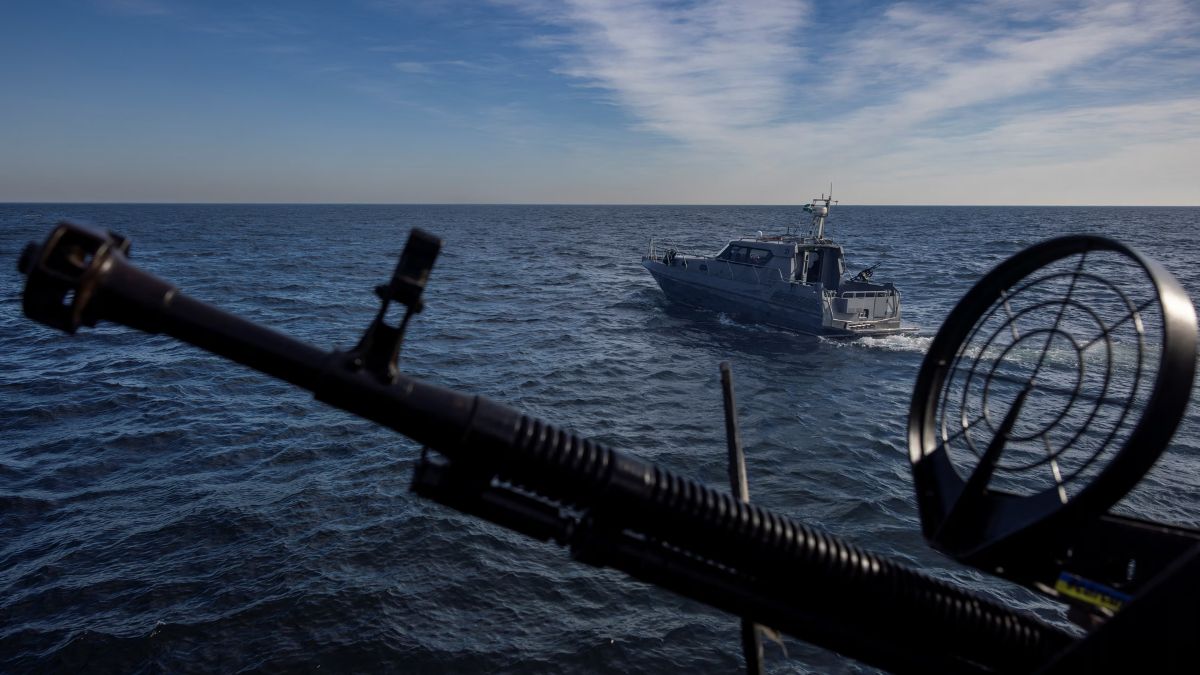
After intense negotiations, Russia and Ukraine have agreed to a partial ceasefire extending beyond energy infrastructure to the strategically vital Black Sea. According to separate White House statements—one with Russia and another with Ukraine—the deal commits both parties to “ensure safe navigation, eliminate the use of force, and prevent the militarization of commercial vessels.” While the exact start date remains unclear, the agreement signals a potential de-escalation in a region that has been plagued by conflict since Russia’s invasion of Ukraine.
The talks in Riyadh, a neutral ground hosted by Saudi Arabia, mark a rare instance of indirect dialogue between the warring nations, facilitated by U.S. mediation. However, the lack of a unified joint statement and conflicting expectations hint at the fragility of this accord.
What’s in It for Russia and Ukraine?
Russia’s Gains: Sanctions Relief and Market Access
For Russia, the ceasefire promises a lifeline to global markets. The Kremlin’s statement highlights an understanding that sanctions on its agricultural bank and other institutions will be lifted, restoring access to the SWIFT financial system—a long-standing demand. This could unlock Russia’s ability to export fertilizers and agricultural products, stabilizing its economy amidst wartime pressures. However, the White House has yet to confirm which sanctions, if any, will be eased, leaving room for speculation.
Ukraine’s Priorities: Humanitarian Support
On Ukraine’s side, the U.S. has reaffirmed its commitment to humanitarian efforts, including facilitating prisoner-of-war exchanges, the return of civilian detainees, and the rescue of abducted children. Ukrainian President Volodymyr Zelensky hailed the outcome as a diplomatic win, expressing gratitude to the U.S. for its role. Yet, he emphasized that implementation hinges on official American action, underscoring Kyiv’s reliance on its ally to enforce the deal.
Tensions Over Timing and Enforcement
Despite the optimism, cracks in the agreement are already visible. Russia claims the ceasefire on energy infrastructure—covering oil refineries, pipelines, power plants, and more—began on March 18, 2025, and warns that any violation by Ukraine frees Moscow from its obligations. Ukraine, however, insists the truce should start now, on March 26, and calls for a clear mechanism to monitor violations. Zelensky noted that Kyiv must report breaches to the U.S. with evidence, a process he described as a safeguard against collapse pushed by American urgency.
An anonymous official familiar with the talks accused Russia of exploiting the deal to pressure U.S. President Donald Trump into lifting sanctions, potentially undermining his diplomatic triumph. “It’s a humiliation,” the official said, pointing to Russia’s backdating as a tactic to manipulate the truce’s timeline.
Expert Voices: Optimism or “Rhetorical Acrobatics”?
Analysts remain skeptical. Andriy Klymenko of the Black Sea Institute of Strategic Studies dismissed the agreement as “rhetorical acrobatics,” arguing that irreconcilable differences between Russia and Ukraine doom it to failure. “The war at sea will continue,” he predicted, citing the lack of concrete enforcement measures. Serhiy Leshchenko, an adviser to Zelensky’s office, accused Russia of deflecting blame, likening its narrative to past denials of atrocities in Bucha and Kramatorsk.
Meanwhile, Zelensky hinted at broader implications, suggesting the deal implicitly protects civilian infrastructure beyond energy targets. “Calm skies in the energy sector extend to other civilian areas,” he said, reflecting U.S. assurances during discussions.
A Test of Trust—and Russia’s Next Move
In his evening address, Zelensky challenged Russia to prove its sincerity. “If we see renewed air raid alerts or military activity in the Black Sea, new measures will be taken against Moscow,” he warned. With 85% of Ukrainians viewing a partial ceasefire favorably, per a recent Kyiv International Institute of Sociology poll, public support exists—but trust in Russia does not.
Russian Foreign Minister Sergei Lavrov cautiously welcomed the deal’s nod to resuming the Black Sea Grain Initiative, abandoned in 2023, but remained wary of Zelensky’s word. Moscow seeks predictable access to grain and fertilizer markets, a goal disrupted by the war’s economic fallout. Yet, data from the UN and Russian trade groups shows Russia’s grain exports nearing pre-war levels, casting doubt on the urgency for sanction relief.
The Bigger Picture: Food Security and Global Stakes
The 2022 Black Sea Grain Initiative stabilized global food prices by ensuring Ukrainian and Russian exports reached markets. Its collapse spiked costs, though U.S. officials have long maintained sanctions don’t target Russia’s food trade—a claim Moscow disputes. With this new ceasefire, the U.S. aims to balance peace efforts with economic stability, but the devil lies in the details—or lack thereof.
As the world watches, the Black Sea remains a powder keg. Will this ceasefire pave the way for lasting peace, or is it just another pause in an unrelenting conflict? Russia’s actions in the coming days may hold the answer.