

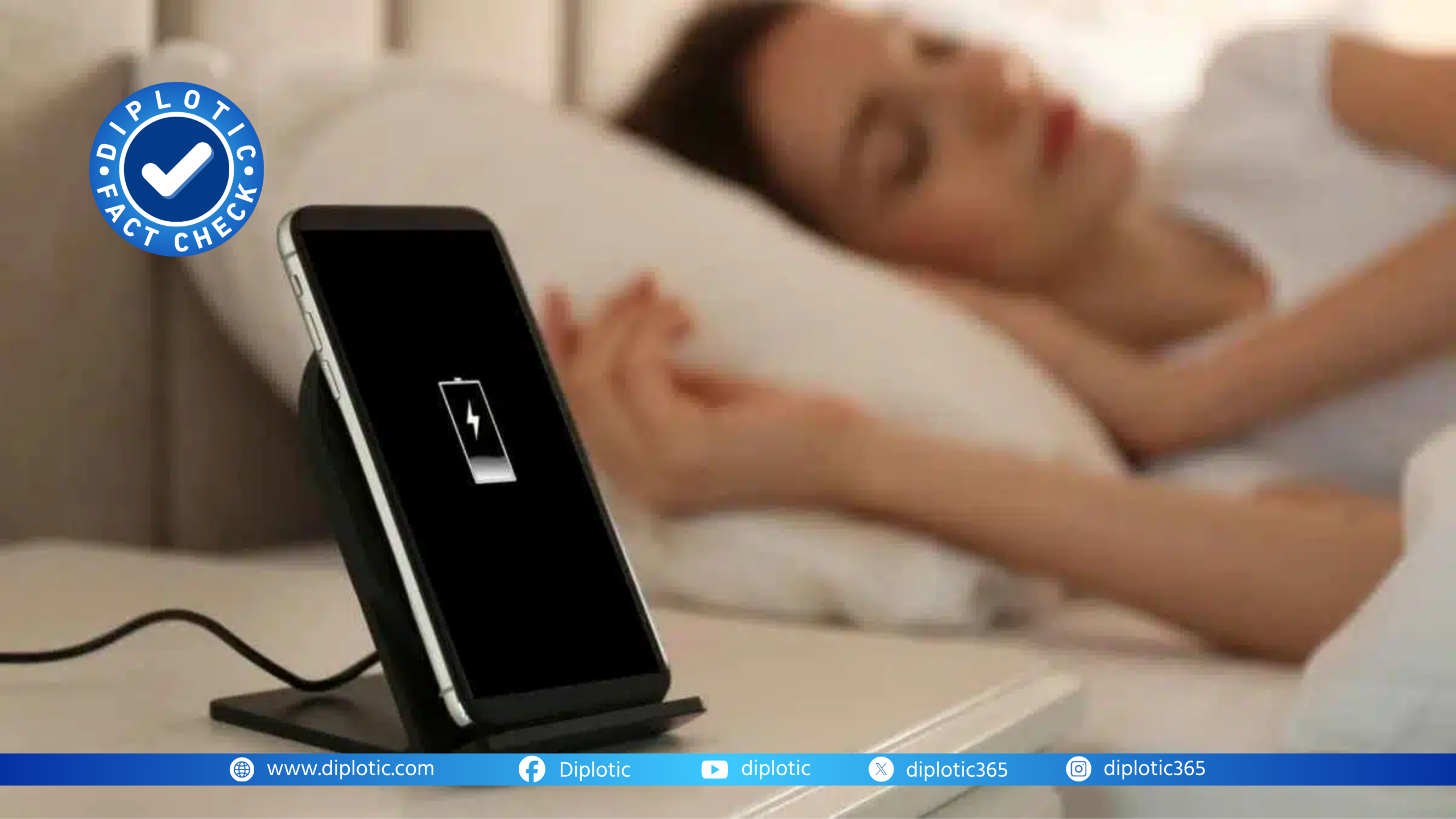
For as long as smartphones have existed, a persistent warning has followed them: never leave your phone charging overnight, or you will destroy the battery. This advice has been passed down through family members, tech forums, and well-meaning friends. Social media posts continue to warn that waking up to a fully charged phone comes at a hidden cost. But as battery technology has evolved, the answer to this question has changed significantly. This investigation examines what actually happens inside a modern smartphone when it stays plugged in for hours, the real factors that degrade batteries, and whether the overnight charging habit deserves its bad reputation.
Claim 1: Modern smartphones automatically stop charging when the battery reaches 100 percent, preventing overcharging damage.
Evaluation: This claim is strongly supported by technical evidence from multiple sources. Modern smartphones use lithium-ion batteries equipped with a power management integrated circuit (PMIC), a dedicated chip that manages the charging process from the moment the phone is plugged in . When the battery reaches 100 percent, this circuit cuts off the incoming power. The phone is no longer actively charging; it is simply connected to a power source that the battery management system ignores .
A tech expert responding to a Reddit query explained this clearly: “It doesn’t overcharge, and you don’t need to baby it. Just plug it in when you feel like it and leave it plugged in as long as you want, the charging controller will take care of the battery” . The controller may allow the battery to drop slightly and then top it up again, but it never forces more power into an already full battery .
This technology has been standard for over a decade. Power management chips began appearing in the mid-2000s and became common in smartphones by approximately 2010 . The concern about overcharging was valid for much older nickel-cadmium batteries, which had a “memory effect” and could be damaged by being left on a charger. Lithium-ion batteries do not suffer from this problem .
Verdict: True. Modern smartphones contain built-in circuits that stop charging when the battery reaches 100 percent. The phone does not continue forcing power into a full battery.
Claim 2: Keeping a phone at 100 percent charge for extended periods accelerates battery degradation compared to keeping it at lower levels.
Evaluation: This claim is true, though the magnitude of the effect is often overstated. Lithium-ion batteries experience the least chemical stress when kept at a “middle” charge level, generally between 20 percent and 80 percent . Keeping a battery at 100 percent keeps it at high voltage, which causes gradual chemical aging over time .
Chao-Yang Wang, director of the Electrochemical Engine Center at Penn State University, told HuffPost that consistently charging to 100 percent causes a battery to deteriorate roughly 10 to 15 percent faster over its lifetime than charging to a lower percentage like 90 percent . “So it’s not a whole lot, but it’s noticeable,” he added. This degradation is slow, and modern phone batteries are durable. As Wang noted, batteries “last, probably, longer than the other features of the phone” . Most people will need a new phone for other reasons—a cracked screen, a better camera, or outdated software—before battery degradation becomes a serious problem.
Dibakar Datta, an associate professor at New Jersey Institute of Technology, confirmed that the ideal range for battery longevity is keeping the charge between 20 percent and 80 percent . However, both experts agree that occasional full charges are fine, especially when extra battery life is needed for a long day.
Verdict: True but with important caveats. Keeping a battery at 100 percent does cause faster chemical aging, but the effect is modest (about 10-15 percent faster degradation over the phone’s lifetime). For most users who upgrade every two to three years, the difference is unlikely to be noticeable.
Claim 3: Heat during charging is a more significant threat to battery health than overnight charging itself.
Evaluation: This claim is strongly supported by expert consensus. Multiple sources agree that temperature is a more critical factor in battery degradation than the duration of charging . Wang stated that “the battery is probably more afraid of too cold or too hot [temperatures]” and that “damage under those extreme conditions probably is greater than charging to 100 percent under normal temperatures” .
The problem with overnight charging is not the duration but the conditions. When a phone is left under a pillow, inside a blanket, or in a tightly sealed case while charging, the heat generated during the charging process has nowhere to escape . This trapped heat can accelerate battery degradation significantly.
Lithium-ion batteries are sensitive to high temperatures. At temperatures above 45 degrees Celsius (113 degrees Fahrenheit), the protective layer inside the battery can deteriorate, compromising safety and performance . Datta explained that fast charging generates more heat than slow charging, which is why frequent use of fast chargers can also contribute to battery wear .
Modern smartphones include safety features to address this. Users may have seen a “too hot to charge” notification appear on their screens, which indicates the phone is actively protecting the battery from temperature damage .
Verdict: True. Heat is a more significant threat to battery health than the act of leaving a phone plugged in overnight. The danger comes from charging in enclosed spaces like under pillows, not from the charging duration itself.
Claim 4: Using the correct charger is essential for battery safety and longevity.
Evaluation: This claim is supported by technical experts and safety organizations. While it is not necessary to use the exact charger that came with the phone—certified third-party chargers are perfectly acceptable—using cheap, uncertified chargers poses real risks .
The problem with low-quality chargers is that they may not provide stable voltage and current. Lithium-ion batteries require precise charging parameters, and unstable power delivery can damage the battery management system or the battery itself . In extreme cases, uncertified chargers have been linked to overheating and fire hazards .
Consumers should look for proper safety certifications. In Europe, the CE marking indicates compliance with basic safety requirements. In North America, the UL mark from Underwriters Laboratories represents third-party safety testing . The USB-IF certification is another reliable indicator for USB chargers .
Matching the charger’s power output to the phone’s specifications is also important. A charger with significantly higher wattage than the phone supports may not be harmful—the phone will only draw what it needs—but extremely high-wattage chargers (140-240 watts) should only be used with phones specifically designed for them .
Verdict: True. Using certified, quality chargers is essential for safety. However, the charger does not need to be the original brand as long as it meets proper safety standards and provides appropriate power output.
Claim 5: Charging overnight creates a fire hazard regardless of battery management technology.
Evaluation: This claim requires careful distinction between two different risks: the battery overcharging risk (which is managed by the PMIC) and the fire risk from overheating (which depends on charging conditions). The fire hazard is not from the act of overnight charging itself but from where and how the phone is charged.
Laurie Pollard, managing director of Firechief Global, warned that “phones generate heat during charging, and covering them with pillows or blankets can trap that heat, increasing the risk of overheating and potentially causing a fire” . He identified overcharging as a leading cause of fires in devices with lithium-ion batteries, though this refers to situations where the charging management system fails or the battery is damaged.
The risk is real but contextual. A phone sitting on a nightstand or a hard, flat surface is not a significant fire hazard. A phone buried under bedding, placed on a soft surface that traps heat, or covered by clothing is at greater risk. The National Fire Protection Association and other safety organizations have documented incidents where phones overheated and caught fire while charging under pillows or blankets .
Verdict: True for certain conditions, but not for overnight charging in general. The fire hazard comes from charging in enclosed, heat-trapping spaces, not from the duration of charging. A phone on an open, hard surface is safe to charge overnight.
Claim 6: Optimized charging features in modern phones significantly reduce the impact of overnight charging.
Evaluation: This claim is accurate. Both Apple and Android manufacturers have introduced “optimized charging” features that actively manage how and when the battery reaches full charge .
Apple’s implementation, available on iPhone 15 models and later, allows users to set a charge limit between 80 percent and 100 percent in 5 percent increments . When the charge limit is set below 100 percent, the phone stops charging at that level. With the limit at 100 percent, Optimized Battery Charging learns the user’s daily charging routine and holds the battery at around 80 percent for most of the night, only completing the charge to 100 percent shortly before the user typically wakes up .
Similar features exist on Android devices. Google Pixels and Samsung Galaxy phones include options to limit charging to 80 or 85 percent to preserve long-term battery health . These features work by reducing the time the battery spends at high voltage, which as established earlier, slows chemical aging.
WIRED recommends turning on these optimized charging features and leaving them enabled . The feature works best for users with regular sleep and wake schedules.
Verdict: True. Optimized charging features significantly reduce battery wear by limiting the time the battery spends at 100 percent charge. Users should enable these features if available on their devices.
Claim 7: Deep discharging (letting the battery drop to 0 percent) is more harmful to battery life than overnight charging.
Evaluation: This claim is supported by battery chemistry research. Allowing a lithium-ion battery to drain completely to 0 percent causes more damage than leaving it at 100 percent .
When a lithium-ion battery drops below 5 percent, irreversible changes can occur in the crystal structure of the electrode materials . The ion conductivity in the electrolyte decreases, and the battery’s capacity permanently declines. Researchers from MIT have shown that full discharge cycles can shorten battery life by up to 60 percent compared to partial discharge cycles .
The recommended practice is to plug in the phone when it reaches about 20 percent . The “sweet spot” for battery longevity is keeping the charge between 20 percent and 80 percent . This minimizes both the stress of high voltage (at the top end) and the risk of deep discharge damage (at the bottom end).
Verdict: True. Letting a phone battery drain completely to 0 percent is more harmful to long-term battery health than leaving it plugged in overnight. The 20-80 percent range is ideal for battery longevity.
Conclusion: The Overnight Charging Question, Reconsidered
The investigation reveals that the conventional wisdom about overnight charging damaging phone batteries is significantly outdated. Modern smartphones contain power management circuits that prevent overcharging by cutting off power when the battery reaches 100 percent . The phone does not continue forcing electricity into a full battery.
However, this does not mean that overnight charging has no effect whatsoever. Keeping a battery at 100 percent for extended periods does cause slightly faster chemical aging—approximately 10 to 15 percent faster over the phone’s lifetime compared to keeping it at 90 percent . For most users who upgrade their phones every two to three years, this difference is unlikely to be noticeable.
The more significant risks associated with overnight charging are not about battery chemistry but about charging conditions. Heat is the enemy of lithium-ion batteries, and charging a phone under a pillow or blanket traps heat, accelerating degradation and potentially creating a fire hazard . A phone on an open, hard surface is safe to charge all night.
For users concerned about maximizing battery longevity, several evidence-based practices are more important than avoiding overnight charging. Keeping the battery between 20 percent and 80 percent is ideal . Avoiding deep discharges to 0 percent is critical . Using certified chargers with appropriate safety markings prevents voltage instability . And enabling optimized charging features, available on most modern phones, reduces the time the battery spends at full charge .
The overnight charging habit is not the battery killer it was once believed to be. The technology has evolved, and the advice should evolve with it. For most people, the convenience of waking up to a fully charged phone outweighs the modest long-term impact on battery health. The real risks lie elsewhere—in cheap chargers, in extreme temperatures, and in the habit of letting the battery drain completely before plugging it in. These are the practices worth changing. The overnight charge can stay.




