

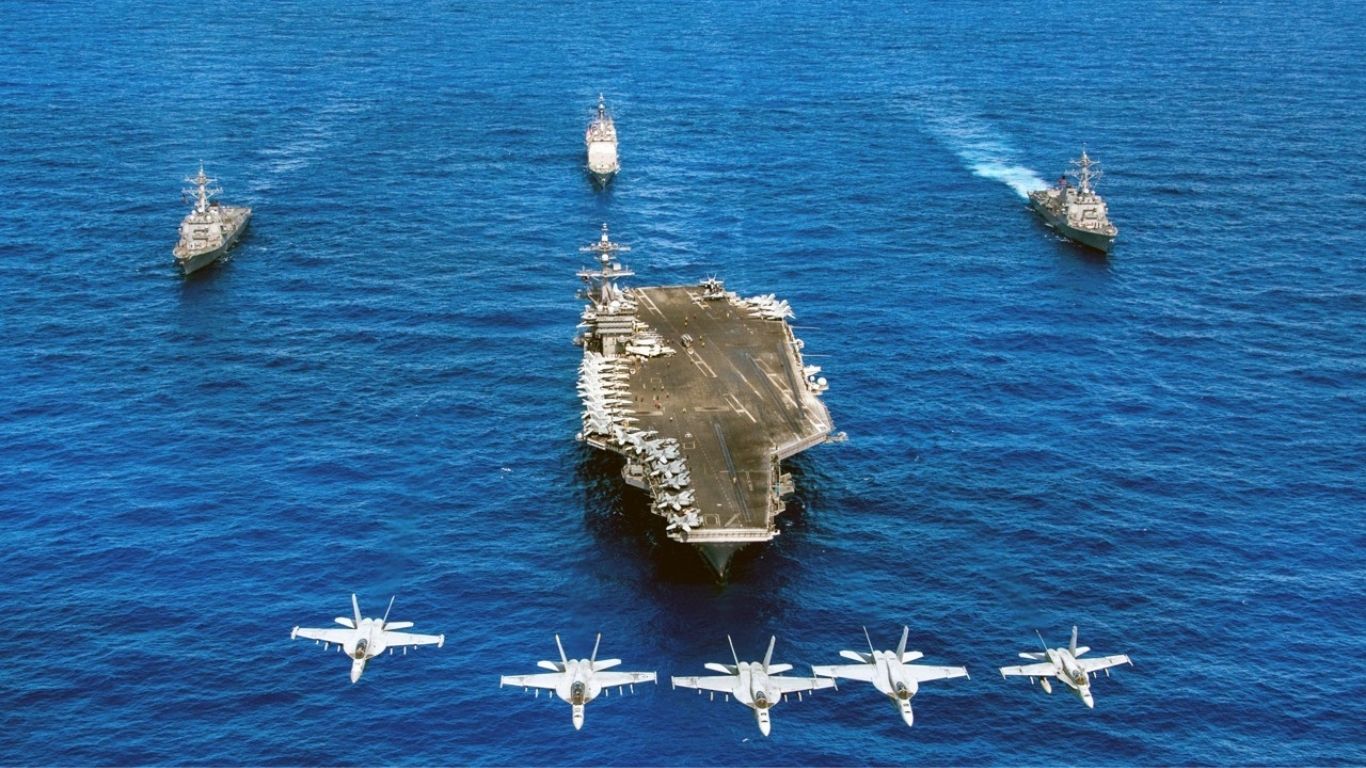
For more than a decade, the idea of the Indo-Pacific has shaped how many countries understand global power. Governments from Asia to Europe have adopted this concept, building strategies around the belief that control of sea lanes ensures stability and influence. Naval cooperation, alliances, and maritime security became central to this vision.
But recent events linked to the Iran conflict are raising serious questions. As tensions disrupted shipping and threatened key routes like the Strait of Hormuz, the limits of maritime power became visible. Even the most advanced naval forces faced difficulty operating freely in contested waters. This has led analysts to reconsider a basic assumption: can sea power alone still shape global order?
The Indo-Pacific idea was always ambitious. It connected two vast oceans into a single strategic space. It aimed to link countries with different interests into one framework. But its strength depended on one key belief—that maritime dominance could manage risks across regions. The Iran crisis suggests that this belief may no longer hold in the same way.
What is now emerging is not just a temporary disruption but a deeper shift. Power is no longer defined only by who controls the sea. It is also shaped by who can deny access from land. This change challenges the foundation of the Indo-Pacific strategy and raises new questions about how countries should plan their security.
Was the Indo-Pacific Always More Vision Than Reality?
The Indo-Pacific concept did not emerge naturally from geography. It was built as a strategic idea, mainly shaped by the thinking of the United States. For Washington, the world has long been seen as a network of sea routes where power can be projected through naval strength.
By extending this thinking, the Indo-Pacific linked the Indian Ocean and the Pacific Ocean into one space. It created a vision where allies and partners could work together to secure trade routes and balance rising powers. This framework was supported by joint exercises, defense agreements, and policy documents across many countries.
However, not all countries share the same strategic priorities. For some, especially those with large land borders, security concerns are not centered on the sea. This creates a gap between the idea of the Indo-Pacific and the realities faced by individual nations.
Take India as an example. It is often described as a key player in the Indo-Pacific. Yet its main security challenges are on land, including border tensions and regional stability. While it has important maritime interests, its strategic focus remains largely continental.
This mismatch raises an important question. Can a single framework truly address the needs of such diverse countries? The Indo-Pacific tries to create unity, but it may overlook the different ways in which nations experience security threats.
The Iran conflict highlights this issue. While maritime routes are important, the crisis shows that land-based power can directly influence what happens at sea. This challenges the idea that naval strength alone can ensure stability across regions.
How Did the Iran Conflict Challenge Maritime Power?
The Iran crisis has turned key waterways into zones of risk. The Strait of Hormuz, one of the most important shipping routes in the world, became a focal point of tension. Disruptions in this narrow passage affected global trade, especially oil supplies.
For decades, naval forces have been seen as the main tool for securing such routes. The assumption was that strong fleets could keep sea lanes open even during conflict. However, recent events suggest that this assumption is no longer fully reliable.
Modern warfare has changed the balance. Advances in missile technology and surveillance systems allow countries to target ships from long distances. This makes it more dangerous for naval forces to operate close to hostile shores. Even powerful fleets must now keep a safer distance, reducing their ability to control events directly.
This shift is important because it changes how power works. In the past, control of the sea allowed countries to influence land-based outcomes. Today, the reverse is also true. Land-based systems can limit what happens at sea.
The Iran conflict demonstrates this clearly. The risk to shipping did not come only from naval battles but from threats originating on land. This creates a situation where maritime dominance is no longer absolute.
For the Indo-Pacific strategy, this is a serious challenge. If sea control cannot be guaranteed, the entire framework becomes less certain. Countries that rely on maritime security must now consider new risks that cannot be addressed by naval power alone.
Is Continental Power Now Overtaking Maritime Strategy?
One of the most important changes highlighted by the current crisis is the growing strength of continental power. Across large landmasses, countries are building systems that reduce their dependence on sea routes. These include rail networks, pipelines, and overland trade corridors.
This shift is particularly visible in regions connected to China and its broader economic initiatives. By investing in land-based infrastructure, countries can move goods without relying entirely on maritime routes. This reduces vulnerability to disruptions at sea.
At the same time, military capabilities on land are becoming more advanced. Systems designed to prevent access to certain areas are now more effective. These systems can cover large distances and create layers of defense that are difficult to overcome.
This changes the balance between attack and defense. Maritime powers, which once had the advantage of mobility, now face higher risks when approaching contested regions. The cost of operating near hostile territory has increased, while the advantage has shifted toward those defending from land.
For countries that built their strategies around naval strength, this presents a challenge. The Indo-Pacific framework assumes that maritime mobility allows for flexible and effective responses. But if access is denied, this flexibility is reduced.
This does not mean that sea power is no longer important. Trade still depends heavily on shipping, and naval forces remain essential for many operations. However, the balance is changing. Power is now shared between sea and land in a more complex way.
The Iran conflict serves as a clear example of this transition. It shows that control is no longer one-dimensional. Instead, it is shaped by multiple factors, including geography, technology, and infrastructure.
What Does This Mean for the Future of the Indo-Pacific?
The current crisis is forcing countries to rethink their strategies. The Indo-Pacific idea is not disappearing, but it may need to evolve. Its original focus on maritime dominance may no longer be enough to address modern challenges.
Countries like Japan and Australia have invested heavily in this framework. They rely on secure sea routes for trade and see naval cooperation as a key part of their security. However, they must now consider how to respond to threats that come from land as well as sea.
For the United States, the challenge is even larger. Its global strategy has long been based on naval power and the ability to operate across oceans. The Iran conflict shows that this approach faces new limits in a world where access can be restricted by advanced defenses.
The question moving forward is not whether the Indo-Pacific remains relevant, but how it can adapt. This may involve greater focus on land-based partnerships, infrastructure development, and economic integration. It may also require new ways of thinking about security that go beyond traditional military power.
The Iran crisis has acted as a stress test. It has revealed weaknesses that were not always visible during stable times. These lessons are likely to shape future policies and alliances.
In the end, the Indo-Pacific strategy is at a turning point. It was built on the belief that control of the sea could ensure order. Today, that belief is being questioned. The balance of power is shifting, and strategies must adjust to reflect this new reality.
The outcome of this shift will not be decided in a single conflict. But the signals are clear. The world is moving toward a more complex system, where no single domain—land or sea—can dominate alone.




