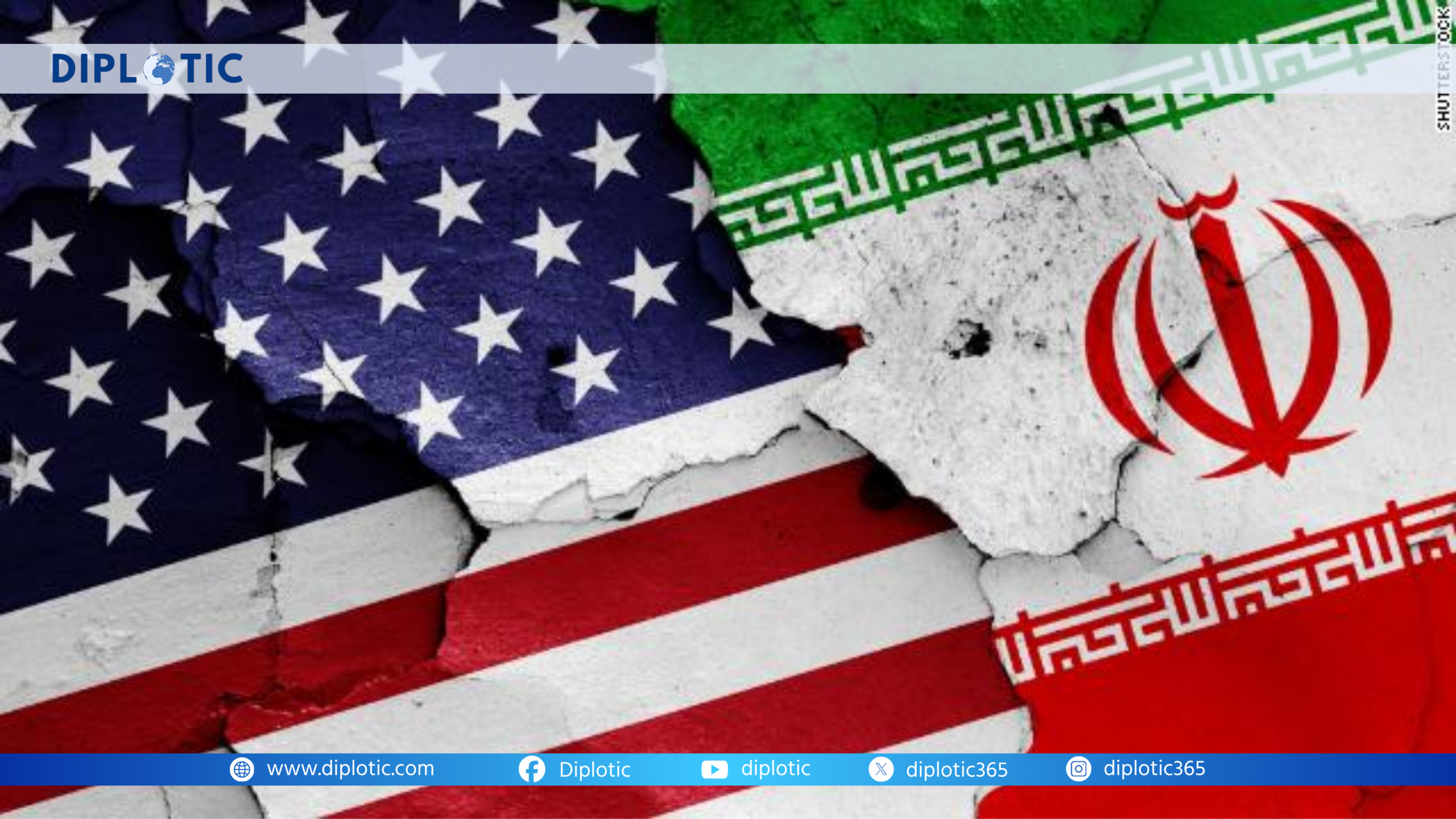
For more than a century, American presidents have declared the United States a Pacific nation. Theodore Roosevelt in 1903 foresaw “the Pacific era, destined to be the greatest of all.” Barack Obama in 2009 called himself “America’s first Pacific president.” Joe Biden in 2022 affirmed that “the United States is a proud Pacific power.” Even Donald Trump, whose administration largely rejects the language of partnership, has asserted that “the United States is and always will be an Indo-Pacific nation” . Yet what it means to be a Pacific nation has never been settled, and today, the gap between rhetoric and reality has never been wider.
Under the current administration, the United States increasingly defines its Pacific identity not through people, mobility, or shared prosperity, but through the region’s strategic utility in competition with China . Washington is scaling back people-centered initiatives while accelerating militarization, building and upgrading military facilities framed as responses to great-power rivalry . This approach sits uneasily with the priorities articulated by Pacific Islanders themselves, who consistently emphasize human security concerns—livelihoods, climate change, and sustainable development—over the strategic obsessions of distant capitals . This explainer examines why U.S. policy in the Pacific is failing, what a people-centered alternative might look like, and why mobility matters as much as military bases in securing America’s place in the region.
What Do Pacific Islanders Actually Want from External Partners?
The Pacific Islands Forum, the region’s leading multilateral grouping representing 18 countries and territories, provided a clear answer to this question four years ago. In its 2050 Strategy for the Blue Pacific Continent, the Forum acknowledged heightened geostrategic competition but defined security as something broader than raw military power . The strategy aims to secure a resilient future for Oceania through seven interconnected thematic areas: inclusive development, collective security, sustainable economics, climate resilience, and oceanic stewardship, among others .
For Pacific Islanders, climate change is not a future threat but a present reality. Rising sea levels are already inundating communities, contaminating freshwater supplies, and eroding coastlines. Extreme weather events are becoming more frequent and destructive. The survival of low-lying island states depends on global action to reduce emissions and support adaptation. When external partners focus on military bases rather than climate resilience, they signal that their priorities diverge from those of the people they claim to partner with.
Economic development is another core concern. Pacific Island economies face structural challenges: small markets, geographic isolation, limited resources, and vulnerability to external shocks. Sustainable economic partnerships that create jobs, build skills, and generate revenue are far more valuable than strategic posturing. Trade access, investment, and labor mobility programs that enable Pacific Islanders to work abroad and send remittances home directly improve lives in ways that military infrastructure cannot.
Ocean stewardship is equally fundamental. The Pacific Ocean is not just a geographic feature; it is the source of livelihood, identity, and culture for island communities. Protecting marine resources, managing fisheries sustainably, and preserving biodiversity are existential priorities. When external partners treat the ocean primarily as a theater for naval competition, they miss the point entirely.
How Is U.S. Policy Diverging from Pacific Priorities?
Nowhere is the disconnect between U.S. policy and Pacific priorities clearer than in the realm of mobility. Citizens of the freely associated states—the Federated States of Micronesia, the Marshall Islands, and Palau—have visa-free access to the United States under their unique treaty relationships . But for the remaining Pacific island countries, the Trump administration has imposed new restrictions that make travel to the United States more difficult and expensive.
Recent measures include new restrictions on Fijian immigrant visas, a partial visa ban on Tongans, and requirements for bonds of up to $15,000 for visitors from Fiji, Tuvalu, and Vanuatu . These are not minor adjustments. For communities with strained job markets and deep traditions of circular migration, mobility is essential not only for income and remittances but also for maintaining family and cultural ties . An estimated 1.6 million Pacific Islanders, including native Hawaiians, live in the United States, representing a vital transnational community . Tongans and Fijians, among those most affected by the new restrictions, number approximately 79,000 and 54,000 respectively, concentrated largely in western states .
These mobility restrictions come alongside other decisions that undercut people-centered engagement. New tariffs on Pacific island exports make it harder for producers to access U.S. markets. The withdrawal of programs supported by the U.S. Agency for International Development eliminates initiatives that had built trust and delivered results . The cancellation of key climate commitments and financing mechanisms signals that the United States is not serious about the existential threat Pacific Islanders face . In January, the United States quit the South Pacific Regional Environment Programme, the primary intergovernmental environmental organization in the Pacific that Washington itself co-founded in 1993 .
While Washington builds fences, it simultaneously accelerates militarization. Recent initiatives include a Defense Cooperation Agreement with Papua New Guinea, expansion and restoration of the Northern Field airfield in the Northern Mariana Islands, construction of a new radar facility in Palau, and rehabilitation of a World War II-era airstrip there as well . All of this is framed as a response to strategic competition with China.
What Is China Doing Differently in the Pacific?
China’s approach to the Pacific offers a stark contrast, though not without its own complications. While Beijing has expanded its diplomatic footprint and security presence—most notably through a 2022 agreement with the Solomon Islands and increased policing cooperation with several regional governments—it has simultaneously invested in visible, community-level development projects .
Chinese aid has funded roads, government buildings, sports facilities, and renewable energy infrastructure across Oceania . This “small and beautiful” strategy, as described by the Lowy Institute, aims to build credibility among Pacific Islanders through tangible improvements to daily life . When a new road connects a village to market, or a solar installation provides reliable electricity, the impact is immediate and visible.
China has also expanded mutual visa exemption arrangements with Pacific island states, including Fiji in 2015, Samoa in 2025, the Solomon Islands in 2024, and Tonga in 2016 . These arrangements signal a commitment to mobility and exchange that contrasts sharply with U.S. restrictions. While far fewer Pacific Islanders live in China than in the United States, the symbolic value of welcoming visitors is significant.
China’s aviation links to the region, while still limited compared to U.S. connectivity, are expanding. One direct flight operates from Guangzhou to Port Moresby, reflecting ties between China’s southern provinces and Oceania . China is also expanding connectivity through one-stop options to Honiara and exploring additional routes .
Surveys conducted in Papua New Guinea and the Solomon Islands in 2023 found that locals generally supported closer ties with Beijing . However, they also expressed concerns over environmental impacts and debt risks associated with Chinese commercial engagement. The picture is not one of unalloyed enthusiasm but of pragmatic calculation: Pacific Islanders see benefits and risks and seek to manage both.
What Can Australia and New Zealand Teach Us About a People-Centered Approach?
Australia and New Zealand, while imperfect partners, have demonstrated what a people-centered Pacific policy might look like. Both countries have seasonal labor programs that create reliable remittance flows and deepen bilateral links . These programs respond directly to Pacific priorities: they provide employment, generate income, and build skills while respecting the cultural importance of circular migration.
In 2023, Australia and Tuvalu signed the Falepili Union treaty on climate-induced mobility, which provides a voluntary migration pathway to Australia for residents of the low-lying Pacific nation . This agreement acknowledges that climate change is already making some islands uninhabitable and that mobility is a necessary adaptation strategy, not a problem to be managed.
New Zealand’s 2023 review of its Recognised Seasonal Employer scheme reflects an effort to acknowledge harms, correct abuses, and better align mobility with development outcomes . Seasonal workers now hold multi-entry visas, enabling them to return home for family events or bereavements without losing their work status. This seemingly small change has profound implications for workers’ ability to maintain family and cultural ties while pursuing economic opportunities abroad.
Neither Australia nor New Zealand has resolved all the tensions in their Pacific relationships. Labor schemes can perpetuate exploitation if not carefully monitored. Climate migration pathways raise complex questions about sovereignty and identity. But both countries have recognized that mobility is an essential pillar of regional partnership rather than a security threat to be managed . Their example suggests that consistent and beneficial mobility options—for work, education, and family reunification—can serve as a form of strategic engagement that does not rely on militarization.
Why Does Mobility Matter So Much for Pacific Communities?
For Pacific Islanders, mobility is not an abstraction. It is woven into the fabric of daily life, economy, and culture. Remittances from family members working abroad constitute a significant portion of national income for several Pacific states. In Tonga, for example, remittances regularly exceed 30 percent of GDP . For communities with limited formal employment opportunities, access to overseas labor markets is not a luxury but a necessity.
Mobility also sustains cultural connections. Pacific diaspora communities maintain deep ties to their home islands, returning for ceremonies, contributing to community projects, and passing language and traditions to younger generations. When visa restrictions make travel difficult or expensive, these connections fray. The requirement of a $15,000 bond for visitors from Fiji, Tuvalu, and Vanuatu effectively prices many families out of travel altogether.
The educational dimension is equally important. Pacific students who study in the United States, Australia, or New Zealand acquire skills and perspectives that benefit their home communities. They build networks that facilitate trade, investment, and cooperation. When mobility is restricted, these opportunities diminish.
For low-lying island states facing existential threats from climate change, mobility is increasingly a survival strategy. As the 2023 Australia-Tuvalu treaty recognizes, some communities will need to relocate. Managing this process humanely, with respect for dignity and cultural continuity, is one of the great challenges of our time. Policies that treat mobility as a threat rather than a reality will fail this test.
What Are the Risks of a Militarized Approach?
Some scholars now describe the Pacific not simply as a strategic space but as a “sacrifice zone,” where local communities bear the risks of great-power rivalry . This framing echoes the region’s experience during World War II, when Pacific islands became key battlegrounds and military bases, bringing large-scale destruction, displacement, and environmental damage to local communities .
The legacy of that era persists. Unexploded ordnance still contaminates land in several countries. Nuclear testing in the Marshall Islands during the Cold War caused lasting health and environmental damage, with consequences that continue to this day . Communities that bore these costs have not forgotten.
A new round of militarization risks repeating these patterns. Military facilities bring environmental risks from fuel storage, waste disposal, and accidents. They can displace communities from land and disrupt traditional livelihoods. They make islands potential targets in conflicts that have nothing to do with local concerns. And they divert attention and resources from the human security priorities that Pacific Islanders themselves identify.
Strategic competition with China is not only about weapons systems or base access; it is also about credibility and trust . Demonstrating that movement is welcome and that Pacific Islanders are treated as partners would do more to ground U.S. influence in the region than just adding military infrastructure. Yet the current trajectory points in the opposite direction.
What Would a Better Pacific Policy Look Like?
A people-centered Pacific policy would start by listening to what Pacific Islanders say they need. The 2050 Strategy provides a clear blueprint: inclusive development, collective security, sustainable economics, climate resilience, and oceanic stewardship . Aligning U.S. programs with these priorities would rebuild trust and demonstrate genuine partnership.
On mobility, the United States could reverse recent restrictions and explore expanded visa access for Pacific Islanders. Seasonal work programs modeled on Australian and New Zealand schemes would create economic opportunities while strengthening ties. Educational exchanges and scholarships would build lasting relationships. Family reunification pathways would honor the transnational character of Pacific communities.
On climate, the United States could rejoin the South Pacific Regional Environment Programme and restore canceled climate commitments . Providing meaningful support for adaptation and resilience would signal that Washington takes Pacific priorities seriously. Investing in renewable energy, coastal protection, and disaster preparedness would deliver tangible benefits.
On development, the United States could restore USAID programs and expand trade access for Pacific exports . Supporting sustainable economic growth through investment and technical assistance would create opportunities that reduce dependence on aid.
On security, the United States could pursue a balanced approach that addresses both traditional and human security concerns . Military cooperation has its place, but it should complement rather than displace people-centered engagement. Ensuring that Pacific Islanders have a voice in security arrangements that affect them is essential.
Conclusion
The United States has long declared itself a Pacific nation, but that identity means little if it is not reflected in policy. Today, Washington is scaling back people-centered engagement while accelerating militarization, diverging sharply from the priorities Pacific Islanders have articulated. Mobility restrictions, aid cuts, and climate retreat signal that the United States values the region for its strategic utility rather than its people.
China, for all its complications, is pursuing a different approach. Visible community-level investments, visa expansions, and growing connectivity build credibility in ways that military bases cannot. Pacific Islanders are pragmatic: they will engage with partners who deliver tangible benefits and respect their priorities.
Australia and New Zealand demonstrate that a people-centered approach is possible. Seasonal labor programs, climate migration pathways, and worker protections create genuine partnership while serving strategic interests. The United States could learn from these examples.
The Pacific risks becoming a “sacrifice zone” for great-power rivalry, repeating patterns that brought destruction to the region during World War II and the Cold War . Communities that bore those costs are being asked to shoulder them again. Absent a shift toward people-centered engagement, U.S. influence in the Pacific will rest on an increasingly fragile foundation. Credibility and trust cannot be built on military infrastructure alone. They require treating Pacific Islanders as partners, not pawns, and demonstrating that their priorities are America’s priorities too.