

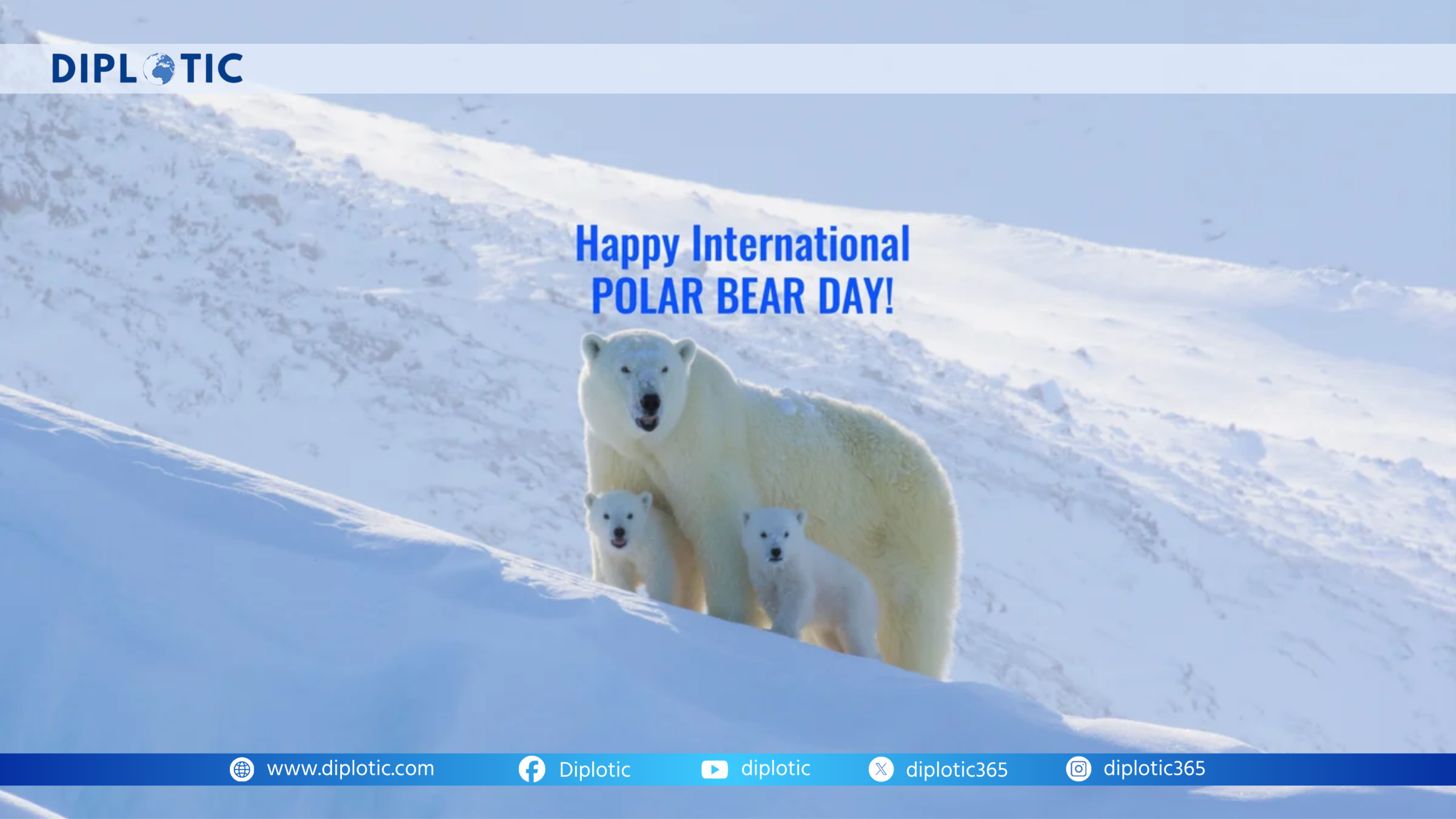
On February 27, the world marks International Polar Bear Day, a time dedicated to raising awareness about the conservation challenges facing these majestic Arctic creatures . The timing is deliberate: it coincides with the period when polar bear mothers and cubs are nestled in their snow dens, the most vulnerable phase of their lives . This year, conservationists are focusing on protecting these denning areas and ensuring that polar bear families have the best possible chance of survival . But for residents of Mumbai, Dhaka, Lahore, and Kolkata, this day might seem distant, even irrelevant. What do polar bears, living thousands of kilometers away on shrinking Arctic sea ice, have to do with the daily struggles of South Asia’s urban millions—the choking smog, the unprecedented floods, the erratic monsoon rains that drown crops one year and fail the next?
The answer, increasingly clear to climate scientists, is that the connection is not only real but profound. The accelerating melt of Arctic sea ice, driven by global greenhouse gas emissions, is directly influencing weather patterns across South Asia . The same pollutants that cloud the skies over Delhi and Lahore—black carbon, methane, and other short-lived climate pollutants—are simultaneously accelerating warming in the Arctic and degrading air quality at home . On this International Polar Bear Day, understanding why Arctic conservation matters is not just an exercise in global solidarity. It is an urgent lesson in self-preservation for the nearly two billion people who call South Asia home.
What Is International Polar Bear Day and Why Does It Matter?
International Polar Bear Day was established by Polar Bears International to coincide with the denning season, when mother bears and their newborn cubs are most in need of protection . Born in December, the cubs emerge from their dens in February and March, following their mothers onto the sea ice to learn essential survival skills . This period is critical: fewer than half of polar bear cubs survive to adulthood, and during years of poor sea ice conditions, there may be no surviving cubs at all .
The day serves multiple purposes. It raises awareness about the challenges polar bears face in a warming Arctic, where sea ice—their primary hunting platform—is disappearing at an alarming rate. It mobilizes support for conservation efforts, including protecting denning areas from industrial disruption and funding research into polar bear ecology . And it connects people around the world to the broader issue of climate change, using the polar bear as an iconic symbol of the consequences of a warming planet . Zoos and conservation organizations host educational events, scientists share their research through social media, and individuals are encouraged to take action, from reducing their carbon footprint to supporting conservation organizations .
But the significance of the day extends far beyond the Arctic. The forces that threaten polar bear survival—rising temperatures, melting ice, disrupted ecosystems—are global in origin and global in consequence. The greenhouse gas emissions that warm the Arctic come from every corner of the world, including South Asia’s rapidly industrializing cities. And the effects of that warming are now circling back to affect the very regions producing those emissions.
How Does Arctic Ice Melt Affect South Asian Weather?
The connection between Arctic ice and South Asian weather is not intuitive, but it is increasingly well-documented by scientific research. The Arctic is warming nearly four times faster than the global average, a phenomenon known as Arctic amplification . As sea ice disappears, it exposes dark ocean water that absorbs more solar radiation, further accelerating warming in a self-reinforcing cycle. This dramatic change in the Arctic is not isolated; it ripples through the global climate system, affecting weather patterns thousands of kilometers away.
A 2025 study published in Environmental Research Letters provides compelling evidence that Arctic sea-ice decline causes intense summer monsoon precipitation events over South Asia under greenhouse warming . The researchers found that enhanced Arctic sea-ice melt increases “mid-latitude waviness” and intensifies atmospheric circulation patterns that strengthen the subtropical high over East Asia. This, combined with La Niña-like conditions in the Pacific, enhances mean summer monsoon precipitation over South Asia. Crucially, the enhanced energy in the tropics and anomalous mid-latitude intrusions create conditions conducive to moisture convergence and intense precipitation events .
India’s own research station in the Arctic, Himadri, has been monitoring these changes since 2008 . Scientists at the National Centre for Polar and Ocean Research (NCPOR) have documented how the reduction of sea ice in the central Arctic region causes increased rainfall in central and northeastern India, while low sea ice in the Barents-Kara Sea delays the onset and intensity of the monsoon . A long-term paleoclimate study found that warm Arctic conditions were linked to intense rainfall over the Indian subcontinent, while cold conditions were associated with weak rain spells over the past 1,000 years .
The practical implications are already visible. In 2025, India experienced one of its most devastating monsoon seasons in recent memory. Seasonal rainfall was 8 percent above normal, but that statistic masked widespread destruction: breached embankments, collapsed bridges, ruined harvests, and entire villages marooned . From cloudbursts in the Himalayas to inundated lowlands in Bengal, from flooded cotton fields in Maharashtra to waist-deep water on the streets of Kolkata, the scale of devastation was national . In Punjab, farmers watched their basmati rice harvests rot in waterlogged fields. In Andhra Pradesh, families scrambled onto rooftops as the Godavari River rose. Kolkata recorded its heaviest 24-hour rainfall since 1988, killing at least 12 people . These are not isolated accidents; they are the new normal in a climate system disrupted by Arctic change.
What Role Does Air Pollution Play in This Connection?
The link between Arctic ice melt and South Asian weather is not the only connection. The very air that South Asians breathe is also contributing to both problems through a class of pollutants known as short-lived climate pollutants (SLCPs) or “super pollutants” . These include black carbon, methane, tropospheric ozone precursors, and hydrofluorocarbons (HFCs). They are called “short-lived” because they remain in the atmosphere for a much shorter time than carbon dioxide, but their warming potential is many times greater.
Black carbon, produced by diesel engines, brick kilns, and the burning of agricultural waste, is particularly problematic. When deposited on snow and ice in the Arctic, it darkens the surface, increasing absorption of solar radiation and accelerating melt . The same black carbon that chokes the lungs of Delhi residents, that forced the cancellation of international sporting events due to “extreme pollution,” is literally darkening the Arctic and hastening the disappearance of polar bear habitat .
South Asia is a global hotspot for air pollution . The region is home to 17 of the world’s 30 most polluted cities, and Pakistan ranks as the third most polluted country globally . Delhi, Lahore, Dhaka, and Peshawar regularly vie for the title of the world’s most polluted major city, with PM2.5 concentrations frequently exceeding 20 times the World Health Organization’s safe limit . The Indo-Gangetic Plains form one of the world’s most toxic airsheds, a vast region where pollution from India and Pakistan mixes and circulates, oblivious to national borders .
The Earth Commission has now quantitatively validated the regional “safe limit” for air pollution over South Asia, confirming that exceeding certain levels of airborne particles increases the risk of severe drought in India . Using climate modeling, researchers determined that an aerosol optical depth (AOD) of 0.25 would lead to a 10 percent reduction in summer monsoon rainfall, while an AOD of 0.50 would lead to a 20 percent reduction . The current annual mean AOD is 0.14. Reaching 0.25 would require an increase in aerosol loading by a factor of 2.7, a scenario that could lead to major and persistent droughts affecting nearly two billion people . Some high-emission climate scenarios project aerosol levels reaching an AOD of 0.69 by 2050, which could reduce mean summer monsoon rainfall by 30 percent .
The mechanism is complex but increasingly understood. Aerosols weaken the South Asian monsoon through two key processes. “Fast adjustments” occur when aerosols block sunlight, cooling the land surface while warming the upper atmosphere, enhancing atmospheric stability and suppressing cloud formation. “Slow responses” involve changes in sea surface temperatures that alter large-scale atmospheric circulation, creating sinking air over South Asia that suppresses convective activity . Whether the aerosols are reflective (like sulfates) or absorbing (like black carbon), the result is the same: reduced rainfall .
Why Should South Asian Cities Care About Polar Bears?
For residents of South Asian cities, the connection to polar bears may still seem abstract. But the chain of causation is direct and consequential. The fossil fuels burned to power vehicles, generate electricity, and manufacture goods in South Asian cities release greenhouse gases that warm the Arctic. That warming melts sea ice, disrupting atmospheric circulation patterns that intensify monsoon rains and increase flood risk. The same combustion processes release black carbon and other pollutants that degrade local air quality, harm human health, and accelerate Arctic melt when transported northward. The pollutants that force international athletes to withdraw from tournaments in Delhi are the same pollutants darkening Arctic ice .
The economic stakes are enormous. South Asia’s agriculture, which employs hundreds of millions of people and feeds billions, depends on the predictability of the monsoon. Erratic rains, whether in the form of droughts or floods, destroy crops, disrupt supply chains, and push farmers into debt. The 2025 floods in Punjab threatened basmati rice supplies, with potential price increases affecting consumers across the region and beyond . Urban infrastructure, already strained by rapid population growth, is ill-equipped to handle the kind of flooding that submerged Kolkata streets or washed away bridges in Uttarakhand. Disaster response systems are overwhelmed, and the costs of reconstruction mount with each passing year.
There is also a question of equity. The poorest and most vulnerable communities bear the brunt of these climate impacts. Farmers with small landholdings, urban slum dwellers in flood-prone areas, and daily wage workers whose livelihoods depend on stable weather patterns have the least capacity to adapt. Their suffering is directly linked to emissions and pollution generated by more affluent consumers and industries, often in the same cities where the wealthy retreat to air-conditioned apartments while the streets flood outside.
What Can Be Done to Address These Connected Crises?
The interconnected nature of these problems suggests that solutions must also be interconnected. Addressing Arctic ice melt and South Asian air pollution are not separate tasks but two fronts in the same battle. Mitigation strategies for super pollutants must be integrated into broader air quality management frameworks to ensure efficiency and maximize impact . Both air pollutants and super pollutants share common sources—energy, transport, industry, agriculture—making siloed approaches ineffective .
The World Bank has called for a coordinated “airshed-based approach” to air pollution in South Asia, recognizing that isolated national actions cannot fight forces that do not recognize borders . The Indo-Gangetic Plains function as a single airshed, and pollution from one country affects its neighbors. Similarly, short-lived climate pollutants demand coordinated regional responses because their impacts on health, climate, and water resources transcend national boundaries .
Mitigation of super pollutants offers immediate, high-impact benefits. Targeted reductions in black carbon and methane can quickly improve health outcomes, curb near-term warming, and slow cryosphere loss, delivering co-benefits for climate resilience and water security . An integrated approach enables coordinated regional action, reduces duplication of efforts, and accelerates progress toward national clean air goals and international commitments like Nationally Determined Contributions (NDCs) and Sustainable Development Goals (SDGs) .
India’s engagement with the Arctic also has diplomatic value. The country became an observer in the Arctic Council in 2013, joining a club where Russia, the United States, and China all jostle for influence . Sustaining research stations like Himadri is not just about scientific prestige; it is about survival. The data collected by Indian scientists in Svalbard feeds directly into the climate models that attempt to predict the monsoon . For farmers in Punjab, cotton growers in Latur, shopkeepers in Kolkata, and orchardists in Uttarkashi, what happens at Himadri may decide whether their crops ripen or rot, whether their businesses survive or fail, whether their families stay dry or wade through floodwaters .
What Does This Mean for the Future of South Asia?
The evidence is now overwhelming: what happens in the Arctic no longer stays in the Arctic . The accelerating melt of sea ice, driven by global emissions, is reshaping weather patterns across South Asia. The pollutants that cloud the region’s skies are simultaneously warming the planet and darkening Arctic ice. The fate of polar bears and the fate of South Asian farmers are bound together by the same invisible threads of atmospheric physics and global commerce.
This understanding should transform how we think about both problems. Arctic conservation is not a luxury for wealthy nations to fund out of environmental guilt; it is a necessity for the entire planet, including the millions of South Asians whose lives depend on stable monsoon rains. Similarly, cleaning up South Asia’s air is not just a public health measure, though the health benefits alone justify the effort; it is also a climate action that slows Arctic warming and protects global weather systems.
On this International Polar Bear Day, as conservationists focus on protecting mothers and cubs in their snow dens, residents of South Asian cities might pause to consider their own connection to these distant creatures. The same emissions that threaten polar bears with extinction are making the monsoon more dangerous, the air more toxic, and the future more uncertain. Protecting polar bears means protecting the climate system that sustains them—and us. In that shared vulnerability lies an opportunity for shared action, one that could benefit both the Arctic’s majestic predators and the two billion people who call South Asia home.




