

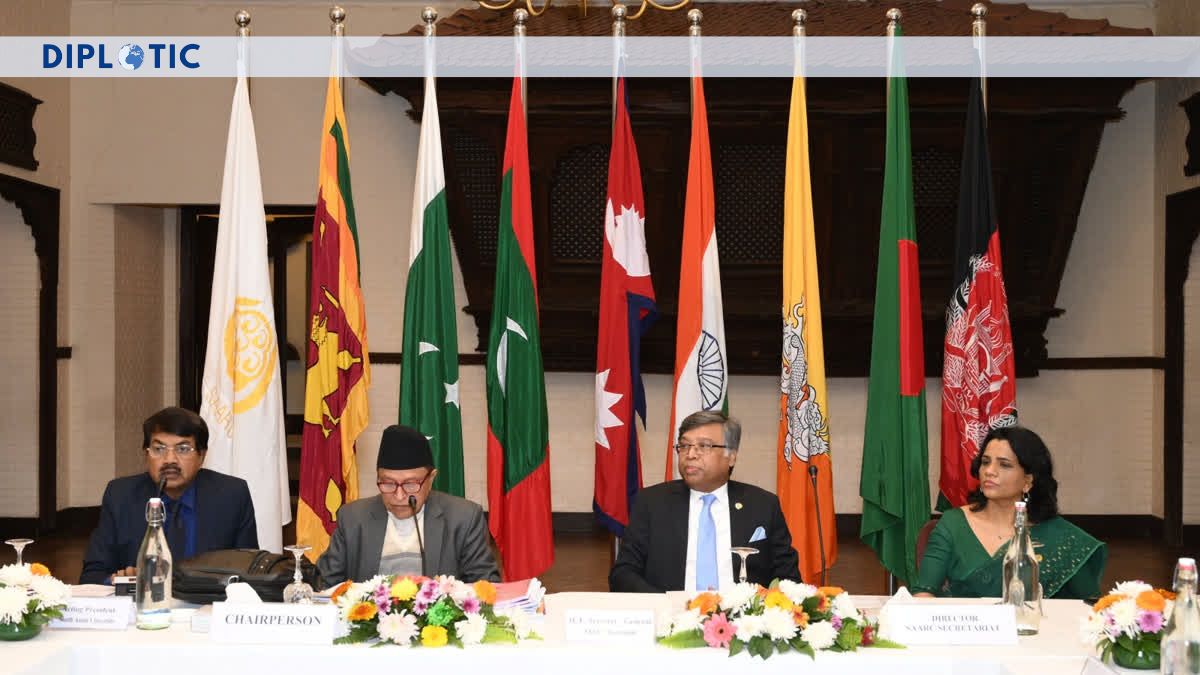
Can SAARC be revived in 2026? Explore the powerful opportunities, persistent political tensions, economic barriers, and new regional strategies shaping the future of South Asian cooperation.
A Region at a Crossroads
South Asia is home to nearly a quarter of the world’s population, yet it remains one of the least economically integrated regions globally. At the center of its unrealized regional potential stands the South Asian Association for Regional Cooperation (SAARC). Established in 1985, SAARC was envisioned as a transformative platform to promote economic growth, cultural exchange, and strategic collaboration among its member states.
Four decades later, the organization faces a sobering question: Can SAARC be revived, or has regional cooperation permanently shifted elsewhere?
With renewed geopolitical competition, economic volatility, climate challenges, and shifting alliances, 2026 has reignited debate over whether South Asia can finally unlock the power of regional unity.
The Original Vision of SAARC
SAARC was founded by seven countries India, Pakistan, Bangladesh, Sri Lanka, Nepal, Bhutan, and the Maldives with Afghanistan joining later in 2007. Its goal was ambitious: foster collective self-reliance, accelerate economic development, and strengthen regional peace.
The organization launched initiatives such as the South Asian Free Trade Area (SAFTA), cultural exchange programs, and cooperation frameworks in agriculture, poverty alleviation, and education. In theory, SAARC held enormous potential to mirror the success of organizations like the European Union.
Yet implementation lagged behind ambition. Political tensions repeatedly stalled summits, agreements remained underutilized, and intra-regional trade stagnated at low levels compared to other global blocs.
The India–Pakistan Impasse
Any serious discussion about SAARC’s revival must confront its most persistent obstacle: strained relations between India and Pakistan.
India, the region’s largest economy, plays a central role in SAARC’s functionality. However, diplomatic crises between India and Pakistan have repeatedly derailed scheduled summits and cooperative initiatives.
The 2016 Islamabad summit was canceled following heightened tensions, effectively freezing high-level engagement within SAARC. Without sustained dialogue between its two largest members, institutional progress has remained limited.
Regional cooperation cannot flourish when bilateral disputes dominate the political landscape. This structural vulnerability has weakened SAARC’s credibility over time.
Economic Integration: A Missed Opportunity
South Asia’s intra-regional trade remains strikingly low, hovering at roughly 5% of total trade, compared to over 60% within the European Union and nearly 25% within ASEAN.
Barriers include high tariffs, restrictive visa policies, weak transport connectivity, and non-tariff obstacles. Although SAFTA aimed to reduce trade barriers, implementation has been uneven.
Smaller economies such as Nepal and Bhutan often express interest in deeper regional connectivity, while Bangladesh has shown strong export growth potential within the region. However, political mistrust and bureaucratic inertia continue to undermine economic momentum.
A revived SAARC would require bold structural reforms, harmonized trade standards, and significant infrastructure investment to unlock its latent economic power.
Climate Change: A Shared Existential Challenge
Ironically, the most compelling case for SAARC’s revival lies in a shared crisis: climate change. South Asia faces rising sea levels, glacial melt, extreme heatwaves, and devastating floods.
Regional cooperation on climate adaptation, disaster management, and renewable energy could yield transformative benefits. Countries like Bangladesh and the Maldives are on the frontlines of climate vulnerability, while Nepal and Bhutan manage critical Himalayan water systems.
Collective action on water sharing, disaster early-warning systems, and sustainable energy grids could redefine SAARC’s purpose. Climate diplomacy may provide neutral ground for rebuilding trust.
The Rise of Alternative Regional Platforms
While SAARC stagnated, alternative regional frameworks gained traction. The Bay of Bengal Initiative for Multi-Sectoral Technical and Economic Cooperation (BIMSTEC) emerged as a prominent platform linking South and Southeast Asia.
India has increasingly prioritized BIMSTEC engagement, partly because it excludes Pakistan, reducing diplomatic friction. Infrastructure connectivity projects and security cooperation have advanced more swiftly within this framework.
Additionally, China’s Belt and Road Initiative has expanded economic influence in South Asia, reshaping regional alignments and investment flows.
The rise of alternative platforms raises a critical question: Does SAARC still hold strategic relevance in an evolving geopolitical landscape?
Digital Connectivity and Youth Demographics
Despite political divisions, South Asia shares powerful demographic and technological trends. The region has one of the world’s youngest populations and rapidly expanding digital adoption.
Cross-border digital trade, fintech collaboration, and e-commerce integration represent untapped opportunities. Shared language similarities and cultural ties could accelerate digital cooperation.
A modernized SAARC could pivot toward digital economy integration, cybersecurity collaboration, and startup exchanges. By focusing on future-oriented sectors rather than traditional trade disputes, the organization might redefine its strategic identity.
Trust Deficit and Institutional Weakness
One of SAARC’s deepest structural challenges is the trust deficit among member states. Decisions often require unanimous consent, giving individual countries veto power that can stall progress.
Unlike the European Union, SAARC lacks strong supranational authority or enforcement mechanisms. Its secretariat has limited capacity to drive independent policy momentum.
Institutional reform would be essential for revival. Streamlining decision-making processes and empowering technical bodies could enhance efficiency and credibility.
Without reform, even renewed political will may struggle to translate into measurable outcomes.
New Pushes for Engagement
Recent diplomatic signals suggest cautious openness to limited functional cooperation. Track-two dialogues among academics, business leaders, and civil society groups are exploring incremental collaboration.
Some policymakers argue that sector-specific cooperation such as public health coordination, energy trade, or climate adaptation could bypass broader political disputes.
The COVID-19 pandemic briefly demonstrated that emergency coordination within SAARC remains possible. Virtual summits and shared health initiatives indicated that pragmatic collaboration can occur during crises.
A phased revival strategy, focused on practical outcomes rather than grand declarations, may offer the most realistic path forward.
Geopolitical Pressures and Strategic Calculations
Global power competition is reshaping South Asia’s strategic environment. The United States, China, and regional powers are vying for influence through infrastructure investment, defense partnerships, and trade agreements.
In this context, a cohesive regional bloc could strengthen South Asia’s collective bargaining power. Fragmentation weakens negotiating leverage in global forums.
However, geopolitical rivalries also risk deepening divisions. Member states increasingly align with different global powers, complicating unified regional positions.
SAARC’s revival will depend partly on whether member states perceive collective strength as strategically advantageous.
Conclusion: Revival or Reinvention?
Can SAARC be revived? The answer lies somewhere between cautious optimism and structural realism.
The obstacles, political tensions, economic fragmentation, and institutional weakness are formidable. Yet the incentives of climate resilience, economic integration, demographic advantage, and strategic autonomy are equally powerful.
A full-scale revival may require political breakthroughs that remain uncertain. However, targeted, issue-based cooperation could gradually rebuild trust and relevance.
SAARC’s future may not resemble its original vision. Instead, it could evolve into a pragmatic platform focused on climate, digital trade, and development partnerships.
South Asia stands at a critical inflection point. Whether through revival or reinvention, regional cooperation remains a powerful but underutilized force capable of transforming one of the world’s most dynamic regions.




