

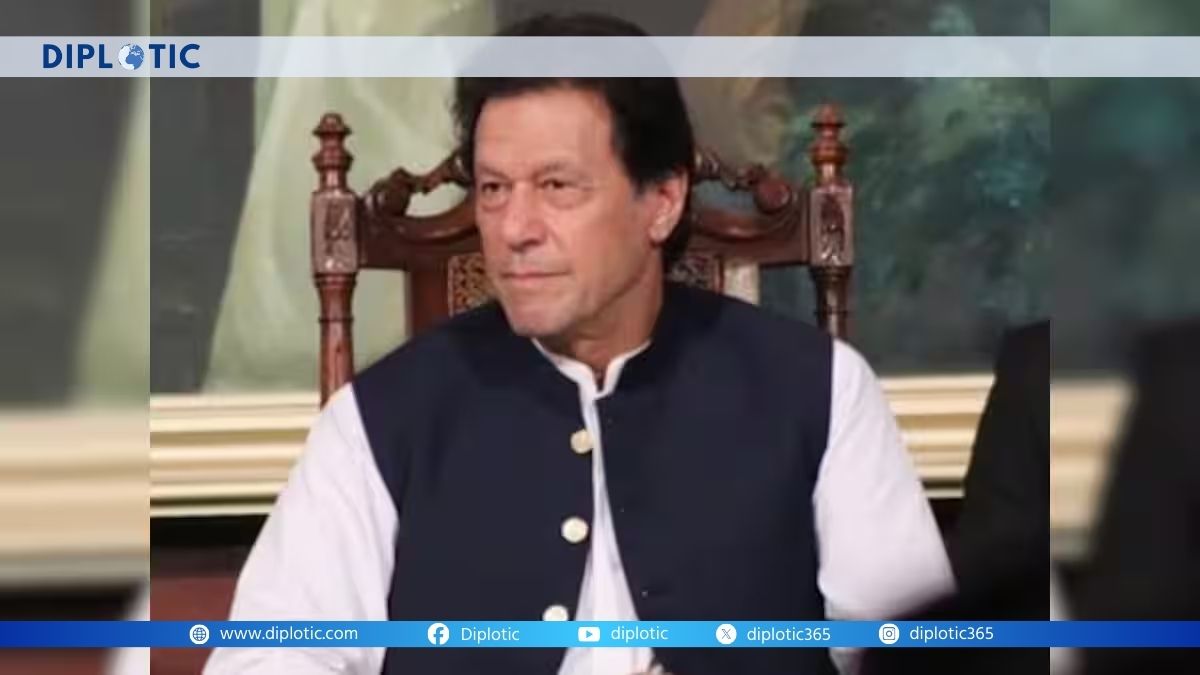
For weeks, the health of one man has gripped a nation. Imran Khan, the jailed former prime minister of Pakistan and founder of the Tehreek-e-Insaf party, has been at the center of a fierce medical and political dispute. His lawyers and family claimed he had lost 85 percent of the vision in his right eye due to neglect and delayed treatment. The government insisted he was receiving proper care. Now, a medical board appointed by the Supreme Court has submitted its report, offering a clinical assessment that cuts through the competing narratives. The board, which examined Khan at Adiala Jail on February 15, 2026, reported a significant improvement in his condition. According to the findings, vision in his right eye has improved from 6/36 to 6/9, while his left eye maintains 6/6 vision with glasses . But the release of this report has not ended the controversy. It has only deepened the battle over who controls the story of his health—and what it means for Pakistan’s volatile political landscape.
What Did the Medical Board Actually Find in Its Examination?
The two-member medical board, comprising Professor Dr. Nadeem Qureshi from Al-Shifa Trust Eye Hospital and Professor Dr. Muhammad Arif Khan from the Pakistan Institute of Medical Sciences (PIMS), conducted a detailed ophthalmic assessment of Khan inside the prison . Their findings paint a clinical picture that differs sharply from the alarming accounts previously circulated. The report, officially submitted to the authorities and shared with the Supreme Court, documented that the anterior segment of both eyes was normal and the cornea clear. It noted mild intragel hemorrhage at the edge of the right eye and moderate retinal hemorrhage in all four quadrants . Importantly, the swelling in the macula of the right eye—a critical area for sharp vision—was subsiding, with macular thickness reduced from 550 to 350 microns. This reduction in swelling is considered a clear sign of recovery .
The vision measurements themselves tell a story of marked improvement. Without glasses, Khan’s right eye vision was recorded at 6/24, and his left eye at 6/9. With corrective lenses, the right eye improved to 6/9, and the left eye reached a healthy 6/6 standard . This represents a significant change from earlier claims that he had lost most of the vision in his right eye. The board outlined ongoing medication and treatment, prescribing Nevanac and Systane Ultra eye drops for both eyes and Cosopt drops specifically for the right eye . It recommended further diagnostic steps, including OCT angiography and fundus fluorescein angiography, after the completion of anti-VEGF therapy . Crucially, the board made no recommendation for shifting Khan to a hospital, indicating that his condition could be managed within the prison setting with the current treatment plan .
Why Were There Such Conflicting Claims About His Condition?
The divergence between the medical board’s findings and the narrative presented by Khan’s legal team and family is stark. Salman Safdar, Khan’s lawyer who was appointed as amicus curiae by the Supreme Court, submitted a report earlier in February stating that Khan had told him he had only 15 percent vision remaining in his right eye . According to Safdar’s account, Khan claimed that until October 2025, he had normal vision in both eyes, after which he began experiencing persistent blurred vision. He reported this to the jail superintendent but alleged no action was taken . When he suffered a sudden and complete loss of vision, an ophthalmologist from PIMS diagnosed a blood clot and administered treatment. But Safdar quoted Khan as saying that despite this, he was left with only 15 percent vision . Safdar also noted that Khan appeared visibly distressed, with watery eyes throughout their meeting .
Khan’s sister, Aleema Khanum, has been equally forceful in her statements, terming the situation “extremely concerning and unacceptable” that the government resisted allowing his personal doctor and family representative to be present during examinations . She declared that without such oversight, the family categorically rejects any government claims about his condition. Dr. Asim Yousuf, Khan’s personal physician, took a more measured but still cautious position. After a conference call with the doctors who examined Khan, he stated that while they reported improvement, he could neither confirm nor deny it because he had not examined Khan himself or spoken to him directly . He requested that all future assessments be conducted at Shifa International Hospital, a facility with international standards, where Khan could receive the best possible care under his supervision .
How Has the Government Responded to the Medical Report and Ongoing Protests?
Government officials have seized upon the medical board’s findings to counter criticism and justify their handling of Khan’s health. Law Minister Azam Nazeer Tarar stated that Khan has normal 6/6 vision in one eye, while the other achieves about 70 percent vision with glasses . He emphasized that the specialist medical team expressed satisfaction with the treatment and had briefed opposition leaders and Khan’s personal doctors . Parliamentary Affairs Minister Tariq Fazal Chaudhry stressed that the examination was conducted with “complete transparency,” with all necessary facilities provided on site. He noted that the government had informed Khan’s family they could be present, but no representative showed up .
Parliamentary Secretary Barrister Daniyal Chaudhry went further, addressing the political implications directly. He stated unequivocally that sending Khan abroad or granting him bail is not possible unless there is a life-threatening illness with legal evidence to support it . He cited provisions in the Qanun-e-Shahadat, the law of evidence, explaining that such relief applies only in those extreme circumstances. Moreover, he linked any potential reconsideration to political behavior, suggesting that if Khan’s party stopped talking about “destabilizing Pakistan” or “setting Pakistan on fire,” the situation could be reassessed . He dismissed claims of malnutrition or inadequate care as propaganda and insisted that all necessary medical facilities are available to Khan in jail . This linkage of medical care to political conduct has further inflamed tensions.
Meanwhile, opposition protests continue. For days, lawmakers from Khan’s party and the broader opposition alliance, Tehreek Tahaffuz-e-Aiyeen Pakistan (TTAP), have held sit-ins outside Parliament House and K-P House . PTI Chairman Barrister Gohar Ali Khan has stated that the protests will continue until their demands are met. He insisted that Khan’s health should not be treated as a political issue and that he should receive the best possible facilities, just like any Pakistani citizen . The party demands that Khan be treated at a hospital suggested by his family and personal physician, with their supervision over the process . K-P Chief Minister Sohail Afridi indicated that if the government actually ensures treatment under proper supervision, the sit-in will end .
What Broader Questions Does This Dispute Raise for Pakistan?
This medical controversy is about much more than one man’s eyesight. It has become a flashpoint for the deep political divisions that have defined Pakistan since Khan’s ouster from power in 2022. For Khan’s supporters, his health struggles symbolize what they see as a vindictive state apparatus willing to neglect even the basic medical needs of its most prominent political prisoner. The delay in treatment, the exclusion of his personal doctors, and the government’s reluctance to transfer him to a hospital all feed a narrative of persecution . The street protests and the party’s refusal to accept government findings without independent verification reflect a profound lack of trust in state institutions.
For the government, the episode is a test of its ability to manage a politically sensitive prisoner while maintaining both legal standards and public order. By agreeing to the Supreme Court-mandated medical board and allowing Khan to speak with his sons in the United Kingdom, it has complied with judicial directives . Officials present the medical report as evidence of their good faith and competence. They frame the opposition’s continued protests as political blackmail, suggesting that the goal is not genuine concern for health but the extraction of political concessions . The government’s position is that it has fulfilled its responsibilities and that further demands, such as hospital transfer or bail, are not medically justified .
The Supreme Court now holds the medical report and must determine its implications for the broader legal context. The court had intervened after receiving alarming reports about Khan’s health, and the submission of the board’s findings fulfills its directive . However, the continuing political agitation and the refusal of Khan’s party to accept the report’s conclusions suggest that the legal resolution may not bring political peace. The question of who controls access to Khan—his personal physicians or state-appointed doctors—remains unresolved . For the public, the competing claims create confusion and deepen polarization. In a country already struggling with economic instability and political uncertainty, the fate of one prisoner’s eyesight has become a mirror reflecting larger struggles over justice, power, and truth. The improvement in his vision, according to one set of doctors, has not yet improved the nation’s blurred view of what is really happening behind prison walls.




