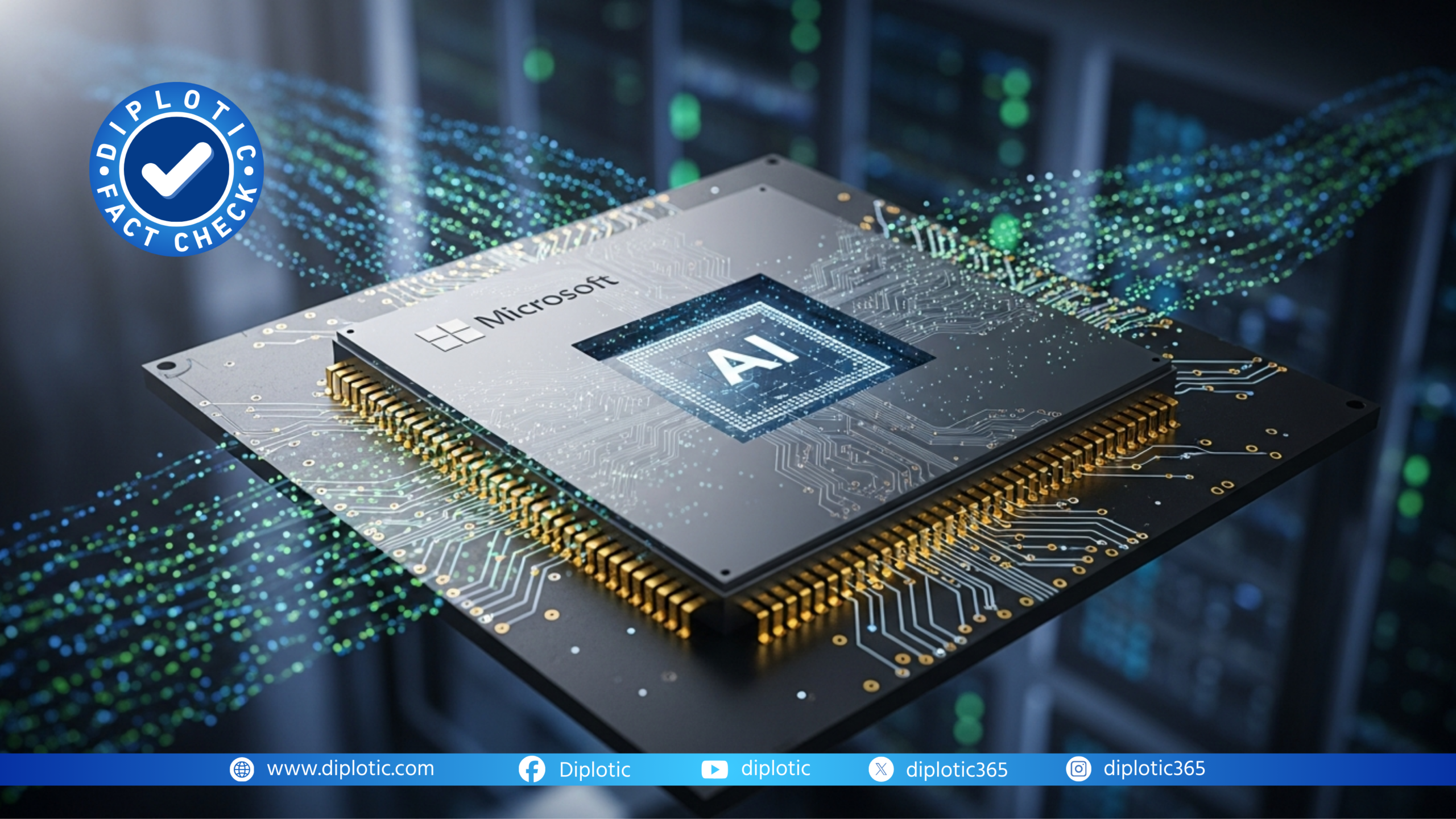
Microsoft’s entry into custom AI hardware has gained attention in 2026. The company unveiled Maia 200, its second-generation AI accelerator, in late January. This chip targets inference—the phase where trained AI models generate responses like chat outputs or image creations. It joins a trend where big cloud providers build their own silicon to cut costs and reduce reliance on outside suppliers.
Nvidia dominates the AI chip market, especially for training large models and general workloads, thanks to its GPUs and the CUDA software ecosystem. Media and social posts have called Maia 200 a “real threat” or even the start of Nvidia’s decline. This matters because Nvidia’s success drives stock markets, tech investments, and AI progress. If custom chips from Microsoft, Google, Amazon, and others erode Nvidia’s position, it could change pricing, innovation, and who controls AI infrastructure.
This article examines 4–5 major claims from announcements, expert views, and online discussions. It draws on technical details from Microsoft, comparisons in tech reports, and balanced analyses from financial and industry sources. It adds context from the AI hardware race, highlights contradictions, and explores implications for users and the industry.
Claim 1: Maia 200 Offers Superior Performance and Directly Challenges Nvidia’s Top Chips
Microsoft claims Maia 200 delivers over 10 petaFLOPS in FP4 (low-precision) compute and over 5 petaFLOPS in FP8, with 216GB of HBM3e memory at 7 TB/s bandwidth, built on TSMC’s 3nm process, and a 750W power draw.
Technical specs show Maia 200 excels in inference efficiency. Microsoft states it provides three times the FP4 performance of Amazon’s latest Trainium and better FP8 results than Google’s newest TPU. It also offers 30% better performance per dollar than prior hardware in Microsoft’s fleet.
However, direct comparisons to Nvidia are limited. Nvidia’s Blackwell series (like B200 or GB200) focuses on both training and inference, with higher raw compute in some areas and broader versatility. Maia 200 is optimized for inference only, not general-purpose or heavy training tasks. Experts note that Nvidia’s ecosystem, including CUDA, gives it an edge in developer adoption and flexibility.
A contradiction: while Maia 200 beats other custom chips in specific metrics, it does not match Nvidia’s full range of capabilities or market availability.
Verdict: Partially true. It outperforms rival custom chips in targeted inference benchmarks but does not directly surpass Nvidia’s flagship GPUs in overall versatility or ecosystem support.
Claim 2: Maia 200 Is Already Running Major Models Like GPT-5.2 at Scale, Signaling Nvidia’s Decline
Some reports and posts say Maia 200 is live in Azure, powering OpenAI models and reducing Nvidia dependency.
Microsoft confirms Maia 200 is deployed in select Azure regions for inference on models including recent OpenAI ones. It aims to lower costs for services like Copilot and Bing.
Yet, Microsoft still uses Nvidia GPUs heavily for training and many workloads. The chip targets cost-sensitive inference, not replacing Nvidia entirely. Analysts point out that hyperscalers like Microsoft build custom silicon to optimize internal operations, not to compete broadly with Nvidia’s merchant market.
Historically, similar efforts (Google’s TPUs since 2016) have captured internal share but left Nvidia dominant in external sales.
Trade-off: custom chips save money for cloud giants but lack the broad software support that keeps developers tied to Nvidia.
Verdict: Misleading. It handles real production inference, but Nvidia remains central for training and many external uses—no sign of decline.
Claim 3: Custom Chips Like Maia 200 Will Erode Nvidia’s Market Share and Pricing Power
Discussions suggest growing custom silicon from hyperscalers threatens Nvidia’s 90%+ dominance.
Evidence supports gradual pressure. Microsoft, Amazon, Google, and Meta invest in ASICs for efficiency in their clouds. Projections show custom chip shipments rising sharply, potentially fragmenting the market by 2027–2028.
Experts agree this could reduce demand for Nvidia in cloud inference and force competitive pricing. However, Nvidia’s strength lies in its platform: software tools, developer ecosystem, and leadership in training. Custom chips are closed to outsiders, limiting their reach.
Geopolitically and economically, diversification reduces single-supplier risks, but Nvidia counters with innovations like Blackwell and Rubin architectures.
Wider implication: long-term shift toward specialized hardware, but Nvidia’s moat endures through openness and scale.
Verdict: True with nuance. It contributes to long-term erosion in specific segments, but not a near-term collapse of dominance.
Claim 4: Media and Social Posts Overhype Maia 200 as the “End of Nvidia”
Viral claims label it a “war” declaration or Nvidia’s downfall.
Many sources describe it as notable but not disruptive. Nvidia stock showed little change after the announcement, reflecting investor calm. Analysts emphasize that while competitive, Maia 200 tightens the backdrop without breaking Nvidia’s advantages.
Social media often amplifies drama for engagement, turning internal efficiency gains into existential threats.
Contradiction: hype ignores that hyperscalers remain Nvidia’s biggest customers, balancing competition with partnership.
Verdict: True. Much coverage inflates impact beyond technical reality.
Claim 5: Maia 200 Represents a Fundamental Shift in AI Hardware Toward Custom Solutions
The launch fits a pattern where cloud providers control more of the stack.
This holds. The “hyperscaler war” pushes efficiency amid rising AI costs. Maia 200 focuses on inference economics—key as usage grows faster than training.
Yet, training complex models still favors Nvidia’s flexible GPUs. The shift is incremental, not revolutionary.
Ethically, it raises questions about open vs. closed ecosystems: custom chips limit choices for smaller players.
Verdict: True. It signals acceleration toward specialized hardware, but Nvidia adapts and retains core strengths.
In summary, Microsoft’s Maia 200 is a strong step in custom AI silicon, offering excellent inference efficiency and cost savings for Azure. It outperforms other hyperscaler chips in key areas and reduces internal reliance on Nvidia for certain tasks. However, it is not a direct, immediate threat to Nvidia’s overall dominance. Nvidia’s advantages in software, training performance, and broad market access remain firm. Media hype often overstates the chip’s reach, turning a strategic internal tool into a perceived game-changer.
This reflects the maturing AI hardware landscape: competition grows, efficiency matters more, and diversification spreads. For developers and businesses, it means more options and potentially lower costs over time. Nvidia faces tighter margins in some segments but continues leading innovation. The real story is evolution, not replacement—custom chips like Maia 200 complement rather than conquer the ecosystem. (Word count: 1,256)