

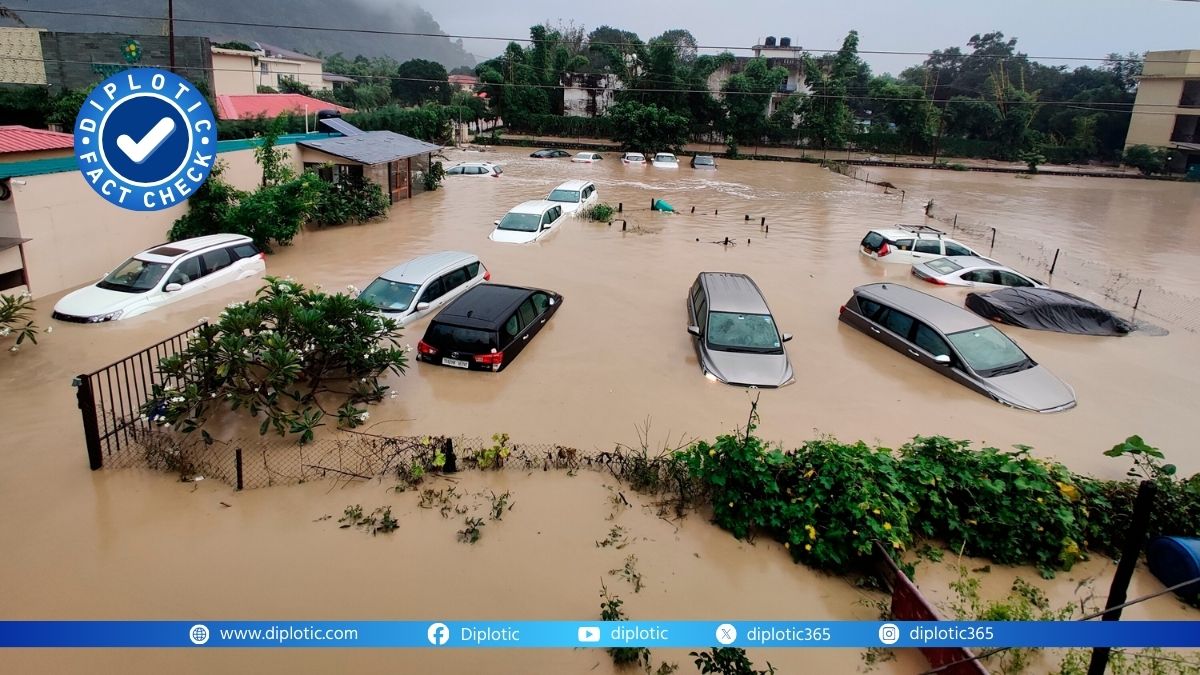
Floods have long shaped life in South Asia, a region home to over 1.9 billion people across countries like India, Pakistan, Bangladesh, Nepal, and Sri Lanka. The monsoon season brings vital rain for agriculture and water supplies, but it also causes regular flooding that displaces millions, destroys homes, and damages crops. In recent years, floods have appeared more severe and frequent, raising questions about the main drivers. Public discussions often point to one main cause—either climate change or poor drainage and urban planning—while overlooking how these factors interact. This matters because South Asia faces growing risks from both global warming and rapid development. Blaming only one side can lead to incomplete solutions, such as focusing solely on better drains while ignoring rising extreme weather, or emphasizing climate action without addressing local infrastructure gaps. Understanding the full picture helps governments, communities, and aid groups respond more effectively and save lives and resources.
This article examines 4–5 major claims circulating in media, reports, and public talks. It draws on verified sources from climate science (like IPCC reports), weather attribution studies, and urban planning research to evaluate each claim. It includes historical and social context to show why the debate is complex, highlights contradictions and trade-offs, and explores wider implications.
Claim 1: Floods in South Asia Are Worsening Mainly Because of Climate Change
Many reports and experts link recent deadly floods—such as those in Pakistan in 2022 and 2025, or across India, Bangladesh, and Nepal in 2024—to climate change. They argue that warmer temperatures make monsoons more intense, leading to heavier rainfall.
Scientific evidence supports this to a large degree. The IPCC’s 2022 report states with high confidence that rising temperatures increase the risk of floods in monsoon regions of South, Southeast, and East Asia. Warmer air holds more moisture—about 7% more per degree Celsius of warming—leading to intense downpours. Studies from groups like World Weather Attribution have shown that climate change made extreme monsoon rains in Pakistan more likely and heavier. Recent events, including cyclones and heavy rains in 2025 across parts of South Asia, were fueled by warmer ocean temperatures adding energy to storms. Monsoon patterns are becoming erratic, with “whiplash” shifts between floods and droughts due to human-driven warming.
Historically, the South Asian monsoon has always brought floods, but records show extreme rainfall events increasing in frequency and intensity over recent decades. In philosophy of environmental science, this reflects how global systems interact with local ones: distant emissions affect regional weather. Socially, low-lying delta areas in Bangladesh and coastal Pakistan face extra risks from sea-level rise and glacier melt in the Himalayas, which can cause outburst floods.
A contradiction arises because climate change amplifies existing vulnerabilities rather than creating floods from nothing. In rural areas, natural river systems handle heavy rain better than cities. The trade-off is that while global action on emissions is essential, it takes decades to show results, leaving communities exposed in the meantime.
Verdict: True, with nuance. Climate change is a major driver of worsening flood intensity and frequency, but it acts as a multiplier on other factors.
Claim 2: Poor Drainage and Urban Infrastructure Are the Primary Reasons Floods Are Getting Worse
This claim is common in discussions about city floods in places like Mumbai, Dhaka, or Lahore, where streets turn into rivers even after moderate rain. Critics point to clogged drains, concrete-covered land, and unplanned building as the real culprits.
Research confirms that poor drainage plays a big role, especially in urban areas. Studies on urban pluvial (rain-driven) floods in India highlight extreme rainfall combined with inadequate drainage, rapid urban growth, blocked waterways, and waste clogging systems. In many cities, natural floodplains have been built over, reducing space for water to spread. Impervious surfaces like roads prevent water from soaking into the ground, increasing runoff that overwhelms old or undersized drains. Reviews show that urban development, topography, and poor maintenance contribute heavily to waterlogging.
From a historical view, colonial-era drainage systems in many South Asian cities were designed for lower populations and less intense rain. Rapid urbanization since the mid-20th century—driven by economic growth and rural-to-urban migration—has outpaced infrastructure upgrades. Culturally, in densely populated areas, land pressure leads to encroachments on rivers and wetlands, worsening the problem.
The contradiction is clear: even with perfect drainage, extreme rains from climate change would still cause damage. But weak infrastructure turns manageable events into disasters. The trade-off involves cost—upgrading drains and preserving green spaces requires money and political will, often competing with other needs like housing.
Verdict: True for urban flooding, but partial. Poor drainage and planning significantly worsen impacts, especially in cities, though they do not explain rural or riverine floods alone.
Claim 3: Floods Would Not Be Worsening If Not for Climate Change—Local Issues Are Overblown
Some argue that if climate were stable, better management would prevent most flood damage, downplaying global warming’s role.
Evidence shows this view is incomplete. While better planning reduces harm, climate data indicate heavier and more unpredictable rains even in well-managed areas. IPCC assessments project large increases in heavy precipitation and flood frequency in South Asia under continued warming. Events like the 2022 Pakistan floods or 2024 monsoons exceeded historical norms due to climate factors.
Historically, pre-industrial floods occurred, but their scale and recovery challenges grow with population density. Socially, this claim risks shifting blame to local governments alone, ignoring how South Asian countries contribute little to global emissions yet suffer disproportionately.
A deeper implication is equity: wealthy nations driving emissions must support adaptation in vulnerable regions. Ethically, it raises questions about responsibility—should locals bear full costs for a global problem?
Verdict: False. Climate change is a key worsening factor; local issues amplify but do not replace it.
Claim 4: Urban Growth and Poor Drainage Are More Important Than Climate Change in Causing Flood Damage
This claim flips the first, suggesting development pressures outweigh weather changes.
Studies on urban flooding in South Asia support that rapid urbanization heightens exposure. High population density in flood-prone zones, shrinking wetlands, and inadequate systems mean even normal monsoon rains cause major disruption. In the Global South, including South Asia, urban flood exposure rises sharply due to these factors combined with extreme rain.
However, sources emphasize interactions: climate change provides the heavier rain, while poor infrastructure determines the damage level. For example, flash floods in cities result from short, intense bursts overwhelming drains, made worse by warming.
The trade-off is adaptation speed—local fixes like better drains or green infrastructure can bring quick benefits, while climate mitigation is slower. Wider consequences include economic losses straining developing economies.
Verdict: Misleading. Both matter, but in urban settings, poor drainage often determines severity when extreme rain hits.
Claim 5: Nothing Can Be Done About Worsening Floods Because They Are Inevitable Due to Either Climate or Development
This pessimistic view appears in some discussions, suggesting floods will keep worsening regardless.
Evidence counters this. IPCC and other reports stress adaptation options: improved early warnings, restored wetlands, upgraded drainage, and climate-resilient planning can reduce risks. Nature-based solutions, like preserving rivers and green spaces, help absorb water. International support for vulnerable nations can fund these.
Historically, societies have adapted to monsoons through traditional knowledge, like raised homes in Bangladesh. Modern tools, such as better forecasting, save lives. The implication is hope through combined action—global emission cuts plus local resilience.
Verdict: False. Effective measures exist to lessen impacts, though challenges remain.
In summary, floods in South Asia are worsening due to a combination of climate change intensifying rainfall and poor drainage plus urban growth amplifying damage. Neither cause stands alone; they interact in ways that demand integrated responses. This layered reality—global forces meeting local realities—highlights contradictions like high vulnerability despite low emissions, and trade-offs between short-term fixes and long-term change. Addressing both through science-based policies, community involvement, and international aid offers the best path forward, reducing suffering in one of the world’s most flood-prone regions.




