
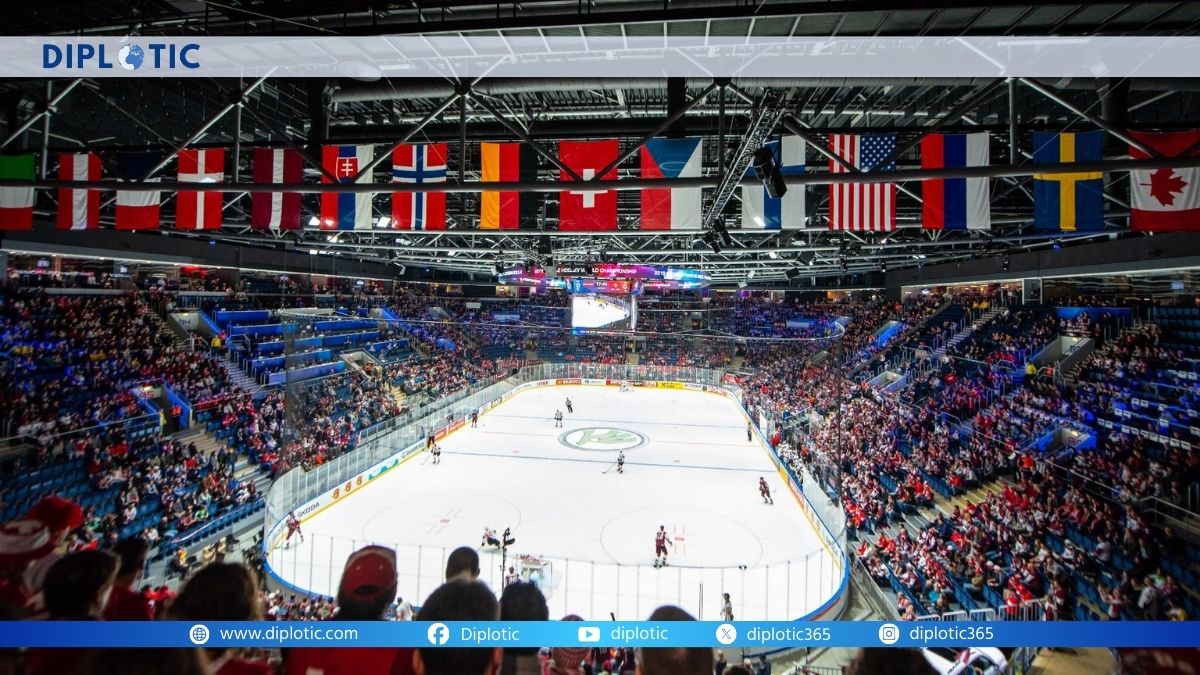
The scoreboard tells a simple story: the United States defeated Slovakia 6–5 at the 2026 IIHF World Junior Championship. But the game itself was anything but simple. It was chaotic, uneven, at times uncomfortable, and yet deeply revealing. This was not a clean win built on control or dominance. It was a survival test. For long stretches, the defending champions were chasing the game, struggling with structure, and reacting rather than dictating play. And yet, when the game demanded resolve, they found it.
In tournaments like the World Juniors, results often hide deeper truths. A narrow win can expose more than a blowout. This matchup did exactly that. Slovakia exposed gaps in the American defensive game, capitalized on mistakes, and showed that the talent gap between traditional powers and emerging nations continues to narrow. At the same time, the United States displayed a quality that often separates contenders from champions: the ability to stay alive when things fall apart.
This was also a game shaped by absence. Without top defender Cole Hutson, the U.S. blue line lacked its usual speed and clarity. Breakouts were slower. Transitions were messy. Slovakia noticed and pressed hard. What followed was a high-scoring, error-filled contest that forced Team USA to rely not on structure, but on character, adaptability, and individual brilliance. Whether that formula is sustainable remains an open question.
How Slovakia Controlled the Chaos Early On
From the opening faceoff, Slovakia played with intent. They did not sit back or wait for mistakes. They attacked. The early goals were not flukes or lucky bounces. They were the product of direct skating, confident puck movement, and a clear plan to pressure the U.S. defense. Tobias Pitka’s opening goal came off a clean rush, executed with calm and precision. Tomas Chrenko’s power-play strike shortly after showed how quickly Slovakia could punish defensive lapses.
For the United States, the first period exposed a familiar weakness when facing aggressive forechecking teams. Without Hutson’s ability to carry the puck out of danger, exits became predictable. Turnovers followed. Slovakia capitalized not just with goals, but with momentum. Each U.S. response was met by another Slovak push, restoring the lead again and again.
The second period did little to calm the game. Shorthanded goals on both sides reflected a lack of discipline and structure. Neutral-zone mistakes turned into immediate danger. The game flowed end to end, with very little sustained control by either team. Slovakia’s ability to repeatedly regain the lead spoke to their growing confidence at this level. They did not look overwhelmed by the crowd or the stakes.
Importantly, Slovakia’s performance reinforced a larger trend in international junior hockey. Programs outside the traditional power circle are no longer content with moral victories. They expect to compete, to lead, and to win. Chrenko’s tournament-leading goal total and Pitka’s leadership reflected a team that believes it belongs in late-stage games. For much of this contest, Slovakia played like the sharper, more organized side.
Why James Hagens Became the Difference
If Slovakia represented structure and belief, James Hagens represented inevitability. The Boston College forward did not dominate the game from start to finish. Instead, he waited, absorbed pressure, and struck when the moment mattered most. His two goals came at turning points, not as isolated highlights, but as momentum shifts that changed the emotional balance of the game.
Hagens’ first goal finally gave the United States its first lead after multiple failed attempts to stay ahead. His second, just 18 seconds into the third period, was decisive in tone. It signaled that the U.S. was done chasing and ready to dictate. These were not flashy goals built on solo rushes. They were goals born from awareness, positioning, and anticipation.
Equally important was Hagens’ leadership role. Wearing an “A” in the absence of Hutson, he became a stabilizing force in a game that threatened to spiral. His post-game comments focused less on personal success and more on team identity. That framing matters. At the World Juniors, leadership is often as important as skill, especially when defending a title.
Still, relying on individual brilliance raises questions. Hagens can change games, but championships are rarely won on rescue missions alone. The fact that the U.S. needed multiple comeback efforts suggests vulnerabilities that stronger opponents, like Sweden, will be eager to exploit. Hagens delivered when needed, but the conditions that made his heroics necessary deserve scrutiny.
What the Absence of Cole Hutson Revealed
Cole Hutson’s absence was not just noticeable. It was instructive. His ability to escape pressure, jump-start offense, and calm defensive situations has been central to the U.S. game plan. Without him, the defense looked hesitant. Puck movement slowed. Gaps widened. Slovakia’s forwards took advantage, forcing hurried decisions and capitalizing on loose coverage.
This does not reflect a lack of talent on the U.S. blue line, but rather a reliance on specific skill sets. Hutson’s style masks certain weaknesses. When he is gone, those weaknesses surface quickly. This raises an important question for the rest of the tournament: how adaptable is this team when key pieces are unavailable?
Dakoda Rheaume-Mullen filled in admirably, but the overall defensive structure lacked cohesion. Communication breakdowns led to odd-man rushes. Goaltender Caleb Heil faced heavy traffic and a high shot volume. While he ultimately outdueled his counterpart, the defensive environment placed unnecessary strain on him.
For a team with championship ambitions, these are areas that must tighten quickly. Sweden, Canada, and other top contenders will not need repeated invitations to exploit similar gaps. Hutson’s potential return will help, but a deeper solution lies in system discipline, not personnel alone.
Does This Win Strengthen or Complicate the U.S. Title Case?
On paper, the United States is now three-for-three in group play. That matters. Points accumulate. Confidence builds. A showdown with Sweden for first place awaits. From a standings perspective, this comeback was valuable. From an evaluation perspective, it was complex.
The positive takeaway is resilience. The U.S. refused to fold, even when trailing multiple times. The team showed emotional control late, killing penalties, managing clock pressure, and responding to physical play without losing focus. Those qualities are essential in knockout games.
The concern lies in repetition. Falling behind repeatedly is not a sustainable habit. High-risk hockey can produce exciting wins, but it also increases volatility. Against elite opponents, one or two mistakes often decide games. The U.S. made far more than that here.
This match may ultimately serve as a turning point, either as a warning that led to necessary adjustments or as a preview of trouble ahead. Much will depend on how the coaching staff responds. Do they view this as proof of character alone, or as evidence that structural fixes are needed?
In the end, the U.S. did what champions often must do: survive a bad night. But survival is only the first step. The deeper test comes next, when resilience must be paired with control. Whether this comeback becomes a foundation or a footnote will be decided in the games still to come.