

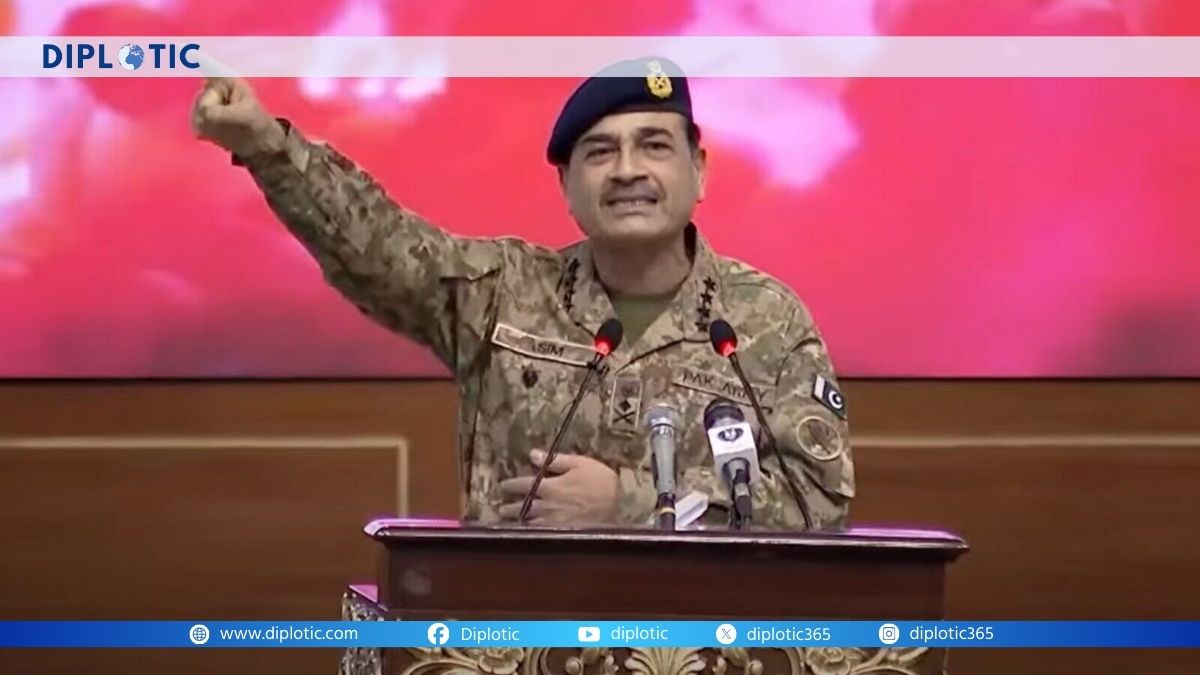
Saudi Arabia’s decision to award its highest national honor to Pakistan’s army chief, Field Marshal Asim Munir, is more than a ceremonial gesture. It comes at a moment of shifting regional security, renewed defense cooperation, and quiet but serious strategic calculations across the Middle East and South Asia. The King Abdulaziz Medal of the Excellent Class, conferred during Munir’s visit to Riyadh in December 2025, signals trust, alignment, and long-term intent. While official statements speak of brotherly ties and shared goals, the timing and context raise important questions. Why now? What does this say about the evolving Saudi-Pakistani relationship? And how might this affect regional stability in a time of growing geopolitical strain?
This development must be understood not as a standalone honor, but as part of a larger pattern that includes a new defense pact, public remarks about nuclear cooperation, and Pakistan’s rising military influence after recent regional conflicts. The award places Pakistan’s military leadership at the center of Saudi Arabia’s security thinking and reflects how both countries are repositioning themselves in an uncertain global order.
A symbolic honor with strategic weight
The King Abdulaziz Medal is Saudi Arabia’s most prestigious civilian and military honor, reserved for individuals who have made exceptional contributions to the kingdom. By granting it to Field Marshal Asim Munir, Saudi Arabia is recognizing not only his personal military career but also Pakistan’s role as a long-standing security partner. This matters because Saudi Arabia has many allies, but very few that it trusts with core defense and strategic concerns.
Pakistan’s military has historically played a quiet but important role in Saudi security planning. Pakistani troops have been stationed in the kingdom in advisory and training roles, and Islamabad has repeatedly affirmed its commitment to protecting Islam’s holy sites in Mecca and Medina. These assurances carry deep religious and political meaning for Saudi leaders, especially during times of regional tension.
Munir’s elevation to the newly created post of chief of defense forces has further increased his influence. The role is designed to improve coordination among Pakistan’s army, navy, and air force, making him the single most powerful uniformed officer in the country. Honoring him now suggests that Riyadh views Pakistan’s military leadership as stable, reliable, and capable of delivering on long-term commitments.
The timing also aligns with broader Saudi efforts to strengthen ties with key Muslim-majority states that can provide security cooperation without public controversy. As Saudi Arabia balances relations with the United States, China, and regional rivals, Pakistan offers a partner that is militarily strong, politically flexible, and deeply invested in Islamic solidarity.
The defense pact and sensitive signals
The award cannot be separated from the defense pact signed earlier in 2025 between Saudi Crown Prince Mohammed bin Salman and Pakistani Prime Minister Shehbaz Sharif. That agreement formalized cooperation in defense, training, and counterterrorism. While the full details remain undisclosed, public comments from Pakistani officials added a new layer of sensitivity to the relationship.
In September, Pakistan’s defense minister stated that Islamabad’s nuclear program “will be made available” to Saudi Arabia if needed under the defense pact. Although later clarifications sought to soften the statement, it drew international attention. Pakistan is the only Muslim-majority country with nuclear weapons, and any suggestion of nuclear sharing, even indirect, carries serious implications.
Saudi Arabia has long insisted that it does not seek nuclear weapons, but it has also said it would not remain passive if regional rivals acquired them. Against this backdrop, closer defense ties with Pakistan take on added meaning. The honor given to Munir may reassure Saudi leadership that Pakistan’s military command structure is disciplined, centralized, and aligned with Saudi security interests.
At the same time, this relationship raises concerns among global observers about arms control and regional escalation. Saudi Arabia and Pakistan both insist their cooperation is defensive and stabilizing. Yet the lack of transparency invites speculation. The award, therefore, serves a dual purpose: it rewards loyalty while signaling seriousness to allies and rivals alike.
Pakistan’s military rise and regional relevance
Field Marshal Asim Munir’s prominence has grown sharply in 2025, particularly after Pakistan’s confrontation with India earlier in the year. The four-day border conflict, which followed an Indian operation targeting militants inside Pakistan, brought the two nuclear-armed neighbors dangerously close to a wider war. Pakistan’s military leadership claimed success in repelling Indian actions, a narrative that strengthened Munir’s standing at home and abroad.
The situation eased only after U.S. President Donald Trump announced a full and immediate ceasefire. Even so, the episode reinforced Pakistan’s image as a frontline state in South Asian security. For Saudi Arabia, this matters. A partner that can manage high-stakes conflict, maintain internal cohesion, and navigate international pressure is valuable in a volatile region.
Munir’s visit to Saudi Arabia was part of a broader tour of Islamic countries, marking his first foreign engagement since assuming his new post. During meetings in Riyadh, discussions reportedly covered regional security, defense coordination, and evolving geopolitical challenges. Saudi officials praised Munir’s professionalism and strategic outlook, language that suggests confidence in his leadership style.
Pakistan’s military has often been the most stable institution in a country marked by political turbulence. For Saudi Arabia, which prioritizes predictability in its security partners, this stability is a key asset. The award thus reflects not only gratitude for past cooperation but also expectations for future alignment in a changing regional landscape.
Economics, security, and mutual dependence
Beyond defense, the Saudi-Pakistani relationship is deeply rooted in economic and social ties. Saudi Arabia has repeatedly provided financial assistance to Pakistan during times of economic distress, including help in avoiding default on foreign debt payments. Millions of Pakistani workers live and work in the kingdom, sending vital remittances back home.
This economic link reinforces the security partnership. Pakistan benefits from Saudi financial support and employment opportunities for its citizens. Saudi Arabia benefits from Pakistan’s military expertise and political backing within the Muslim world. The relationship is not equal in economic terms, but it is mutually reinforcing.
The honor awarded to Munir can also be read as a message of continuity. Saudi Arabia is signaling that, despite changes in leadership or policy debates within Pakistan, its trust in the Pakistani military remains firm. For Islamabad, this recognition strengthens the army’s international legitimacy at a time when civil-military relations remain sensitive at home.
At a broader level, the award reflects how regional powers are relying more on bilateral arrangements as global institutions struggle to address security challenges. Saudi Arabia and Pakistan are choosing depth over breadth, focusing on trusted partnerships rather than broad alliances.
Conclusion: honor as message, not just medal
Saudi Arabia’s decision to honor Field Marshal Asim Munir is not simply about past service or ceremonial diplomacy. It is a carefully timed signal about shared priorities, mutual trust, and future cooperation. In a year marked by conflict, economic strain, and shifting alliances, the gesture underscores how both countries see each other as anchors of stability within their respective regions.
The past explains part of this bond, built on decades of defense ties, economic support, and religious connection. The present gives it urgency, shaped by new defense agreements and regional tensions. The future will test it, as questions around security, nuclear risk, and geopolitical alignment grow more complex.
In honoring Pakistan’s army chief, Saudi Arabia is speaking not only to Islamabad but to the wider world. It is saying that, in uncertain times, old partnerships still matter, and trusted military relationships remain central to how states seek peace, security, and influence.




