

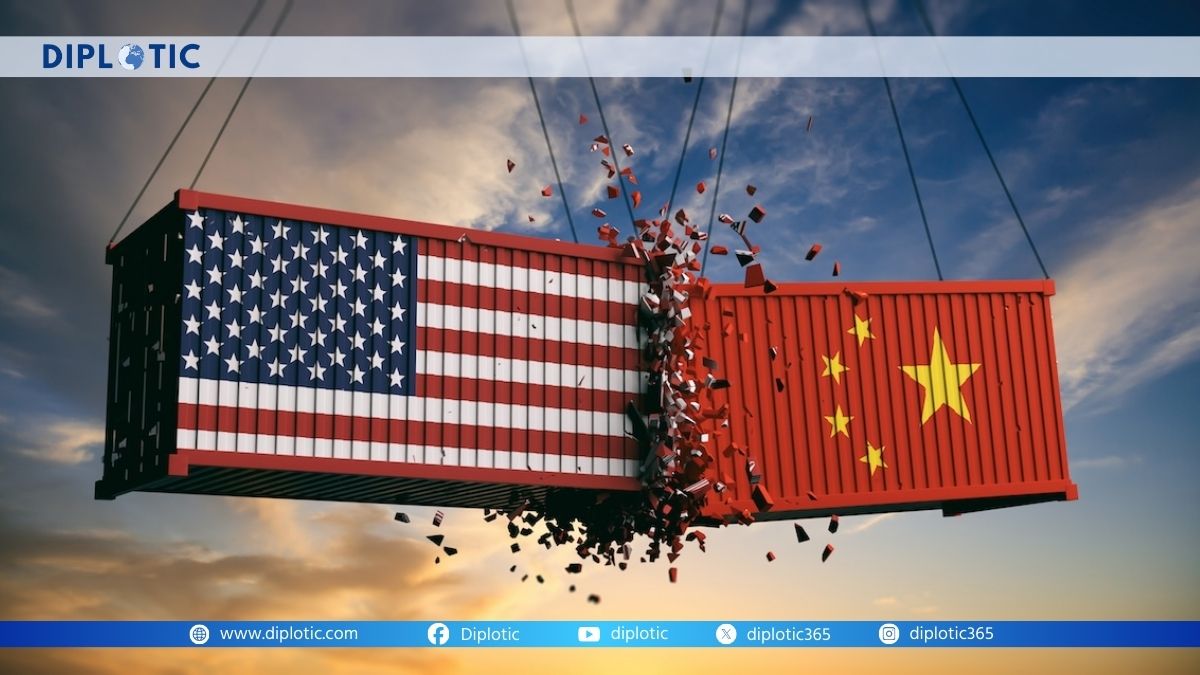
For decades, the United States has held the undisputed title of the world’s largest economy. Its massive output of goods and services, measured by Gross Domestic Product (GDP), has been the benchmark for global economic power. In recent years, however, China’s rapid ascent has fueled a persistent and heated debate: has China finally overtaken the United States in total economic size? The answer, it turns out, is not a simple yes or no. It depends entirely on how you measure economic output. Different calculation methods, each with its own logic and purpose, paint strikingly different pictures of the economic balance between the two superpowers. This is not merely an academic exercise; the answer shapes perceptions of global influence, drives policy decisions, and defines the narrative of 21st-century geopolitics. Understanding the nuances behind the numbers is essential to grasping the true nature of the economic competition defining our era.
What Does the Traditional Market-Rate Method Show?
The most common method used in headlines and financial markets is to measure a country’s GDP in its own currency and then convert it to U.S. dollars using current market exchange rates. By this straightforward metric, the United States remains firmly in the lead. As of recent data, China’s GDP converted at market exchange rates stands at approximately 77% of the U.S. level. Interestingly, this gap has not consistently narrowed in recent years; it has even widened at times due to fluctuations in the value of China’s currency, the yuan, relative to the dollar. This method has the advantage of simplicity and reflects the immediate value of an economy in global financial terms. It answers the question: how much U.S. dollars would China’s annual output be worth if exchanged on today’s market? However, critics argue this method is highly sensitive to short-term currency volatility, which can distort the real, underlying comparison of productive capacity. A strong dollar can make the U.S. economy appear disproportionately large, while a weak yuan can make China’s seem smaller, regardless of what is actually being produced within their borders.
Why Do Economists Often Prefer Purchasing Power Parity (PPP)?
To overcome the distortion of exchange rates, economists frequently use a measure called Purchasing Power Parity (PPP). This method does not convert output at the financial market rate. Instead, it uses a common set of international prices to value the same basket of goods and services in both countries. The goal is to compare the real volume of output, asking how much a dollar (or yuan) can actually buy in terms of food, housing, machinery, and services within each country. When this meticulous adjustment is made, using authoritative data like the Penn World Tables, the result flips dramatically. By the PPP measure, China’s total GDP has surpassed that of the United States since around 2016. The latest estimates suggest China’s economy, measured at PPP, is now over 124% the size of America’s. This makes intuitive sense: while a haircut or a bus ride may cost far less in China than in the United States, the sheer volume of such services provided is enormous due to China’s vast population. PPP is considered the “gold standard” for comparing average living standards across nations, as it reflects what residents can actually afford. For total output, it emphasizes the colossal scale of production and consumption inside China’s borders.
Does a Larger PPP GDP Mean Greater Economic Power?
If China’s economy is larger by PPP, does that automatically translate to greater aggregate economic power on the world stage? Many economists caution that it might not, due to a phenomenon known as the Balassa-Samuelson effect. This theory observes that price levels are generally lower in less developed countries. The leading explanation is that these countries are relatively less efficient at producing sophisticated, high-tech tradable goods (like advanced semiconductors or commercial aircraft), which are expensive everywhere. Instead, their economies are tilted toward lower-tech goods and, especially, inexpensive local services. When the PPP calculation applies high international prices to these abundant, cheap domestic services, it significantly boosts the measured size of a lower-income economy. However, this inflated number may not reflect true economic power. Power—the ability to project influence, build advanced militaries, set technological standards, and lead in high-value industries—arguably depends more on a nation’s capacity in high-productivity, tradable sectors. A country’s ability to produce millions of affordable haircuts adds to its citizens’ welfare and its internal economic scale, but contributes less to its geopolitical heft than its ability to produce cutting-edge technologies that the world needs and must pay a premium for. Therefore, using raw PPP GDP to gauge power may overstate the capability of economies still catching up in high-value sectors.
Can We Adjust the Measure to Better Reflect Power?
To create a measure more aligned with the concept of aggregate economic power, some analysts propose adjusting the PPP figure. The idea is to discount the portion of GDP that is inflated by the Balassa-Samuelson effect—the cheap services and low-tech goods that are plentiful because the country is less efficient elsewhere. One straightforward method is to statistically estimate this effect across countries and subtract it from the PPP calculation for lower-income economies. Applying this adjustment to China yields a fascinating result. The adjusted figure still shows China’s economy much larger than when measured at market exchange rates, but notably smaller than the raw PPP number. By this adjusted measure, China’s aggregate economic power in 2023 is estimated at roughly 91% of the United States’ level. This suggests that while China’s overall productive scale is immense and its living standards are rising, the structural composition of its output—with a larger share still in lower-value-added activities—means its translated economic power may not yet have overtaken that of the United States. This adjustment attempts to answer a different question: if both countries aimed to produce the same high-value mix of goods and services, what would their relative output be?
What Does This Mean for the Future of U.S.-China Rivalry?
The debate over measurement underscores a deeper truth about the nature of the economic competition. China’s undeniable achievement is its massive total output and its rapid growth, which has lifted hundreds of millions from poverty. Its economy operates on a continental scale. The United States’ enduring strength lies in its higher average productivity, its dominance in the most advanced technological and financial sectors, and the global reach of its currency. The “largest economy” title is therefore a race run on two different tracks. On the track of sheer volume of goods and services produced for domestic use (PPP), China is ahead. On the track of high-value output that commands premiums on global markets and fuels geopolitical influence, the United States likely retains an edge, though a narrowing one. The future contest will not be decided by a single statistic. It will hinge on whether China can successfully transition its economy up the value chain, boosting productivity and innovation across the board, and whether the United States can maintain its technological edge and dynamism. For now, the world is navigating a unique moment where economic size, living standards, and geopolitical power are distributed between two giants in complex and evolving ways, defying any single, simple ranking.




