

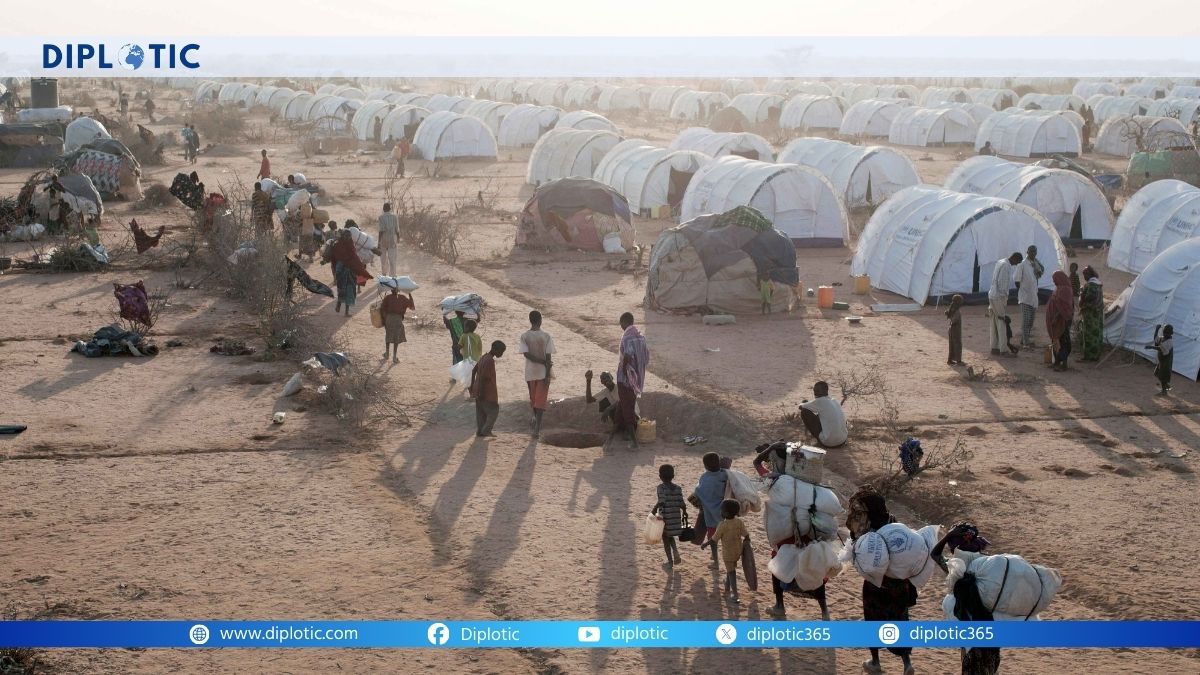
For decades, the United States stood as a global symbol of refuge, a nation built by immigrants that pledged safety to those fleeing persecution worldwide. From Europeans displaced by World War II to Southeast Asians escaping war in the 1970s, American resettlement efforts helped define humanitarian protection. This system, formalized by the Refugee Act of 1980, created an orderly process to vet and welcome vulnerable people. Today, that foundational identity is being profoundly tested and reshaped. The U.S. Refugee Admissions Program (USRAP), once a beacon, is now at the center of intense political debate, with its size, purpose, and very principles in flux. As global conflicts continue to force millions from their homes, the American response has become inconsistent, swinging dramatically between presidential administrations. These shifts raise a critical question: can the United States maintain a credible, humane refugee system while navigating deep domestic political divisions over immigration and national security?
How Has the U.S. Refugee Program Changed Over Time?
The American approach to refugees has never been static, but its modern evolution reveals a story of radical expansion followed by severe contraction. The creation of the USRAP in 1980 established the first permanent, standardized system, setting an annual admissions target of 50,000. Admissions surged in the program’s early years, welcoming over 200,000 refugees annually, largely from Southeast Asia. Throughout the late 20th century, the program adapted to global crises, accepting large numbers from the former Soviet Union and the Balkans. The September 11, 2001, attacks introduced a new era of heightened security scrutiny, causing a temporary pause and leading to more cautious admissions throughout the 2000s, though annual caps remained between 70,000 and 80,000. The modern era of dramatic fluctuation began with the Syrian civil war. In 2016, President Barack Obama raised the ceiling to address the crisis, proposing 110,000 admissions for the following year. This trend was abruptly reversed by President Donald Trump, who systematically slashed the annual cap each year of his first term, bringing it to a historic low of 15,000. President Joe Biden sought to restore the program, raising the cap to 125,000 and introducing private sponsorship options. Now, in his second term, President Trump has moved even more decisively, suspending the program upon taking office and later setting a new record-low ceiling of just 7,500 admissions for 2026. This rollercoaster of policy, dictated by shifting White House priorities, has created immense uncertainty for refugees waiting in peril and for the network of agencies that support them.
What is the Step-by-Step Process for Refugee Admission?
Gaining entry to the United States as a refugee is a lengthy, rigorous, and multi-layered process managed by a complex web of agencies. It is designed to be selective and secure. The journey typically begins with the world’s most vulnerable registering with the United Nations High Commissioner for Refugees (UNHCR) in a country outside their own. The UNHCR conducts an initial assessment and, if the person meets the strict international definition of a refugee—someone with a well-founded fear of persecution based on race, religion, nationality, political opinion, or social group—they may be referred to a U.S. Resettlement Support Center. From this point, the American vetting machinery engages. Applicants undergo in-depth interviews, and their biographical information is subjected to a series of intensive background checks by multiple U.S. national security agencies. This includes biometric screenings like fingerprint and iris scans, checks against global terrorist databases, medical examinations, and cross-referencing with past immigration and criminal history. The Department of Homeland Security’s U.S. Citizenship and Immigration Services officers have the final say on approval. Only after clearing every one of these hurdles is a refugee cleared for travel. The entire process is notoriously slow, often taking between eighteen months and two years. This thoroughness is a point of pride for the system’s defenders, who argue it ensures safety, but critics contend the bureaucracy is too slow to respond to urgent crises and leaves families in dangerous limbo for years.
Who Oversees Resettlement Within the United States?
Once a refugee is approved for entry, a separate but equally complex resettlement process begins, involving a partnership between federal agencies, states, local communities, and private charities. The U.S. State Department initially coordinates arrival through its Reception and Placement Program, which provides short-term support for housing, food, and essentials. After ninety days, primary responsibility shifts to the Department of Health and Human Services and its Office of Refugee Resettlement, which funds longer-term services like English language classes, job training, and cultural orientation. The on-the-ground work, however, is carried out by a national network of nine private, nonprofit resettlement agencies. These organizations, which include groups like the International Rescue Committee and Church World Service, have offices across the country. They are responsible for finding housing, enrolling children in school, helping adults find employment, and connecting families to medical care. Their effectiveness depends heavily on the federal admissions ceiling; when numbers are cut, these agencies are forced to lay off staff and close offices, eroding the national infrastructure for welcoming refugees. While the federal government has ultimate authority on where refugees are placed, resettlement agencies consult with local governments and community groups. This collaboration is crucial for successful integration but can become contentious, as seen when some state governors have attempted to refuse cooperation with resettlement efforts for political reasons.
How Significant is the Security Debate Around Refugee Admissions?
The question of security is the most politically charged aspect of the refugee debate. Critics of robust admissions often argue that the vetting process, despite its layers, cannot guarantee that dangerous individuals will not slip through. They point to isolated, high-profile cases where individuals with ties to refugee or asylum backgrounds were involved in terrorist plots. Proponents of the program counter with data showing that the risk is exceptionally low. Studies indicate that of the millions of refugees resettled since 1980, an extremely small number have been implicated in terrorism on U.S. soil, and the lethality of those attacks has been minimal compared to threats from other sources. They argue that the existing multi-year, multi-agency vetting process is the most stringent security screening for any category of person entering the United States—far more rigorous than for tourists, students, or other immigrants. The political reality, however, is that perceptions often outweigh data. Security concerns were a primary justification for the travel bans and refugee reductions during President Trump’s first term. The current administration’s focus on admitting a specific group—white South Africans—while cutting overall admissions, frames security and immigration policy through a lens of selectivity that critics argue prioritizes politics over a consistent, needs-based humanitarian standard.
What is the Future of U.S. Refugee Resettlement?
The future of the U.S. refugee program hangs in a precarious balance, pulled between humanitarian tradition and a potent political desire to restrict immigration. The current record-low admissions cap of 7,500 represents not just a numerical reduction but a philosophical reorientation. By prioritizing a narrow demographic group and suggesting that states should have greater power to refuse resettlement, the system is moving away from a universal, needs-based model. This creates several profound challenges. First, it abdicates global leadership at a time when the number of refugees worldwide is near record highs due to conflicts in Ukraine, Sudan, Afghanistan, and elsewhere. Second, it damages the domestic resettlement infrastructure; agencies cannot maintain staff and expertise if admissions remain so low, making it difficult to scale up again in the future. Finally, it raises fundamental questions about American values. Is the U.S. refugee system a tool of foreign policy and political preference, or is it a humanitarian commitment to protect the world’s most vulnerable, as envisioned in the 1980 law? The tension between these visions will define the program’s path. Without a return to a bipartisan consensus that recognizes both the security imperative and the humanitarian opportunity, the system risks becoming a shadow of its former self—a symbolic program that offers hope to only a tiny few while turning away from the vast majority of those in need.
The United States faces a defining choice. The refugee program built over four decades represents a significant investment in global stability and American moral standing. Dismantling it through drastic cuts and politicized priorities may satisfy short-term political objectives, but it carries long-term costs. It strains alliances, undermines international cooperation on migration, and forsakes a powerful tool of soft power. Most importantly, it abandons millions of innocent people trapped in war zones and refugee camps to an even more uncertain fate. The robust, secure vetting process exists and has proven its effectiveness. The question is whether the political will exists to use it at a scale that meets both America’s security interests and its historic role as a nation of refuge. The answer will determine not only the fate of desperate families abroad but also the character of the United States itself in the 21st century.




