

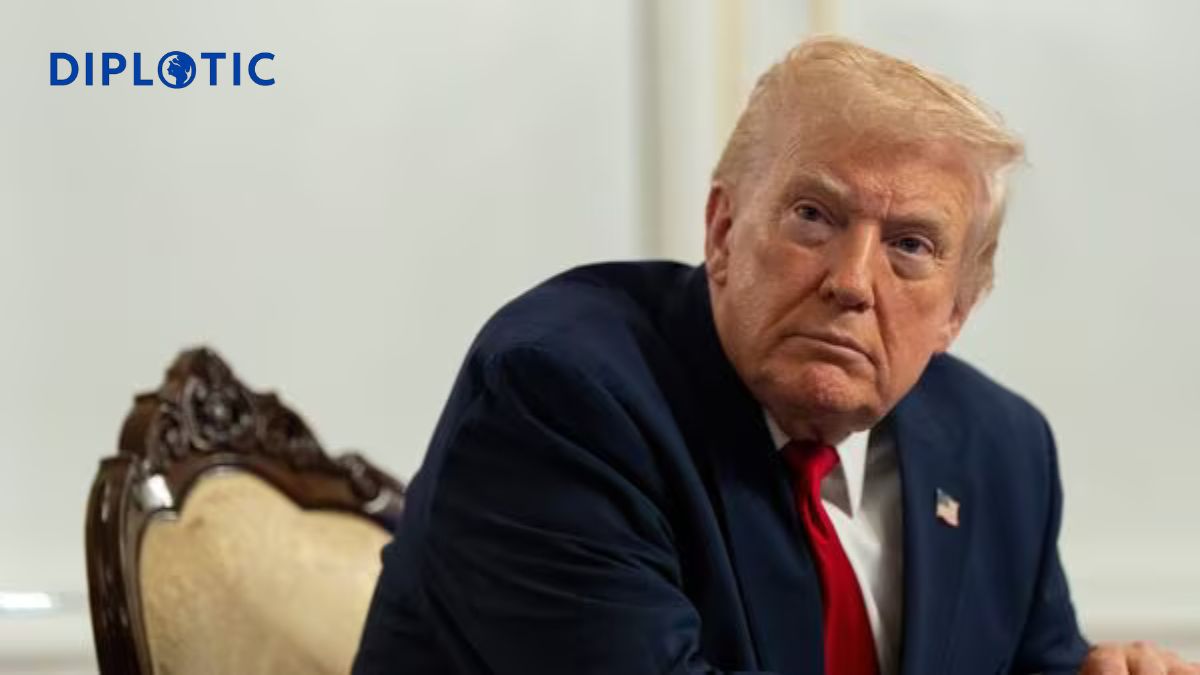
U.S. President Donald Trump’s recent vow to “permanently pause” migration from “Third World countries” has sent shockwaves globally. India is likely to be affected. This article breaks down what the ban actually covers, which countries are on the list, and why the term is misleading.
What Did Trump Announce In His Own Words
On November 28, 2025, the U.S. President declared a sweeping new immigration directive: the United States would “permanently pause migration from all Third World Countries.” He framed the decision as a corrective measure following a violent attack near the White House carried out, he said, by an Afghan national, which prompted renewed scrutiny of prior refugee and immigration policies.
Trump’s message, posted on his social platform, criticized previous administrations’ immigration admissions, stating that continued migration from certain countries had “weakened American society and strained its resources.” He further pledged to review green-card holders from “countries of concern,” end federal benefits for many noncitizens, and even deport individuals deemed a security threat or a “public charge.”
Despite these sweeping claims, Trump did not define which nations qualify as “Third World,” leaving the order ambiguous and open to broad interpretation.
What “Third World” Means And Why It Matters
The Cold War Legacy
The term “Third World countries” goes back to the Cold War era, coined by the French demographer Alfred Sauvy in the 1950s. At that time, the world was divided into three blocs:
First World: U.S.-aligned, industrial democracies.
Second World: Communist bloc led by the Soviet Union (and its allies).
Third World: Countries that were non-aligned neither Western nor Soviet, many of them former colonies in Asia, Africa, and Latin America.
Under that definition, the categorization had little to do with wealth or development: it was purely geopolitical alignment.
Modern Usage: Vague, Inconsistent, Politically Loaded
In contemporary discourse, “Third World” is often loosely used to refer to developing or economically disadvantaged countries, but this has no legal standing in U.S. immigration law or policy.
Global institutions such as the United Nations (UN) no longer use “Third World.” Instead, the UN classifies nations into categories like “Least Developed Countries” (LDCs), based on objective metrics like per capita income, economic vulnerability, and human development.
Because Trump offered no formal definition or list, the term now functions more as a political slogan than a precise classification, which raises uncertainty about who exactly is targeted.
Which Countries Are Likely Targeted Based on Existing Restrictions
While no official “Third World list” exists, the administration appears to be using as a baseline a previously issued travel-restriction list that targets 19 countries deemed high-risk for migration.
These 19 countries are:
Afghanistan, Myanmar, Burundi, Chad, Republic of the Congo, Cuba, Equatorial Guinea, Eritrea, Haiti, Iran, Laos, Libya, Sierra Leone, Somalia, Sudan, Togo, Turkmenistan, Venezuela, and Yemen.
Prior versions of the policy had imposed a full ban on immigrant and non-immigrant visas for nationals of 12 countries, including Afghanistan, Iran, Libya, Somalia, Sudan, and Yemen, and partial restrictions on the remaining seven (such as Laos, Burma, Togo, Venezuela, among others).
By tying the “Third World countries” label to this existing list, the administration has given a likely indicator of which nations are at risk, though the final scope could expand.
What About India? Is It on the Radar?
The short answer: there is no evidence that India is on any official list tied to the ban, and it is unlikely to be included, at least under the current publicly available parameters.
Why India Probably Isn’t Affected
- The U.S. has no legal definition of “Third World countries,” and hence no official list that includes India.
- India is not among the 19 high-risk countries currently flagged by the administration.
- In global classifications, India is considered a developing country, not one of the world’s poorest or least-developed states far from the LDCs targeted by many restrictions.
Historical vs Modern Labels
Under the original Cold War-era definition, India as a founding member of the Non-Aligned Movement — might arguably have been called “Third World.” But in 2025, that historical label no longer translates into policy. Since the administration has pointed to a specific list of 19 countries with documented security or asylum-related concerns, applying the old Cold War definition broadly would be inconsistent with how the ban is being enforced.
Why This Ban Is Already Controversial And Why It Matters
Lack of Clarity Risk of Arbitrary Enforcement
Legal and immigration experts have warned that the use of a vague, undefined term like “Third World countries” could lead to arbitrary decision-making, inconsistent enforcement, and legal instability.
Without a clear, published list, green card holders, even those long-residing legally may face review, revocation, or deportation purely under “country of origin” criteria.
Impact on Refugees, Asylum Seekers, and Longtime Residents
According to the administration’s directive, asylum applications, refugee resettlement, and pending green-card approvals from flagged countries will be suspended or reviewed.
This has drawn sharp criticism from human rights and refugee protection organizations, who argue that such blanket bans undermine international law and the U.S.’s humanitarian obligations toward asylum seekers and persecuted minorities.
Diplomatic Fallout: Allies, Economies & Global Perception
Such a sweeping restriction risks harming U.S. relationships with nations in Africa, Asia, and Latin America. It may also hamper global mobility, reduce remittances, and affect diaspora communities, all while damaging America’s image as a refugee-friendly, global melting pot.
The Road Ahead: What to Watch
- Expect litigation and legal challenges, especially arguing that the policy violates due process, equal protection, or refugee-protection treaties.
- Watch for further clarifications or expansions. The administration may release a formal list, update criteria, or widen the scope beyond the original 19-country group.
- For individuals from vulnerable countries: even legal immigrants, green-card holders, or pending applicants may see their status re-examined.
- For global migration patterns: this could drive increased pressure on other Western nations to tighten immigration policies — as well as raise demand for safer migration corridors and alternative destinations.
Final Word: A Policy Built on Vague Labels With Real Consequences
The “Third World migration ban” announced by President Trump is less a well-defined policy than a sweeping rhetorical statement. With no formal list, relying instead on loosely defined historical or colloquial labels and combining them with an existing but limited 19-country travel-restriction list, the measure raises serious questions about fairness, transparency, and humanitarian obligations.
For now, countries like those on the 19-nation list are clearly in the crosshairs. For countries like India, the ambiguity may seem reassuring but not necessarily permanent if the criteria expand.
As this story develops, what remains clear is that millions of lives are now caught in the crossfire of shifting definitions, political rhetoric, and an increasingly restrictive immigration regime.




