

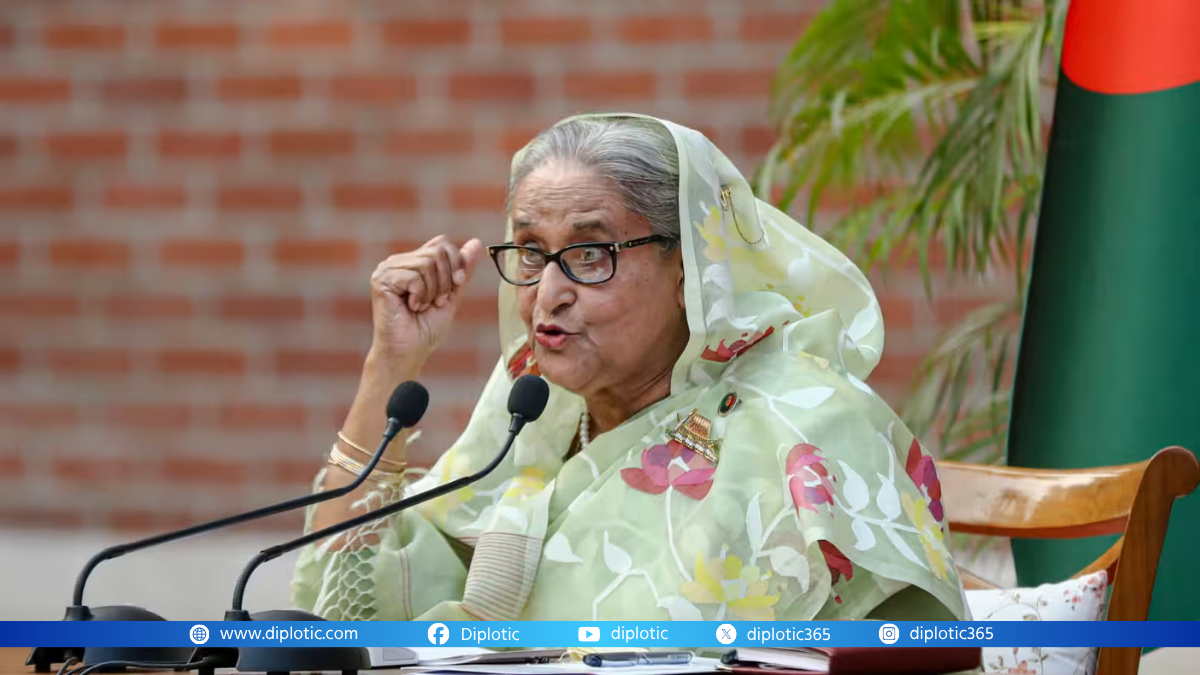
1. A Turning Point That Has Shaken the Country
Bangladesh is facing one of the most uncertain moments in its history. The death sentence handed down to former Prime Minister Sheikh Hasina has pushed the nation into a tense and unpredictable situation. Many people inside and outside the country see this verdict not as a legal judgment but as a major political shift. It raises questions about whether the institutions meant to protect fairness, accountability, and national stability are now being used for political ends.
This moment is important because it comes at a time when Bangladesh’s political landscape is already deeply divided. The current administration, led by an unelected interim leadership, has promised to hold elections in 2026. But public trust in this promise is low. Critics argue that the system is being reshaped in a way that excludes long-standing secular political forces while giving space to groups that once faced strict limits due to links with extremism or anti-liberation activities.
The verdict against Sheikh Hasina has therefore become more than a legal decision. It symbolizes a struggle over Bangladesh’s identity—whether the country will continue to follow its original secular and democratic ideals, or whether it is moving toward a new model shaped by religious political groups and external influences. The situation has left many citizens worried about what comes next and whether the country’s democratic structure can withstand the pressure now placed on it.
This is not the first time Bangladesh has faced political tension, but the scale and direction of the current changes make the moment more alarming. The trial in absentia, the speed of the verdict, and the political climate surrounding it have all combined to create a sense that the country has entered unfamiliar and dangerous territory.
2. A Trial That Raises Questions About Fairness and Process
One of the main concerns around Sheikh Hasina’s verdict is the process through which it was delivered. International legal norms, including the principles found in the International Covenant on Civil and Political Rights, emphasize that any accused person must have the chance to be present in court, hear all testimony, and challenge the evidence presented. Trials in absentia are allowed under special conditions, but they must still meet strict fairness standards.
Observers who followed the case argue that these standards were not met. They point to gaps in procedure, limited transparency, and the overall political atmosphere. The court that delivered the verdict has faced criticism in the past for addressing politically sensitive cases without building the public trust needed for such decisions. For many analysts, this verdict reflects not an effort to apply the law, but a push to change the political landscape.
Such trials can create long-term harm. When justice appears to serve political objectives, it weakens public trust in courts and institutions. It can also isolate a country internationally if partners believe that due process is being ignored. The concern is not about defending any individual leader, but about protecting the fairness of the legal system itself.
Inside Bangladesh, people are divided. Supporters of the verdict say it reflects accountability. Critics argue it is a step toward silencing political opponents. International groups have shared their concerns as well. Several human rights organizations have stated that the process lacked key elements of fairness and that applying the death penalty in such a context deepens the worry.
The larger issue here is the health of the country’s institutional system. When courts are seen as political tools, the entire democratic structure becomes vulnerable. This is why the reaction to the verdict has gone far beyond the case itself and has sparked fears about Bangladesh’s long-term direction.
3. A Changing Political Landscape With Regional and Global Implications
The current political situation in Bangladesh cannot be separated from regional interests and shifting alliances. The interim administration, led by a figure once celebrated internationally for development work, now governs without a public mandate. It relies on support from a range of political groups, some of which were previously restricted from mainstream politics because of their ideological positions or past involvement in unrest. This has raised questions about whether the country’s founding principles are being reshaped to fit short-term political goals.
These shifts matter because Bangladesh has long balanced its internal political debates with the expectations of its neighbors and international partners. A change in political direction affects not only domestic governance but also foreign policy, security cooperation, and economic partnerships. When political power depends heavily on groups with strong ideological agendas, there are concerns about how the state may respond to dissent, how minority rights may be affected, and how foreign ties may shift.
India’s position illustrates this complexity. The request to extradite Sheikh Hasina has placed New Delhi in a difficult situation. Refusing could harm relations with Dhaka. Agreeing could be seen as endorsing a process viewed by many as political. Sending her to a third country poses its own challenges. For India, which shares a long border and deep strategic ties with Bangladesh, the outcome could influence regional stability.
International human rights organizations have also reacted strongly. Statements describing the trial as unfair and politically driven place pressure on Bangladesh at a time when it needs global trust for trade, development assistance, and diplomatic support. If elections are delayed or restricted, further international criticism is likely.
These regional and global implications show how deeply Bangladesh’s internal political choices affect its wider position. The country’s future direction will shape not only domestic life but also its place in South Asia and beyond.
4. Elections, Legitimacy, and the Fear of a Permanent Crisis
The promise of general elections in February 2026 has been repeated by the interim administration, but many analysts doubt that this timeline will be honored. Across political circles, there is growing belief that elections may be delayed or altered to prevent strong secular or left-leaning parties from participating. This fear stems from signs that the present leadership is working to consolidate power rather than prepare for a fair electoral contest.
Free and inclusive elections require a clear transition plan, neutral institutions, and equal rights for all political parties. At the moment, these conditions appear uncertain. Critics argue that the election timeline serves more as a diplomatic message to international partners than as a clear commitment to democratic practice.
If the administration refuses to move into an election-period structure by December, it may face rising unrest. Parties excluded from the process will likely take demonstrations to the streets, increasing tension. A government that relies on security pressure rather than public trust may respond with strict measures, which could lead to more conflict.
A prolonged political crisis also weakens economic stability. Bangladesh faces global challenges tied to trade, inflation, and development needs. A tense political climate could slow investment, disrupt supply chains, and harm the livelihoods of ordinary people.
The concern is that the country is entering not a temporary emergency, but a long-term cycle of uncertainty. Without a credible path to elections and institutional fairness, Bangladesh risks losing the stability that has supported its progress over the past decades.
5. What This Moment Means for Bangladesh’s Future
The verdict against Sheikh Hasina marks a turning point, but the deeper issue is the direction in which the country is heading. Bangladesh has faced challenges before, yet it has always returned to a path where institutions, elections, and national identity were shaped by the goals of 1971—pluralism, inclusion, and democratic values. Today, that path appears less certain.
The coming months will determine whether the country can regain stability through fair elections and balanced institutions, or whether it will enter a new phase marked by deeper political divides and rising tension. The choices made now will influence Bangladesh’s future for years to come.
At this moment, the nation stands at a crossroads, facing questions about justice, identity, and political legitimacy. What happens next will shape not just one political leader’s fate but the future of Bangladesh itself.




