The fatal crash of an Indian Air Force Tejas fighter jet during a display at the Dubai Air Show, examining who the pilot was, how the accident unfolded, and what this means for India’s indigenous fighter-jet program.
A Fiery End to a High-Stakes Display
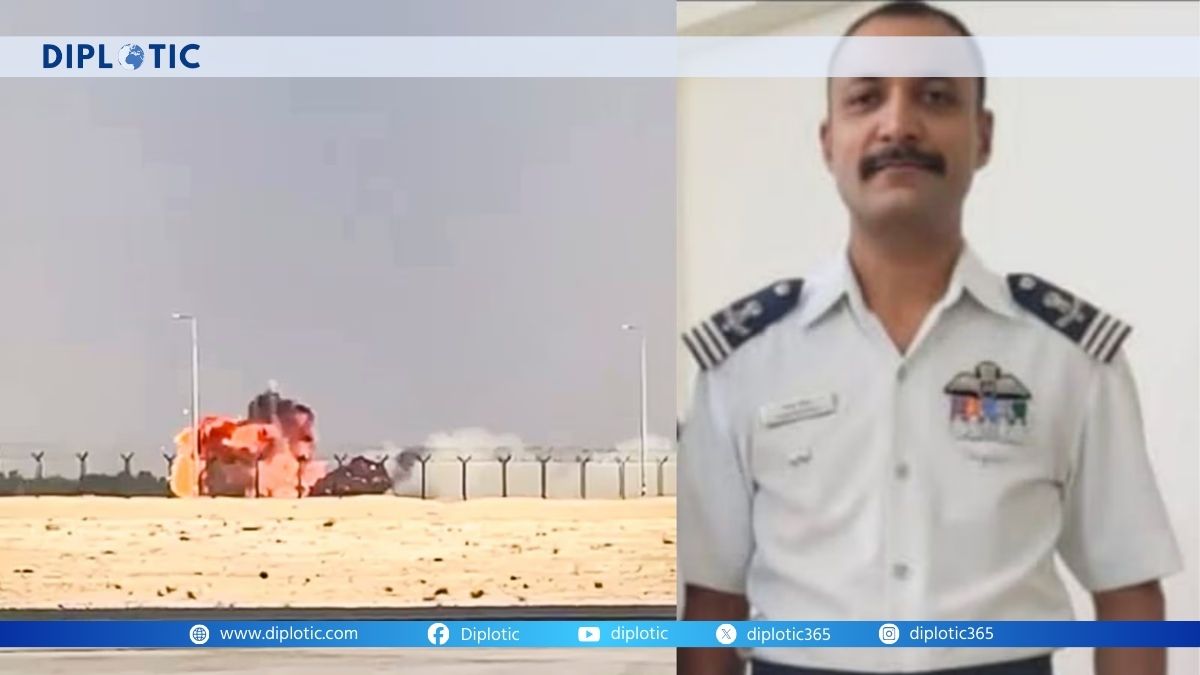
On November 21, 2025, a deeply unsettling moment at the Dubai Air Show shocked spectators and aviation insiders alike. An Indian Air Force (IAF) Tejas fighter aircraft, flying a low-altitude demonstration at Al Maktoum International Airport, suddenly lost control and plunged toward the ground in a massive fireball, leaving thick black smoke in its wake.
Witnesses described the scene as surreal: the agile light combat jet, part of India’s indigenous Tejas fleet, appeared to struggle during a negative-G turn, a demanding maneuver that pits a pilot against gravity, before it descended rapidly and crashed. The Indian Air Force later confirmed that the pilot sustained fatal injuries and declared that a formal court of inquiry would be established to determine the cause.
Emergency teams from Dubai responded swiftly, dousing the wreckage with foam and containing the blaze. In an extraordinary display of professionalism, after about an hour, other air show flights resumed overhead, even as the investigation began.
Remembering Wing Commander Namansh Syal
The pilot who lost his life has been identified as Wing Commander Namansh Syal, a 37-year-old IAF officer from Nagrota Bagwan in Himachal Pradesh. A respected figure, Syal served with dedication and had been selected to fly Tejas during this high-profile international event a testament to his skill and the trust the Air Force placed in him.
Syal’s personal story adds poignancy to the tragedy. His wife is also in the Air Force, and the couple has a young daughter. His father, a retired army officer turned school principal, and his mother grieve deeply, as does the broader IAF community, which has expressed solidarity and heartfelt sorrow.
The Chief of Defence Staff, General Anil Chauhan, issued a statement mourning Syal’s loss, while other senior officials extended condolences to his family. In Himachal Pradesh, regional leaders echoed national grief, calling Syal’s death a profound loss.
Tejas: India’s Indigenous Pride Under Pressure
The aircraft involved was a HAL Tejas Mk-1, a light-weight, single-engine, multirole fighter manufactured by Hindustan Aeronautics Limited (HAL). The Tejas program has long been a point of national pride. Designed and developed in India, it represents a core part of India’s ambition to modernize its air force and reduce dependence on foreign-made aircraft.
Despite its promise, the Tejas has faced challenges. The aircraft’s induction into the IAF has been slow; only a limited number of Mk-1 jets have been delivered so far. Moreover, a previous Tejas crash in March 2024, though non-fatal, raised safety concerns.
The very flight at the Dubai Air Show was meant to showcase Tejas’s agility and technical maturity and its ability to perform steep manoeuvres and compete on the international stage. But the crash underscores how unforgiving such aerobatics can be. Executing a negative-G turn at low altitude demands precision, rapid control, and little room for error.
A Grim Reminder of Airshow Risks
Air shows inherently involve risk. Pilots fly close to the edge, testing both aircraft and human limits. For military aircraft, even small mistakes in timing, altitude, or control input can turn routine demonstrations into deadly accidents. In this case, experts speculate the Tejas may have entered a negative-G turn without enough height to recover, leading to a loss of control and impact.
The IAF’s decision to launch a court of inquiry is standard procedure but critical. Such investigations examine technical logs, flight data (“black box”), and pilot behavior. They help determine if the crash resulted from mechanical failure, pilot error, or a combination of factors.
The probe comes at a sensitive time. Tejas is central to India’s long-term airpower strategy, and any setback, particularly a loss of life, casts a long shadow on the jet’s reputation.
Broader Implications for India and Aviation Safety
The fatal crash raises serious questions about India’s aviation safety, especially in its effort to project its homegrown technology abroad. The Tejas, once hailed as a breakthrough, may now face increased scrutiny from both domestic and international observers.
For HAL, which manufactures the aircraft, the challenge is compounded. The company expressed deep sorrow over Syal’s death and reaffirmed its commitment to cooperating fully with the inquiry. Negative outcomes could affect future export deals and could slow down ongoing production, especially for the more advanced Tejas Mk-1A variant, which India has ordered in large numbers.
On the diplomatic front, the crash at an international venue like the Dubai Air Show carries symbolic weight. It interrupts what was meant to be a powerful display of India’s aerospace prowess. At the same time, the prompt response from both Indian and Emirati authorities and the rapid resumption of the show reflect a shared commitment to safety, crisis management, and the show’s importance.
And at the heart of it all lies a deeply personal loss: a family bereft, a team in mourning, and a nation reminded of the perilous dance between human ambition and mechanical reality.
The crash of the Tejas jet at the Dubai Air Show marks a sobering moment for India’s air force, its defense industry, and those who looked to that aircraft as a symbol of technological progress. Wing Commander Namansh Syal’s death is not just a tragic loss of a brave pilot; it’s a stark reminder of the stakes involved in pushing aerospace innovation forward.
As the court of inquiry delves into the details, the fallout may reshape how India approaches its future in aerospace. Will the Tejas program bear the scrutiny and emerge stronger, or will this tragedy become a turning point in its development? The answers will take time, but for now, the sky feels a little more fragile.