

The story of Venezuela remains one of the most debated subjects in global politics, often reduced to simple slogans or selective statistics. Yet behind the headlines lies a more complex picture of political pressure, economic warfare, and a nation trying to stabilize itself under conditions that few modern states have faced. As new US threats emerge and the Venezuelan economy slowly recovers from years of sanctions, many are once again asking the central question: is Venezuela on the edge of collapse, or on the path to recovery? Understanding this requires looking closely at the political situation, the long economic decline triggered by sanctions, and the shifting role of global powers in the region.
Why Is Venezuela Still Standing Under Heavy External Pressure?
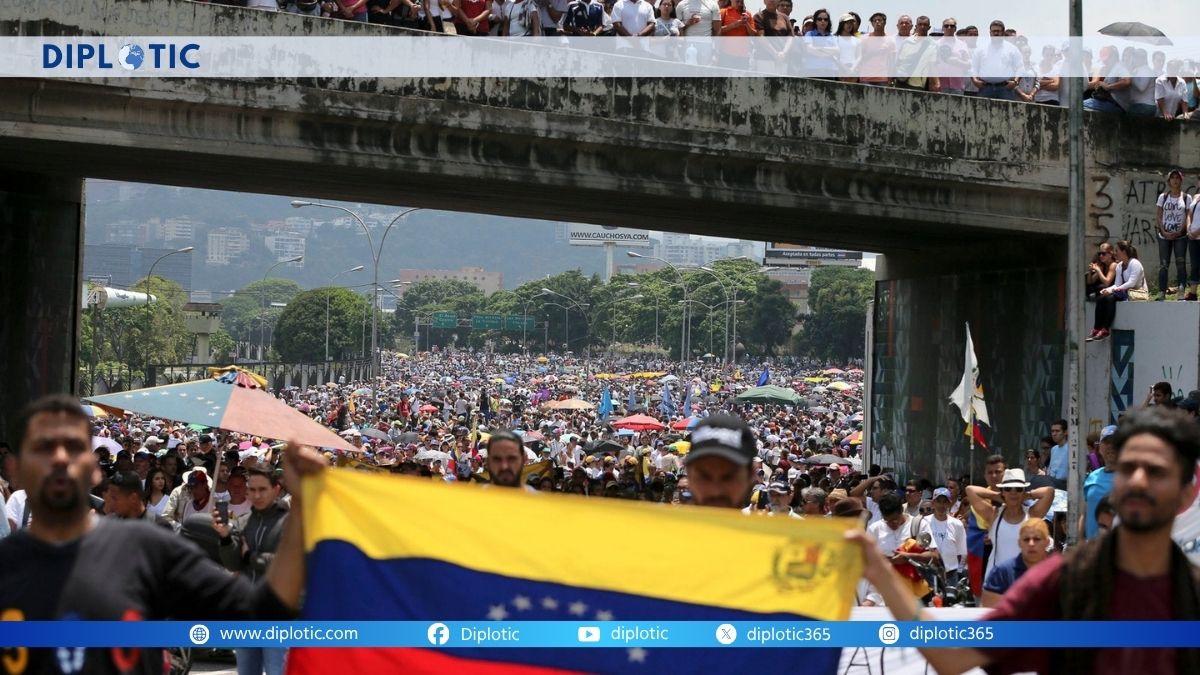
The political landscape in Venezuela today is marked by deep divisions, but also by a resilience that many foreign observers underestimated. While the opposition has strong backing from wealthy elites, foreign-funded organizations, and Western governments, its presence inside the country has weakened over the years. Large protests that once filled major streets now draw far smaller crowds. Many of the opposition’s most vocal leaders have moved abroad, leaving behind a fragmented movement with limited ability to mobilize.
Meanwhile, support for the government continues to come from poor and working-class communities. These groups, who benefited from earlier social programs under Hugo Chávez, often view foreign interference as a direct threat to the country’s sovereignty. They may criticize daily economic challenges, but they also believe that US pressure aims to replace the government with leaders who would privatize national resources and roll back social protections.
The growing tension now centers on reports that the United States is considering direct attacks inside Venezuela. Previous attempts to destabilize the government involved covert operations, sanctions, and support for opposition figures. However, discussions around airstrikes or targeted attacks mark a much larger escalation. Past US actions in Latin America and the Middle East create real fear that such threats could become reality. Even so, public opinion inside the United States does not strongly support military intervention, and this raises a key question: how far will Washington be willing to go, and what consequences could follow?
The situation becomes even more complex when comparing Venezuela with Syria. While both countries have been hit by economic warfare, only Syria experienced a long, devastating war with many foreign armies and militant groups controlling large territories. Venezuela, despite facing violent attempts in 2014 and 2017, has never collapsed into civil war. Its state institutions, including the military, remain intact. This difference has played a major role in preventing a full-scale breakdown. Yet the threat of external attacks continues to shape political debate both inside the country and across Latin America.
How Did Sanctions Shape Venezuela’s Economic Crisis?
Understanding Venezuela’s economic troubles requires looking beyond simple explanations that blame either government policy alone or external sanctions alone. The truth is that both internal and external pressures combined to push the economy into crisis. The turning point began in 2015, when the United States labeled Venezuela a national security threat and introduced the first major sanctions. These restrictions cut the country off from many parts of the international financial system, making it difficult to access hard currency.
The fall in global oil prices between 2014 and 2016 further reduced the state’s revenue. Since oil accounted for the majority of government income, the drop was immediately felt across public services and social programs. When Washington imposed far harsher sanctions in 2017 and a full economic embargo in 2019, the situation became even more severe. According to UN experts, Venezuela lost nearly all of its government revenue during this period, a decline of more than 99 percent. These measures also prevented the country from repairing or replacing oil industry equipment, most of which had originally been built by Western companies.
At the same time, currency speculation worsened inflation. As dollars became scarce, the national currency lost value at extreme speed. Black market groups operating from the United States contributed to this instability by influencing parallel exchange rates used by many businesses. The central bank struggled to defend the bolivar but had little hard currency to do so.
This combination of sanctions, oil dependency, and financial isolation produced the economic collapse that many outside observers attributed solely to internal policy decisions. Yet the picture began to shift only when Venezuela found alternative partners. Iran, Russia, and China provided technical assistance and equipment to repair oil facilities. This helped increase production to around one million barrels per day, the highest level since the coup attempts earlier in the decade. As oil exports recovered, the government gained more access to foreign currency, helping reduce inflation and stabilize the economy. Real wages began to rise, and many basic goods became more affordable again.
The recovery is uneven, and major challenges remain. The dollarization of the economy has weakened monetary sovereignty, and sanctions still limit financial options. But the improvement suggests that the crisis was not a permanent collapse, but a period of intense pressure that the country is beginning to move beyond.
What Role Do Regional Politics Play in Venezuela’s Future?
Latin America’s political map has changed many times over the past decade, but Venezuela continues to face isolation from right-wing governments that remain closely aligned with US interests. Countries such as Argentina, under leadership favoring market liberalization, often echo Washington’s narrative and oppose engagement with Caracas. These governments see Venezuela as a warning against left-wing politics and support actions that weaken its position.
On the other hand, left-leaning governments in the region express more sympathy for Venezuela but face limits. Nations like Cuba and Nicaragua offer strong political support but have limited resources due to their own sanctions and economic struggles. Many progressive governments are cautious because aligning too closely with Venezuela risks provoking secondary sanctions from the United States or triggering backlash from domestic political opponents.
Colombia provides an interesting example. Now led by its first left-wing president, the government has publicly criticized US attacks on Venezuela. This is a major shift from Colombia’s long-standing role as a reliable US ally. Yet even in this case, political risk remains. The president faces significant opposition at home, and upcoming elections create pressure to avoid bold foreign policy moves that could become targets for right-wing parties.
The region as a whole is caught between two forces: growing frustration with economic inequality, which fuels support for left-wing movements, and strong US influence, which often supports conservative groups and private-sector interests. Venezuela is at the center of this struggle. The US strategy in the region aims to weaken governments that resist corporate and geopolitical influence, while strengthening those that align with Washington’s goals.
This dynamic ensures that Venezuela’s future will not be shaped solely by its internal politics. Regional alliances, global power competition, and US foreign policy will continue to influence the country’s path.
What Does Venezuela’s Path Forward Tell Us About Global Power Shifts?
The situation in Venezuela cannot be understood in isolation. It reflects a larger moment in global politics, where economic pressure, sanctions, and information warfare are often used instead of direct military intervention. The country’s slow economic recovery, despite years of intense external pressure, shows that alternative alliances can create new paths for survival. It also highlights how traditional US strategies in Latin America are being challenged by new global players.
Whether the United States takes more aggressive actions in the coming years remains an open question. Public opposition to another foreign conflict may restrain US leaders, but strategic interests, especially in oil and regional dominance, could push for further escalation. At the same time, the Venezuelan government appears stronger and more stable than during the crisis years of 2019–2020. Improved economic conditions and continued support from core groups inside the country suggest that external force, rather than internal collapse, would be the only way to bring major political change.
Venezuela’s story is ultimately about more than one nation’s struggle. It is about how countries navigate external pressure and how global powers use economic tools to achieve political goals. As the world becomes more multipolar, with new alliances forming across continents, the events in Venezuela offer a clear example of how economic dependence, political resistance, and shifting global influence shape modern conflicts. The next chapter in Venezuela’s story will depend not only on its own decisions, but on how these broader forces continue to evolve.




