Every few nights, the people of Bosaso hear it — the low, thunderous growl of a plane slicing through the sky above their coastal city. It lands briefly, under darkness, and then it’s gone again. For most residents, the sight of a massive white cargo jet parked on the tarmac has become strangely normal. But behind those flights lies something far from ordinary — a covert UAE’s secret war operation that’s quietly feeding one of the world’s bloodiest conflicts.
This is the story of how a sleepy Somali port became a lifeline for Sudan’s killers, and how a web of mercenaries, weapons, and silent alliances keeps the war in Sudan alive.
The Planes That Shouldn’t Be There
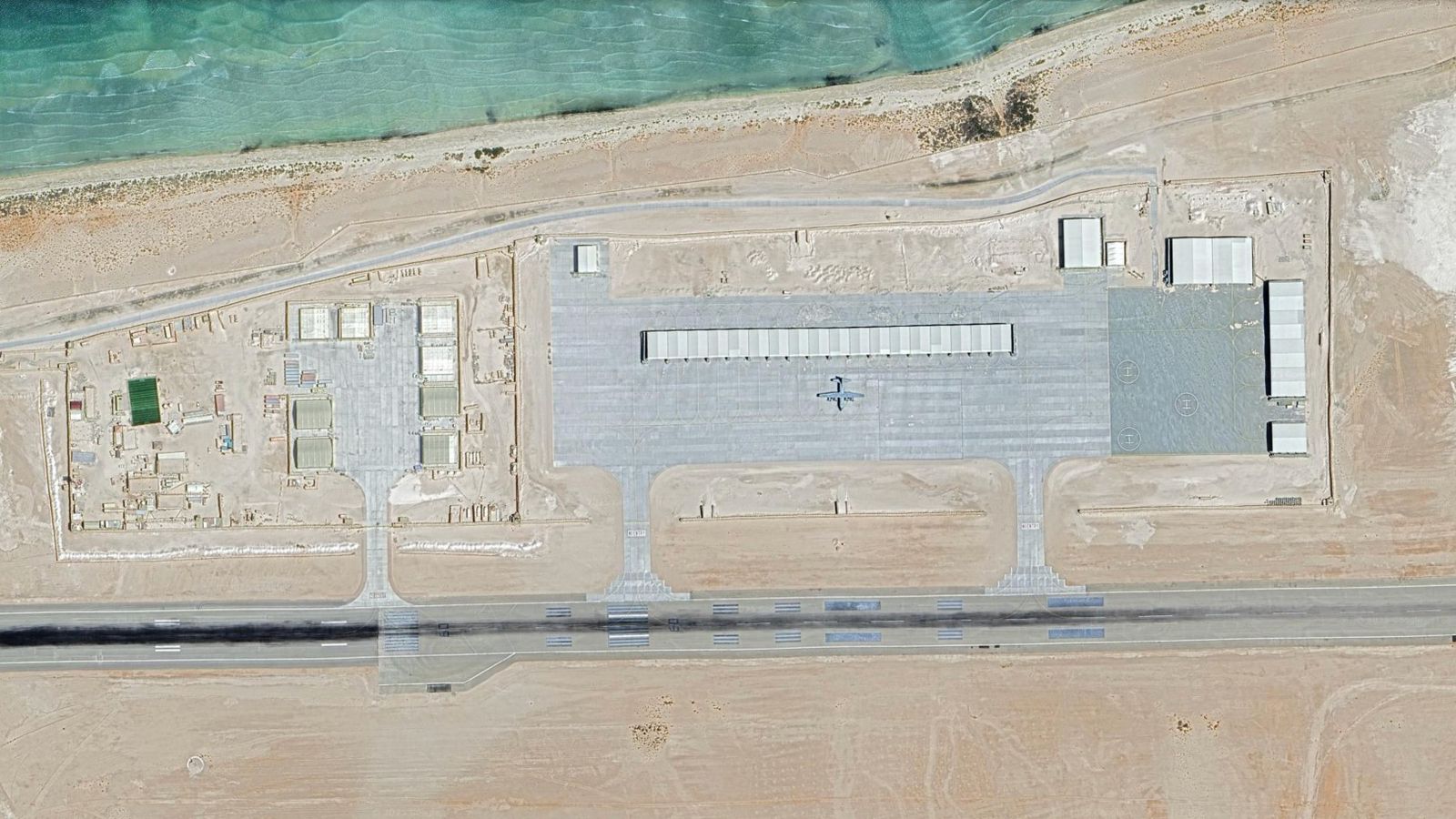
Bosaso Airport, in Somalia’s semi-autonomous region of Puntland, wasn’t always so busy. Two years ago, only a handful of small planes landed each week. Today, huge IL-76 transport aircraft roar in and out almost daily.
“They come at night or early morning,” said Abdullahi, a commander in the Puntland Maritime Police Force (PMPF)who spoke under a false name for safety. “They unload heavy cargo. The materials are quickly moved to another plane that takes off for Sudan. We’re told not to ask questions.”
According to flight data, satellite images, and interviews with multiple regional sources, the flights come from one place — the United Arab Emirates (UAE). And their final destination is not Somalia. It’s Sudan, where the Rapid Support Forces (RSF) are accused of genocide and mass killings in Darfur.
A Port Full of Secrets
Air traffic is just one part of a larger pattern. At Bosaso’s busy port, a senior manager quietly revealed something extraordinary: more than half a million shipping containers, marked “hazardous,” have arrived from the UAE over the past two years. Unlike ordinary cargo, these containers come with no papers describing what’s inside. There’s no record of where they go afterward, either.
“When a ship docks, everything shuts down,” said the port manager. “Security is tight. The police surround the area. Nobody is allowed to take photos or videos.”
The containers are immediately hauled to the airport and loaded onto waiting planes. None of it stays in Puntland. “If it were for us, we’d see the goods somewhere, or at least find the empty containers,” the manager said. “But we don’t. It’s all transit — just passing through.”
What those containers hold remains secret, but U.S. intelligence reports suggest the UAE has been shipping Chinese-made drones, ammunition, and other military supplies through Bosaso to Sudan.
The Mercenaries Nobody Talks About
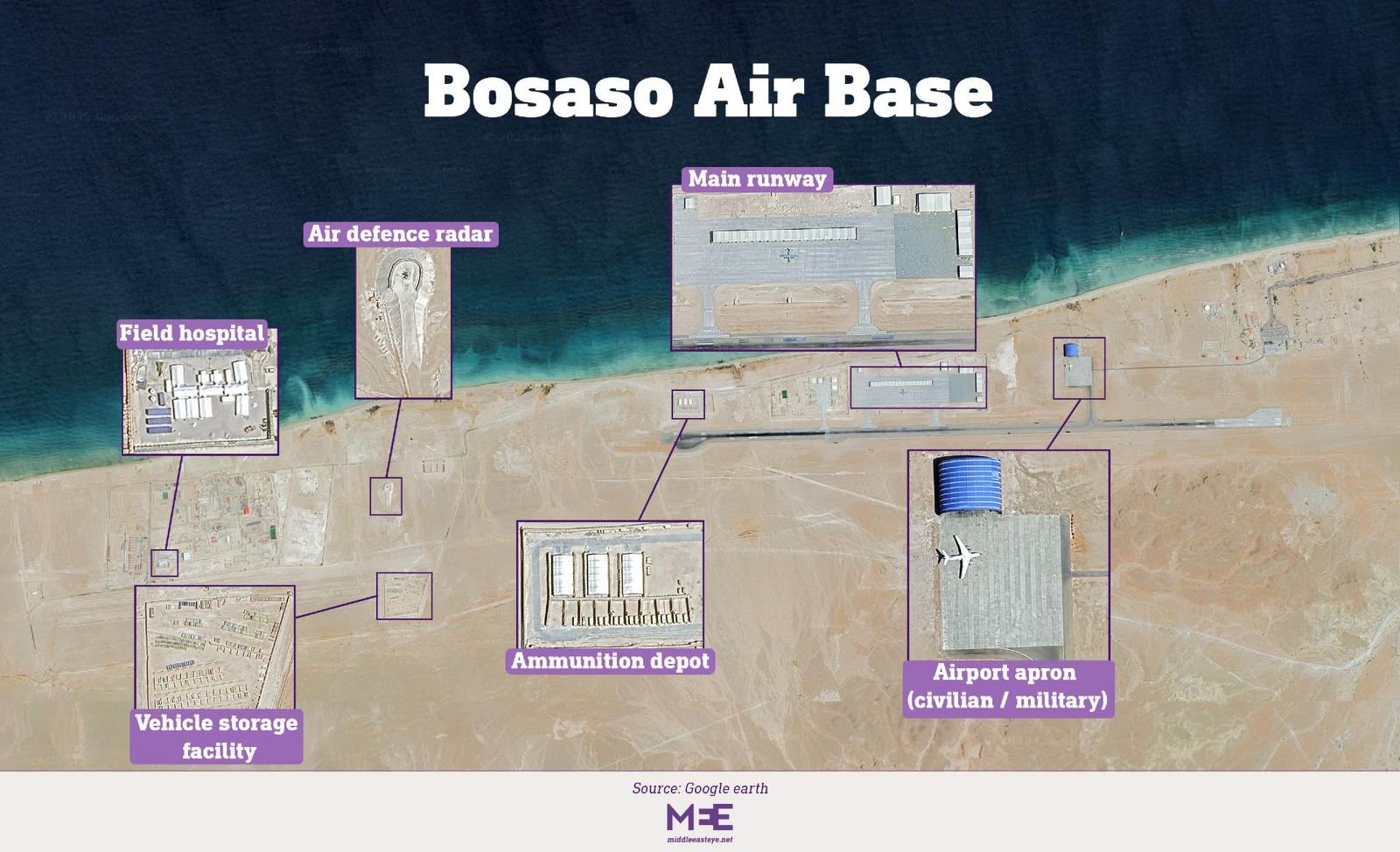
On the north side of Bosaso Airport, a fortified compound sits surrounded by concrete barriers. Inside live dozens of Colombian soldiers — not tourists, but contracted mercenaries reportedly working under UAE command. Photographs obtained by investigative journalists show them stepping off commercial flights, backpacks slung over their shoulders, heading straight into their camp. From there, they’re flown into Sudan to fight alongside the RSF.
“Yes, they’re Colombians,” Abdullahi confirmed. “They operate from Bosaso in large numbers.”
He also described a field hospital inside their base. “Once, a plane landed here with wounded soldiers. The door was covered in blood. They were taken straight into the compound for treatment.”
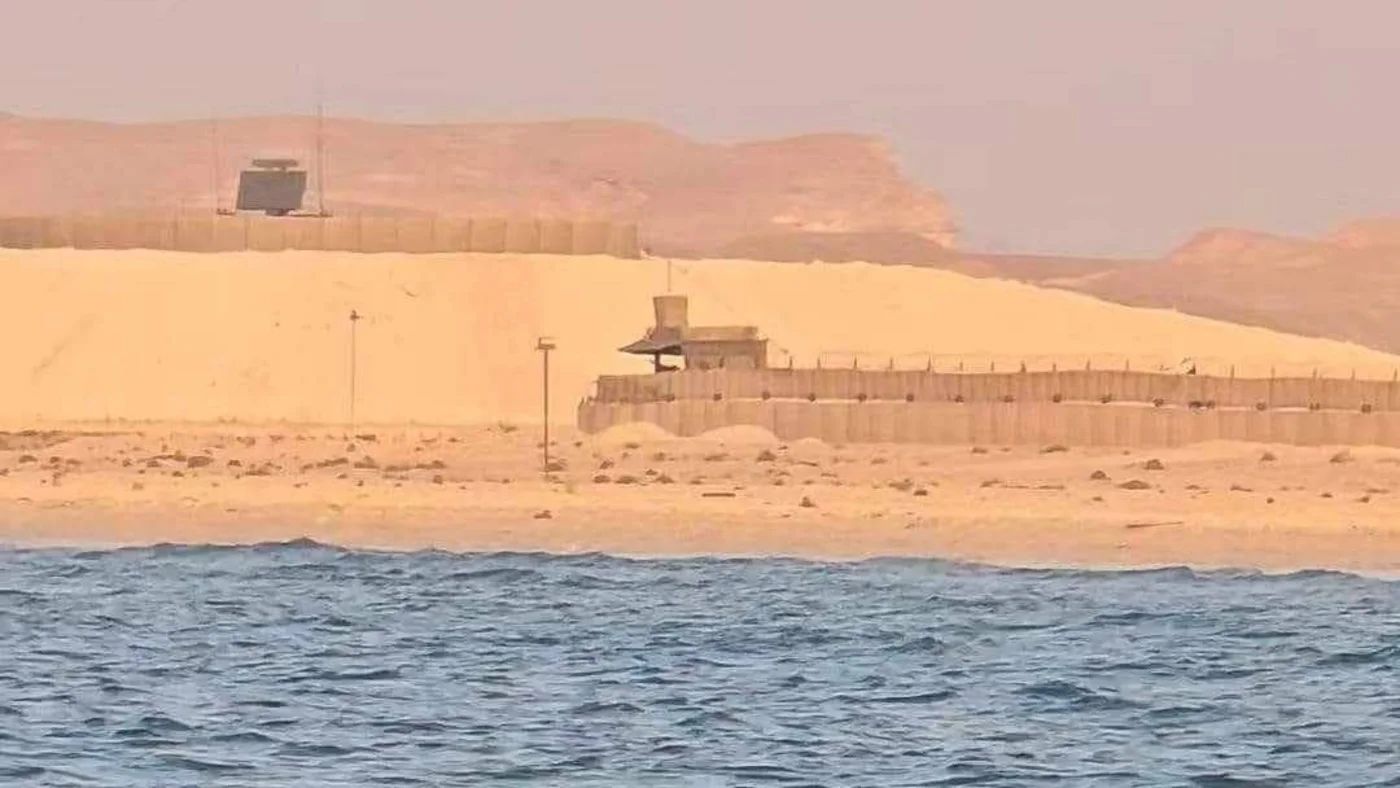
That hospital, locals say, now serves as a medical transit hub for injured RSF fighters — men who fight in Sudan’s deserts, then recover under the watch of foreign medics in Somalia. Next to the camp, the UAE has installed a military radar system, believed to be French-made, to protect Bosaso Airport. It’s one more reminder that this small city has become part of a much larger war.
A Network Built in the Shadows
Bosaso is just one link in the UAE’s covert military chain stretching across the Gulf of Aden and the Red Sea. From the islands of Mayun, Abd al-Kuri, and Samhah, to the ports of Berbera in Somaliland and Mocha in Yemen, the UAE has built or funded bases in territories it doesn’t officially control.
Each base serves a purpose: surveillance, refueling, training, or transit. Together, they form a quiet but powerful military network — one that gives Abu Dhabi reach from East Africa to the Arabian Peninsula.
“Puntland is perfect for them,” says Martin Plaut, a Horn of Africa expert. “It’s remote, under-governed, and geopolitically priceless. No one’s watching too closely.”
The Human Cost in Sudan
In April 2023, Sudan exploded into war between the national army and the Rapid Support Forces (RSF), a paramilitary group once created by the state itself. What followed has been catastrophic. The RSF captured cities across Darfur, carrying out mass executions, rapes, and village burnings.
In El-Fasher, the capital of North Darfur, civilians endured more than 500 days of siege. When the city finally fell, RSF fighters filmed themselves killing fleeing families and shooting patients in hospitals. The United States, the United Nations, and human rights organizations have since accused the RSF of committing genocide. And yet, despite global condemnation, the RSF’s war machine hasn’t run out of fuel. Its lifeline runs through the UAE’s secret Bosaso operation.
Mogadishu’s Silence, Puntland’s Loyalty
Somalia’s central government in Mogadishu controls national airspace, but not Bosaso’s port or airport. Those fall under Puntland, a semi-autonomous state whose leadership has grown increasingly close to the UAE.
Puntland’s president, Said Abdullahi Deni, is considered one of Abu Dhabi’s strongest allies in the region. The UAE funds his security forces and supports his administration — politically and financially.
Meanwhile, Mogadishu stays silent. “They can’t stop it,” said analyst Abdirashid Muse. “They don’t have the power or the leverage to confront the UAE’s growing influence.”
For some Somali officers, that silence feels unbearable. “We were trained to fight pirates,” said one PMPF soldier. “Now it feels like we’re helping fuel a genocide.”
The Motive: Gold, Power, and Influence
So why is the UAE doing this? Analysts believe it’s about control and profit. Sudan’s RSF controls most of the country’s gold mines, and gold is the backbone of the UAE’s trade economy. In exchange for weapons, money, and protection, the RSF allegedly supplies gold shipments to Dubai — gold that finances both their war and Abu Dhabi’s influence.
“It’s a trade in blood and bullion,” said Plaut. “The UAE supplies the war machine and receives gold in return. Everyone profits — except the civilians dying in Darfur.”
A Crime Without Accountability
In July, the International Criminal Court (ICC) said it had “reasonable grounds” to believe war crimes and crimes against humanity were being committed in Sudan. If investigations confirm Bosaso’s role in the RSF’s supply chain, Puntland authorities — and possibly UAE officials— could be found complicit in these crimes.
But justice feels distant. The UAE has denied sponsoring the RSF. Puntland has refused to comment. And while diplomats whisper their concerns, the planes keep landing, the containers keep moving, and Sudan keeps burning.
A Shadow War in Plain Sight
From above, Bosaso still looks like a sleepy Somali port — rows of fishing boats, dusty streets, a handful of cargo cranes. But zoom closer, and you’ll see the signs of something darker: guarded compounds, unmarked containers, foreign soldiers, and a runway that never sleeps.
Every night, as another IL-76 thunders off toward the horizon, someone in Darfur will pay the price for what just left the ground.
“This isn’t logistics,” said Abdullahi softly. “It’s blood supply. The planes bring death.”
The World’s Blind Spot
The UAE’s secret Bosaso operation has turned Somalia’s coastline into a launchpad for a distant war. It’s a story about how modern conflicts are no longer fought only on the battlefield — but in hidden supply chains, business contracts, and backroom alliances.
And until those chains are broken, Sudan’s war will not end. The bombs, the guns, and the mercenaries will keep coming — flown in through the quiet skies of Bosaso, a city now trapped between survival and complicity.