

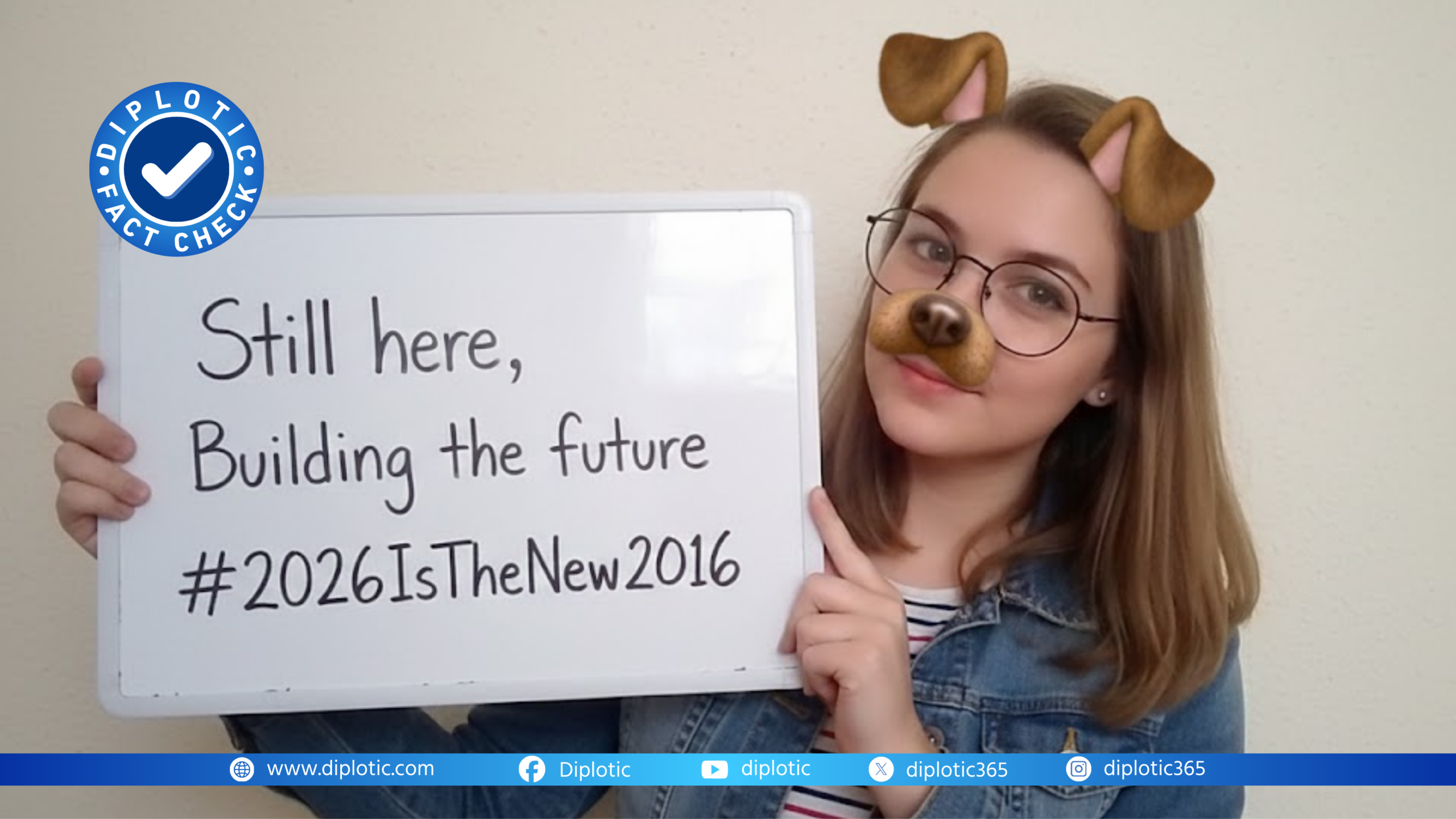
A new viral trend is saturating social media feeds, suggesting a strange and specific form of time travel. The hashtag #2026isthenew2016 has garnered millions of posts on TikTok and Instagram. In these posts, users draw parallels between current 2024-2025 trends and those from 2016, predicting that by 2026 we will have fully cycled back to the cultural atmosphere of that year. But is this a genuine, observable cultural shift, or is it simply a collective longing for a recent past, amplified by the mechanics of social media itself? This investigation examines the core claims of the trend, using cultural theory, media analysis, and historical context to separate pattern from perception.
Claim 1: We are witnessing a direct revival of 2016’s specific aesthetic: bright colors, glitter, and a “carefree” visual style.
Evaluation: Aesthetically, there is surface-level evidence. Early 2020s fashion saw a dominance of minimalism, neutrals, and “quiet luxury.” Recently, there has been a notable resurgence of maximalist elements popular in the mid-2010s: vibrant yellows and pinks, sequins, butterfly motifs, and “festival fashion.” However, calling this a “revival” misses a key distinction. The 2016 aesthetic was often organic and platform-specific to Instagram’s then-chronological feed. The 2024-25 version is heavily informed by algorithmic nostalgia. Young users are digitally archeologizing the recent past, re-creating looks they first saw as children or pre-teens, but through a contemporary, self-aware lens. The glitter is not just glitter; it is a citation. Furthermore, the current aesthetic coexists with the continued influence of other styles like “gorpcore” or minimalist athleisure, creating a fragmented, pick-and-mix visual culture that 2016 did not have to the same degree.
Verdict: Misleading. While specific visual elements are recurring, their context, motivation, and coexistence with other styles are fundamentally different. It is a curated re-enactment, not an organic revival.
Claim 2: The pop culture landscape is resetting, with a return to fun, upbeat pop music and lighthearted blockbusters similar to 2016.
Evaluation: 2016 was arguably the last peak of a monoculture in pop music, dominated by chart-topping, upbeat pop anthems from artists like Ariana Grande, Rihanna, and The Chainsmokers. In contrast, the current chart landscape is fragmented across genres like hip-hop, Latin pop, country, and a moodier strain of alt-pop. However, there is a noticeable strategic pivot among some major labels and artists towards more upbeat, melodic production—a sound that is easily described as “2016-esque.” This is less a reset and more a reaction to fatigue. After years dominated by moodier, introspective music (partly influenced by the pandemic and social unrest), there is a market-driven and possibly genuine audience craving for escapist fun. The difference is that no single sound dominates today. Similarly, while superhero movie fatigue is real, the replacement is not solely lighthearted blockbusters but a diverse array of mid-budget films and legacy sequels. The trend identifies a real mood shift but overstates its uniformity.
Verdict: Partially true, but lacks crucial detail. There is a measurable shift in mood and strategy towards “fun” in some sectors of pop culture, but it exists within a far more decentralized and niche-driven ecosystem than the one that defined 2016.
Claim 3: The social media environment is returning to the “positive” and “authentic” vibe of pre-2018 platforms.
Evaluation: This claim is largely a mythologized reconstruction. Users recall 2016 Instagram as a place for colorful “flat lays” and travel photos, and Vine for its quirky, apolitical comedy. They contrast this with the perceived negativity and performative activism of later years. This nostalgia ignores the real problems of that era: rampant cyberbullying, the filter-heavy “authenticity” that fueled insecurity, and the early seeds of viral misinformation. The current desire for “positivity” is real, but it manifests not as a return but as a self-conscious reaction. “Cozy gaming” streams, mundane vlogging, and the “clean girl” aesthetic are attempts to carve out low-stakes, pleasant online spaces. They are a deliberate retreat from the high-drama, politically charged timelines of the late 2010s. The platform dynamics are also completely different: TikTok’s discovery-driven algorithm fragments culture, making a unified “vibe” impossible. The trend correctly diagnoses a cultural desire but misidentifies its source as a past reality rather than a present invention.
Verdict: False. The 2016 social media environment was not universally positive. The current push for lighter content is a new response to recent stressors, not a return to a past that never truly existed in the way it is remembered.
Claim 4: The 10-year cultural cycle theory proves 2026 will naturally mirror 2016.
Evaluation: The “20-year nostalgia cycle” is a well-documented phenomenon in fashion and music, where trends from two decades prior become ripe for revival. The suggestion of a compressed 10-year cycle for digital-native culture is a compelling, but untested, theory. It holds some logical weight: the first generation to have their entire adolescence documented on social media (those who were 12-18 in 2016) are now in their mid-to-late twenties, a prime age for nostalgic cultural influence. However, this theory faces a major historical anomaly: the COVID-19 pandemic. The years 2020-2022 constituted a profound global disruption that stalled cultural evolution and created a collective sense of lost time. This has likely accelerated the nostalgic pull, making 2016—the last “normal” year before a period of intense political and social upheaval—feel both more distant and more desirable. The cycle may be less a natural rhythm and more a trauma response, compressed and supercharged by algorithmic content delivery.
Verdict: Uncertain, but context is critical. While a 10-year cycle is plausible for digital culture, attributing the trend solely to this rule ignores the massive distorting effect of the pandemic, which makes this potential cycle exceptional, not typical.
Claim 5: This trend signals a genuine cultural reset where society is moving past the “toxic” and “divided” era of the late 2010s/early 2020s.
Evaluation: This is the trend’s most ambitious claim. It posits that the nostalgia for 2016 is actually a forward-looking desire to rebuild a more cohesive, less anxious culture. The evidence here is deeply contradictory. On one hand, the consumption of lighthearted content and aesthetics can be seen as a form of collective self-care and a conscious step back from constant engagement with heavy news cycles. On the other hand, the underlying structural issues that created the “toxic” era—political polarization, economic anxiety, the attention-economy of social media platforms—remain wholly unresolved. The trend may represent a cultural bypass, not a reset. People are changing the channel on their feeds, but not addressing the root causes of the programming. This creates a risk: mistaking a change in aesthetic consumption for meaningful societal healing. The deeper implication is that in the absence of political or institutional solutions to contemporary stresses, cultural nostalgia becomes a palliative coping mechanism.
Verdict: Misleading and Overstated. The trend reflects a powerful desire to move past recent difficulties, expressed through cultural consumption. However, it confuses a shift in online mood with a structural societal reset, which remains unsupported by evidence.
Conclusion: Nostalgia as a Compass, Not a Map
The “2026 is the new 2016” phenomenon is not a genuine, linear cultural reset. It is a complex social media-driven feedback loop where a real sense of generational nostalgia is amplified by algorithms, commercialized by content creators and brands, and interpreted through a mythologized version of the past.
The trend’s real basis lies in three factors: the life stage of the first social media-native generation, a pandemic-induced distortion of time, and a legitimate craving for lighter cultural products after a period of darkness. It is a potent blend of real sentiment and algorithmic performance.
Ultimately, the trend is less a prediction about 2026 and more a commentary on 2024. It reveals a desire to reclaim a sense of optimism and cultural cohesion that is remembered, rightly or wrongly, as being more accessible a decade ago. The danger lies in mistaking the recycled aesthetics of the past for a roadmap to a better future. Culture may rhyme, but it does not repeat. The challenges of the late 2020s will be unique, and navigating them will require more than a filter from 2016.




