

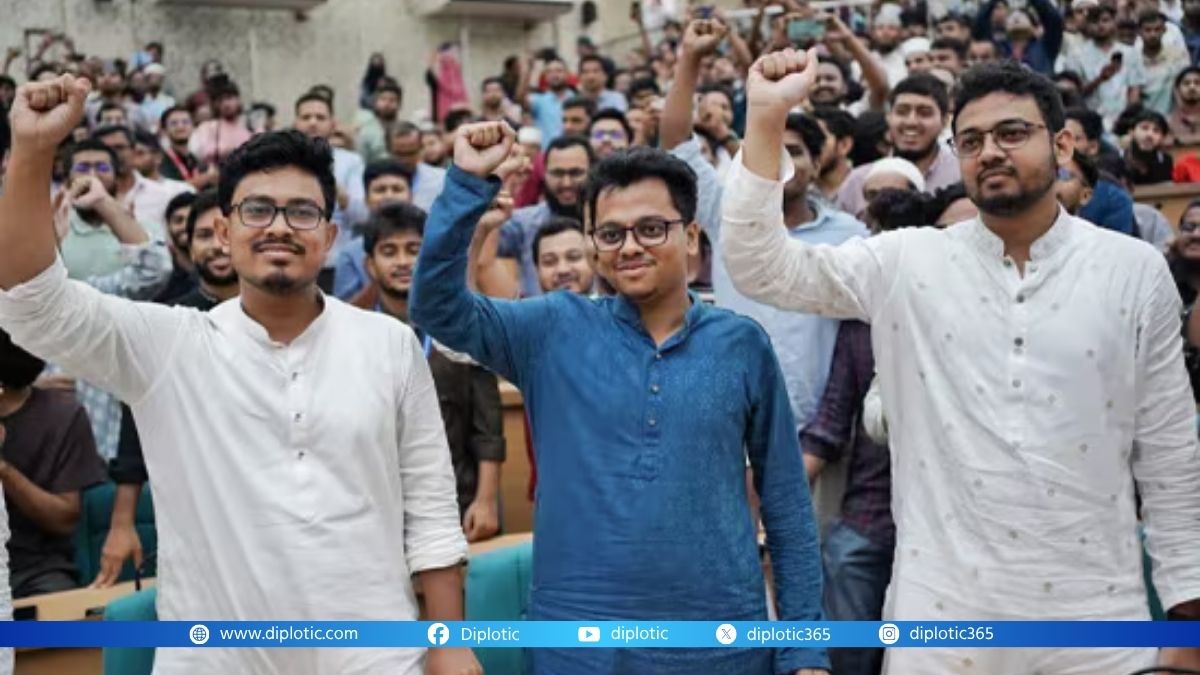
The 2024 uprising in Bangladesh marked a significant shift in the political landscape, with Jamaat-e-Islami’s student wing, Islami Chhatra Shibir (Shibir), emerging as a notable force. Shibir played a key allied role during the uprising, supporting it both directly and indirectly by participating in street protests and critical planning. This involvement helped Shibir transition from an underground presence to a more public and influential player in campus politics, capitalizing on the political vacuum created after the toppling of the Awami League government in July 2024.
Shibir’s recent victories in student union elections at major universities such as Dhaka University, Jahangirnagar, Chittagong, and Rajshahi demonstrate their rising dominance. They have captured a large proportion of leadership positions that were once considered bastions of secular student politics. However, experts caution that these wins should not be understood merely as a religious awakening. Rather, they signal a demand by the youth for effective change, representation, and agency in Bangladesh’s future political trajectory not necessarily an Islamist ideological surge.
Despite this evolving image, Shibir’s legacy remains contentious. The group has faced allegations linking them to campus extremism and violence, including attacks on left-leaning student groups under banners such as the “Anti-Shahbagh Unity.” Reports of aggression and confrontations suggest that while Shibir projects a service-oriented and disciplined image to attract students, especially minorities and younger voters disillusioned with other political options, underlying tensions and accusations of extremism persist.
The 2024 uprising and subsequent political developments allowed Shibir to broaden its appeal by integrating minorities and factions outside traditional Islamist circles, presenting itself as a platform for inclusive representation. This strategic opportunism has helped Shibir gain acceptance, particularly among youth tired of chaotic campus politics and seeking organized, cadre-based leadership. Yet, critics warn that this short-term political gain risks long-term ideological consequences by potentially fueling Islamization and divisive campus extremism.
In sum, Jamaat’s student wing, Shibir, is at a crossroads: it has both co-opted the energy and momentum of the 2024 uprising to reassert its presence on campus and national stages while simultaneously facing scrutiny for enabling or engaging in campus-level extremism and violence. Their ascendancy reflects complex factors: political opportunity, youthful desire for change, and residual legacies, making Shibir a critical actor shaping Bangladesh’s student and political future.




