

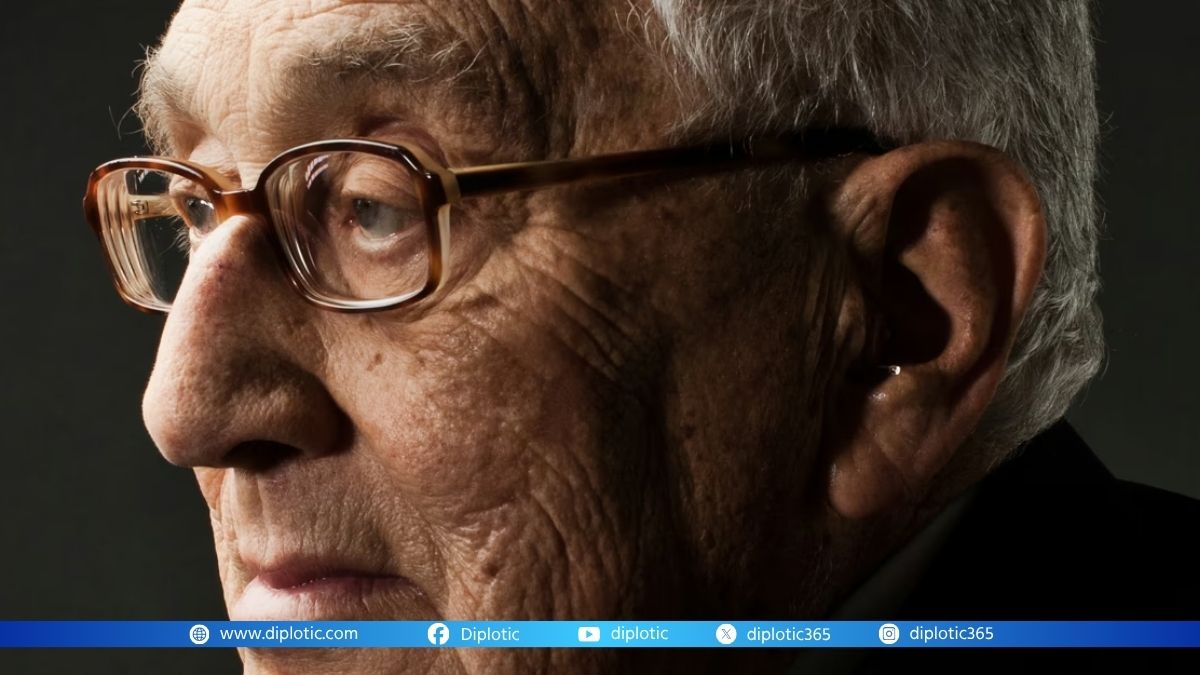
The figure of Henry Kissinger, who died in 2023 at the age of 100, continues to cast a long and contentious shadow over American foreign policy. His was a life forged in the crucible of twentieth-century extremes, a journey from a persecuted Jewish childhood in Nazi Germany to the inner sanctum of power in the White House. A new PBS documentary, part of the American Experience series, revisits this complex legacy, arguing that the very traumas which shaped him also led him to embrace a philosophy of realpolitik whose consequences the world is still grappling with today. The film posits a provocative central thesis: that Kissinger, horrified by the collapse of civilized order in his youth, learned the wrong lessons from his experience with Nazi totalitarianism. In his pursuit of a stable world order, he ultimately sanctioned the very forces of instability and brutality he sought to contain, creating a template for power that continues to influence, and perhaps distort, the conduct of international relations. The question the documentary forces us to confront is not whether Kissinger was a brilliant strategist or a war criminal, but something more nuanced and enduring: did the application of his hard-won, pessimistic worldview, designed to prevent global conflagration, in fact lay the groundwork for a different kind of perpetual conflict, one waged in the shadows with a chilling disregard for the human cost?
The Forging of a Worldview: From Nazi Germany to Realpolitik
To understand Kissinger’s actions in power, one must first appreciate the searing impact of his formative years. The documentary vividly illustrates how his family’s flight from persecution and the murder of thirteen relatives in the Holocaust imprinted upon him a dark and unshakable conviction about human nature and the international system. He witnessed firsthand how norms, laws, and the veneer of civilization could evaporate overnight in the face of ruthless, amoral power. As a U.S. soldier participating in the liberation of the Hannover-Ahlem concentration camp, this lesson was etched into his psyche with horrific clarity. His son, David, notes in the film that for his father, this was “an illustration… that strength was an unavoidable facet of resisting evil.” This became the foundational pillar of Kissinger’s philosophy. He emerged from the war believing that abstract ideals like democracy or human rights were fragile shields against tyranny; only a cold, calculated balance of power, managed by pragmatic statesmen, could prevent a descent into global madness. This perspective, explored in depth by scholars at the Miller Center at the University of Virginia, stood in stark contrast to the more idealistic, rules-based internationalism that had characterized the immediate post-war era.
This intellectual framework was then refined in the halls of Harvard, where Kissinger earned his doctorate and produced his influential 1957 book, Nuclear Weapons and Foreign Policy. His academic work was a deep dive into the nineteenth-century balance of power, particularly the system constructed at the Congress of Vienna. He argued that in an age of thermonuclear weapons, the goal of foreign policy could not be total victory, but rather stability and the managed limitation of conflict. He was not, as his son argues in the documentary, a simple hawk seeking power for its own sake, but a strategist who believed that a strong and assertive America was “the last best hope of humanity” in a dangerous world. This intellectual journey—from the ashes of the Holocaust to the seminar rooms of Cambridge—produced a unique and formidable figure: a scholar who craved political action, a refugee who sought to steer the superpower that had given him sanctuary. His worldview was a product of profound trauma, translated into a dispassionate, almost mathematical theory of international relations where morality was a luxury and stability the supreme good.
The Architect of Détente and the Master of Secrecy
Upon entering government as Richard Nixon’s National Security Advisor and later Secretary of State, Kissinger was finally in a position to apply his theories on a global scale. The documentary rightly highlights his monumental achievements, which were, by any measure, historic. The policy of détente, the groundbreaking opening to China, and the SALT I arms control agreement with the Soviet Union were masterstrokes of triangular diplomacy. They were designed to lower the temperature of the Cold War, reduce the risk of nuclear annihilation, and create a more predictable, manageable international system. His shuttle diplomacy in the Middle East following the 1973 Yom Kippur War helped avert a broader superpower confrontation and established a fragile but critical process of negotiation. For these efforts, which required immense skill, patience, and strategic vision, he was awarded the Nobel Peace Prize and lauded as a genius. As historian Niall Ferguson remarks in the film, “It’s Henry Kissinger’s world,” a testament to his enduring influence on how nations interact.
Yet, the documentary compellingly argues that his methods were as consequential, and ultimately as damaging, as his policies. Kissinger’s pursuit of this grand strategy was characterized by a deep-seated suspicion of democratic institutions and bureaucratic processes. He believed that Congress, the State Department, and the press were impediments to the swift, secret, and decisive action he deemed necessary. This led to the creation of a shadow foreign policy run out of the White House basement, built on covert backchannels, wiretaps of his own staff and journalists, and a pervasive culture of deception. The film features chilling accounts from figures like Anthony Lake and Hedrick Smith, who discovered they were under surveillance by their own government. This obsession with secrecy and control, born from a desire to outmaneuver geopolitical rivals, quickly turned inward, fostering the “anything goes” mentality that culminated in the Watergate scandal. Kissinger’s realpolitik, in practice, meant that the ends justified the means, and the means involved the systematic erosion of the very democratic norms and accountability he was ostensibly defending from foreign threats.
The Human Cost of the Chessboard
Perhaps the most damning indictment presented by the documentary is the staggering human toll of Kissinger’s policies, the “lesser evils” he accepted in the name of global stability. In his view, the world was a grand chessboard, and smaller nations were merely pawns in the larger struggle between superpowers. The internal politics of these countries were irrelevant unless they impacted the balance of power. This philosophy led to devastating consequences on the ground. The film uses powerful imagery and testimony to document this collateral damage. In South Asia, the U.S. “tilt” toward Pakistan during the Bangladesh Liberation War meant turning a blind eye to a campaign of genocide. In Latin America, Kissinger’s statecraft enabled the violent 1973 coup in Chile that overthrew a democratically elected president and installed the brutal dictatorship of Augusto Pinochet.
Nowhere is this cost more starkly illustrated than in Southeast Asia. The secret bombing campaign in Cambodia, intended to disrupt North Vietnamese supply lines, violated international law, destabilized the entire region, and arguably facilitated the rise of the genocidal Khmer Rouge. The documentary gives a voice to this suffering through Cambodian American political scientist Sophal Ear, who recounts the loss of his father and the disappearance of his oldest brother, asking if they were simply “the victims of geopolitics and of decisions made with good intentions but that led to disaster? Yes absolutely.” The film forces viewers to juxtapose the image of Kissinger the diplomatic genius securing arms agreements in Moscow with the harrowing footage of “carpet bombings” over Christmas in 1972 and the skulls and wreckage left behind in Cambodian villages. This is the central paradox of his legacy: the man who sought to create a stable world order through calculated power was directly responsible for unleashing unimaginable instability and violence upon millions of innocent people.
The Enduring and Distorted Legacy
The final, and perhaps most crucial, section of the documentary explores the lasting impact of Kissinger’s world. It makes a compelling case that the long-term costs of his style of politics were enormously destructive to both American democracy and its moral standing in the world. By treating governing norms as expendable, he and Nixon established a dangerous precedent that future leaders would exploit. The film draws a direct, if carefully argued, line from Kissinger’s realpolitik to the foreign policy of the present day. While Kissinger operated with a clear, if controversial, strategic objective—the maintenance of a global balance of power—the documentary suggests that his Machiavellian toolkit has since been adopted by others devoid of any coherent strategy. The pursuit of power, once a means to the end of stability, has in some quarters become an end in itself.
The film notes that even in his own time, this approach faced fierce resistance from both the left, which decried the human rights abuses, and the right, which saw détente as weakness. Ronald Reagan’s successful primary challenge to President Gerald Ford in 1976 was built in part on a repudiation of Kissinger’s philosophy, demanding a more morally grounded and confrontational stance against the Soviet Union. Yet, the Kissingerian model of centralized, secretive, and norm-shattering executive action proved resilient. The documentary implicitly invites viewers to consider the modern parallels: a president authorizing lethal strikes based on unsubstantiated claims, or conducting foreign policy through impulsive tweets and personal relationships, ignoring the institutions Kissinger himself sidelined but without the underlying strategic doctrine. We do, indeed, still live in Kissinger’s world, but it is a distorted version of it—one where the cold calculus of balance-of-power has often been replaced by a more volatile and unpredictable pursuit of unilateral advantage, yet still justified by the same dismissal of norms and consequences that he so masterfully, and tragically, perfected. His legacy, therefore, is not a settled chapter in history but a live wire in contemporary debates about America’s role in the world, proving that the paradoxes he embodied remain unresolved.




