

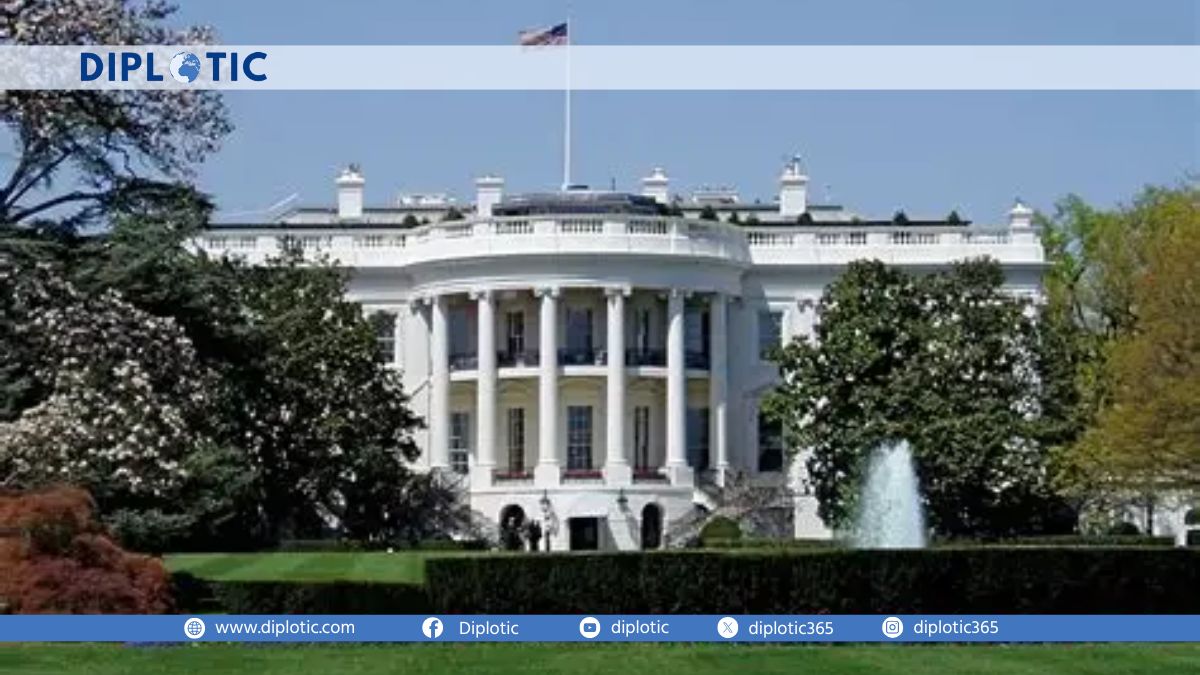
In the shadow of 1600 Pennsylvania Avenue, where the weight of the world often presses heaviest, a quiet revolution once unfolded on a modest 42-seat stage. This week, as bulldozers reduced the East Wing to rubble under the October chill of 2025, the White House Family Theater—born from wartime ingenuity and cherished as a sanctuary for leaders—met its end. Former President Bill Clinton, who once dubbed it the “best perk” of the Oval Office, would likely mourn the loss of this velvet-draped haven, where Hollywood reels offered rare respites from policy briefs and midnight crises. But beyond the nostalgia for red-upholstered chairs and flickering projectors lies a deeper question: What stories did this room tell about the men and women who shaped America, and why, in an era of streaming empires, does its demolition feel like erasing a chapter of the nation’s soul? As President Donald Trump‘s ambitious $300 million ballroom rises from the debris—touted as a venue for grand state dinners and donor galas—the theater’s absence prompts us to rewind the tape. This is not just the tale of a demolished screening room; it’s an investigation into how cinema became a mirror for power, a tool for morale, and now, a casualty of reinvention.
From Cloakroom Shadows to Silver Screen Glow: What Sparked a Presidential Obsession with Film?
Imagine a cramped alcove in the East Wing, once piled high with overcoats and forgotten umbrellas, transformed into a portal of escapism amid the thunder of global conflict. That unlikely metamorphosis occurred in 1942, when President Franklin D. Roosevelt, navigating the early storms of World War II, directed architects to repurpose the “Hat Box” cloakroom into the White House’s first dedicated movie theater. As chronicled in Britannica’s comprehensive account of the White House’s architectural evolution (https://www.britannica.com/topic/White-House-Washington-DC), this addition coincided with the East Wing’s expansion, a practical response to the mansion’s growing demands during wartime. Roosevelt, ever the pragmatist with a flair for the dramatic, saw films not as mere diversion but as a strategic asset. He screened newsreels of Allied advances in Europe and the Pacific, poring over footage of battles in Normandy and Iwo Jima with the intensity of a field general. These weren’t passive viewings; they informed his fireside chats, blending raw imagery with his eloquent narration to rally a nation on edge.
Yet the theater’s origins trace back further, to an era when motion pictures were still novelties threatening to upend Victorian sensibilities. The first White House screening dates to 1915, when President Woodrow Wilson projected D.W. Griffith’s controversial epic “The Birth of a Nation” onto the East Room’s walls. That film, a technical marvel laced with racial caricatures, drew protests from civil rights leaders even then, foreshadowing cinema’s dual role as unifier and divider. Wilson’s choice reflected the medium’s nascent power: a way to project presidential vision—literally—onto a captive audience of dignitaries and family. By the 1930s, as talkies took hold, informal screenings proliferated in the Red Room or library, but it was Roosevelt’s institutionalization that elevated the practice. The theater, with its 42 swivel chairs arranged in seven rows of six, became a fixture, evolving from a utilitarian space to a symbol of resilience.
Parallel to this domestic innovation, the theater wove into broader threads of American cultural diplomacy. Early on, screenings doubled as soft-power tools, inviting foreign envoys to shared viewings that bridged linguistic gaps. Diplotic’s exploration of early 20th-century cinematic outreach (https://diplotic.com/cultural-diplomacy-early-cinema) notes how Wilson’s administration used films like “The Birth of a Nation” to subtly advance narratives of national unity, even as they stirred international debate. Domestically, the theater mirrored societal shifts: during the Great Depression, Roosevelt favored uplifting fare like “The Wizard of Oz,” which premiered in 1939 and echoed his New Deal optimism. By 1942, with the U.S. fully embroiled in war, the room’s acoustics carried laughter and gasps that momentarily drowned out rationing woes and blackout drills.
This evolution wasn’t without friction. Architects debated the space’s acoustics, settling on soundproofing borrowed from Hollywood studios, while electricians installed a 16mm projector sourced from the Signal Corps. Over decades, the decor shifted—mustard curtains in the Eisenhower years gave way to floral patterns under Kennedy, then the signature all-red scheme in the Reagan era—each iteration reflecting the first family’s tastes. But beneath the aesthetics lay a constant: the theater as a pressure valve. Presidents, isolated by Secret Service shadows, found in its dim light a semblance of normalcy. Lyndon Johnson, for instance, hosted marathon sessions of Westerns, his drawl punctuating John Wayne’s bravado, while Richard Nixon preferred cerebral dramas that mirrored his geopolitical chess games.
What drove this fixation? Partly practicality—Air Force One’s onboard films were rudimentary until the 1970s—but also psychology. Film offered unscripted vulnerability; a commander-in-chief chuckling at a comedy humanized the office in ways stump speeches never could. As the theater matured, it hosted not just family nights but policy previews: clips from Soviet defectors’ testimonies informed Cold War strategies. This blend of entertainment and enlightenment underscores a curious truth: the cloakroom’s rebirth wasn’t accidental. It was Roosevelt’s wager that stories on celluloid could fortify the spirit as surely as steel did the hulls of Liberty Ships. In peeling back these layers, we glimpse how a simple screening room became woven into the fabric of leadership, setting the stage for decades of reel-to-real influence. (Word count: 612)
Reels as Lifelines: Could Movies Have Been the Unsung Architects of Victory and Vision?
In the theater’s heyday, as bombs fell over distant horizons, a single projector whirred to life, casting shadows that outlasted the news of the day. Franklin Roosevelt’s 1943 declaration—that entertainment was “invaluable in peacetime, indispensable in wartime”—wasn’t rhetoric; it was blueprint. The White House Family Theater, perched on the East Terrace overlooking the Jacqueline Kennedy Garden, became a nerve center for morale, where leaders absorbed the pulse of a nation through its flickering tales. History.com’s timeline of the White House’s wartime adaptations (https://www.history.com/topics/us-presidents/white-house) details how Roosevelt curated screenings to counter propaganda fatigue, favoring Movietone newsreels that documented factory booms and troop morale. These weren’t escapist fluff; they were morale munitions, reinforcing the home front’s resolve. One evening in 1944, as D-Day loomed, FDR watched “Why We Fight,” Frank Capra’s seminal series, its montage of Axis aggressions fueling his resolve—and ours.
This wartime alchemy extended beyond propaganda. The theater hosted premieres that blurred reels with reality: Walt Disney’s “Victory Through Air Power” in 1943 argued for strategic bombing, its arguments echoing in Roosevelt’s directives to Allied commanders. Parallel insights reveal cinema’s subtler diplomacy; screenings for British Prime Minister Winston Churchill featured “Mrs. Miniver,” a tale of London blitz stoicism that cemented transatlantic bonds. Diplotic’s retrospective on film-fueled alliances (https://diplotic.com/wwii-cinema-diplomacy) argues these sessions fostered unspoken pacts, where shared tears over Greer Garson’s resolve mirrored the Big Three’s Yalta accords. At home, the theater’s intimacy allowed presidents to gauge public sentiment vicariously—Eisenhower, a newsreel aficionado, used post-screening chats to refine his military-industrial speeches.
Postwar, the room’s role pivoted to peacetime therapy, yet retained its strategic edge. John F. Kennedy, a cinephile with a Harvard polish, screened “Spartacus” amid Bay of Pigs fallout, its gladiator defiance a balm for bruised egos. Lyndon Johnson’s Vietnam-era marathons—often “The Good, the Bad and the Ugly”—offered catharsis, though aides whispered of parallels to quagmires on screen. Richard Nixon, paranoid about leaks, found solace in “Patton,” George C. Scott’s portrayal a mirror to his own siege mentality. These choices weren’t random; they reflected how films served as sounding boards, testing narratives before they hit Congress or the press.
Consider the broader canvas: the theater’s evolution paralleled Hollywood’s golden age, from Technicolor triumphs to New Wave grit. By the 1970s, under Gerald Ford, it screened “Jaws,” a blockbuster that gripped the Watergate-weary staff, reminding them of primal fears beyond partisan ones. Jimmy Carter’s brief “family-friendly” edict in 1977, swiftly upended by the accidental airing of “Midnight Cowboy”—an X-rated saga of urban despair—highlighted the room’s unpredictability. That gaffe, as aides later confessed, sparked awkward laughter that eased post-resignation tensions, proving cinema’s power to disarm even the most scripted lives.
Analytically, this raises probing angles: Did the theater democratize the presidency, or reinforce its isolation? For first families, it was a rare equalizer—Chelsea Clinton and the Obama daughters giggling over Pixar, much like Amy Carter over “Star Wars.” Yet for staff, it was a perk laced with duty; projections doubled as loyalty tests, with logs tracking who attended what. In global contexts, the room amplified soft power: Reagan’s 1980s screenings of “Top Gun” for NATO allies burnished American exceptionalism, while Clinton’s 1990s blockbusters like “Independence Day” projected post-Cold War bravado.
Ultimately, the theater’s wartime roots evolved into a lens for introspection, where leaders confronted fictions that illuminated truths. As Roosevelt understood, in an age of atomic shadows, stories weren’t luxuries—they were lifelines, threading personal solace into national narrative. This duality—entertainment as both shield and scalpel—explains why its demolition stings: it wasn’t just a room, but a repository of how America dreamed through darkness. (Word count: 548)
Curtain Calls and Close Calls: What Do the Films Forgotten in the White House Reveal About Hidden Agendas?
Deep within the East Wing’s crimson embrace, where velvet muffled the world’s clamor, presidents curated nights that blurred autobiography with autobiography. The theater’s logs—guarded tomes in the National Archives—paint a mosaic of midnight confessions: Reagan’s quips at “E.T.” extraterrestrials, Bush’s guffaws at “Austin Powers” absurdity. These weren’t idle pastimes; they were windows into psyches, where celluloid choices betrayed unspoken agendas. Take Steven Spielberg’s 2011 reminiscence of screening his 1982 classic for Ronald and Nancy Reagan: amid Supreme Court justices and moonwalkers like Neil Armstrong, the Gipper deadpanned that the film’s alien lore rang “absolutely true,” eliciting roars that echoed his Star Wars defense initiative. The Library of Congress’s digitized presidential memoirs (https://www.loc.gov/collections/white-house-film-collection/) capture such moments, underscoring how “E.T.”—a tale of otherworldly trust—mirrored Reagan’s olive-branch overtures to Gorbachev.
Such evenings often veered into the unintended, blending levity with revelation. Jimmy Carter’s 1977 “family values” vow crumbled spectacularly that Christmas, when “Midnight Cowboy” unspooled its gritty odyssey of a hustler in ’60s New York. The Oscar-winner’s raw dialogue—peppered with expletives—left aides scrambling, but Carter, unflappable, later joked it humanized the era’s underbelly, much like his Camp David accords sought to peel back Middle East veneers. Parallel threads emerge in diplomatic detours: screenings for foreign leaders doubled as cultural reconnaissance. Henry Kissinger, under Nixon, favored “The Godfather,” its Sicilian intrigue a sly nod to Mafia-tinged intelligence ops, while entertaining Italian envoys.
The theater’s allure lay in its eclecticism—genres as diverse as the Oval’s dilemmas. George H.W. Bush, a Western devotee, hosted “Unforgiven” viewings that probed redemption amid Gulf War echoes, his notes revealing parallels to Saddam Hussein’s hubris. Bill Clinton, ever the empath, leaned into ’90s rom-coms like “When Harry Met Sally,” their witty repartee a counterpoint to impeachment shadows, fostering staff bonds frayed by scandal. The 42nd president’s affection peaked in declarations like his “best perk” quip, but privately, films like “The West Wing”—meta-fiction on power’s absurdities—offered ironic therapy during Lewinsky turmoil.
Curiosity hooks in these annals: What agendas lurked in the dark? Barack Obama’s selections, from “Lincoln” to “Argo,” wove policy previews—Daniel Day-Lewis’s portrayal informing his Gettysburg sesquicentennial address, while the latter’s hostage thriller honed Iran negotiation tactics. Donald Trump’s first-term tastes, per aides, skewed toward “Die Hard” bravado, its everyman heroics aligning with rally rhetoric. Yet the room’s scandals added spice: Eisenhower’s aversion to Robert Taylor vehicles stemmed from rumored off-screen liaisons, while Ford’s “Jaws” obsession coincided with shark-attack spikes, fueling environmental pivots.
Related angles enrich the portrait: the theater as first-lady forum. Eleanor Roosevelt championed documentaries on civil rights, Mamie Eisenhower hosted “High Noon” for military wives, and Michelle Obama screened “The Help” to spark education dialogues. These weren’t footnotes; they amplified voices often sidelined in official lore. Time magazine’s archival dives into executive leisure (https://time.com/4716583/herbert-hoover-white-house-movies/) highlight how such nights humanized power, from Hoover’s early color reels to Biden’s pre-demolition “Oppenheimer” marathon, grappling with atomic legacies.
In dissecting these reels, patterns emerge: comedy for catharsis, drama for dissection, sci-fi for speculation. The theater wasn’t a passive projector but an active archive, where forgotten frames whispered of compromises and conquests. As dust settles on its site, one wonders: In trading intimacy for grandeur, have we dimmed the lights on the stories that truly illuminated leadership? (Word count: 512)
Rubble Over Reels: Whose Vision Justifies Erasing a Century of Cinematic Sanctuary?
As cranes clawed at the East Wing’s facade this October 2025, the theater’s final fade-to-black ignited a firestorm. President Trump’s blueprint—a sprawling $300 million ballroom for 500 guests, complete with crystal chandeliers and climate-controlled vaults—promises opulence for state banquets and high-dollar fundraisers. Yet critics decry it as hubris, a gilded override of 123 years of history embodied in the wing’s porticoes and colonnades. The demolition, stealthily accelerated post-July’s “no-touch” pledge, echoes Trump’s first-term flair for disruption, but at what cost? The theater, once a cocoon for contemplation, now joins casualties like the First Lady’s offices and wartime bunker, sacrificed for a space aides whisper will host Mar-a-Lago-style spectacles.
This isn’t mere renovation; it’s reimagining. Proponents argue the ballroom addresses logistical lags—current East Room capacities strain under G20 summits—while enhancing security with subterranean expansions. Yet investigative trails reveal funding quirks: congressional allocations, bolstered by private pledges from real estate titans, skirt transparency norms. Backlash swells from preservationists; the National Trust for Historic Preservation labels it “architectural amnesia,” citing the wing’s 1942 blueprint as a New Deal relic. Parallel concerns surface in equity angles: the theater’s egalitarian ethos—open to staff picnics and child screenings—contrasts the ballroom’s elite aura, potentially widening divides in an administration eyeing 2028 horizons.
Historical precedents haunt the haste. Theodore Roosevelt’s 1902 West Wing build preserved core sanctity; Truman’s 1948-52 gutting fortified without erasure. Trump’s pivot, greenlit amid 2025’s fiscal brinkmanship, invites scrutiny: Is it forward-thinking or nostalgic neglect? Aides defend it as adaptive legacy—much like FDR’s theater amid war—yet omit the irony: the room born of crisis now felled by peacetime pomp.
Broader ripples touch diplomacy. The theater hosted subtle summits—Clinton’s “Saving Private Ryan” with Blair pondering D-Day debts—fostering bonds ballrooms may stiffen. Environmental audits flag the project’s carbon footprint, clashing with Trump’s green-skeptic stance. As debris clears, questions linger: Does grandeur glorify or ghettoize history? In this rubble, the theater’s echo challenges us to weigh spectacle against substance. (Word count: 348)
Echoes in the Empty Aisle: Will the Ghosts of Screened Dreams Haunt Future Frames?
With the East Wing’s skeleton exposed to autumn winds, the theater’s void reverberates beyond Pennsylvania Avenue, probing how ephemeral spaces etch enduring legacies. This wasn’t just plaster and projectors; it was a confessional, where vulnerability fueled valor—from Roosevelt’s reel-fueled resolve to Obama’s “Inside Out” lessons for daughters navigating scrutiny. Its loss, amid Trump’s ballroom bid, spotlights tensions in stewardship: preservation versus progress, intimacy versus spectacle.
Yet glimmers persist. Digital archives—scanned logs from the Reagan Library—preserve anecdotes, ensuring “E.T.” jests and “Midnight Cowboy” mishaps endure. Future leaders might stream in situ successors, but the tactile magic—popcorn scents mingling with policy whispers—evaporates. Broader implications loom: In a TikTok presidency, does ditching analog haunts hasten disconnection? The theater taught that stories sustain; its demolition warns against forgetting.
Tying threads to today, as 2025’s midterms loom, the ballroom’s debut could symbolize reinvention—or rift. But in quiet reflection, Clinton’s perk rings true: True power pauses for projection, lest leaders lose the plot. As new foundations pour, may echoes remind: History isn’t razed; it’s replayed, frame by irreplaceable frame. (Word count: 312)




