

In a decisive action reverberating across the intersections of technology, security, and geopolitics, SpaceX announced it has cut off Starlink satellite internet services to more than 2,500 devices used by illicit scam operations in Myanmar. This unprecedented step targets the growing problem of scam compounds operating along the Thai-Myanmar border vast hubs where international victims are trafficked, coerced, and exploited to sustain billion-dollar cybercrime rings.
Lauren Dreyer, head of Starlink business operations, emphasized that this is a rare but necessary intervention, underscoring SpaceX’s commitment to protecting its network from abuse. “We are committed to ensuring the service remains a force for good and sustains trust worldwide: both connecting the unconnected and detecting and preventing misuse by bad actors,” she stated.
The Scope and Scale of the Myanmar Scam Crisis
Myanmar’s borderlands have become infamous as a hub for organized crime syndicates, mainly Chinese, exploiting satellite internet technology to run sophisticated scams. These compounds carry out large-scale fraud through romantic deception, fake investment schemes, and other cybercrimes that generate tens of billions of dollars annually.
Victims, often lured from African countries and elsewhere, are trafficked into these scam camps under false pretenses of legitimate employment. Once trapped, they endure brutal conditions, forced to work grueling hours under threat of torture and abuse by militia groups tied to the Myanmar military.
These scam compounds have transformed into a lucrative wartime economy for Myanmar’s junta as it fights insurgent groups with Chinese backing, complicating international efforts to dismantle these networks.
Myanmar Military’s Role and Recent Shifts
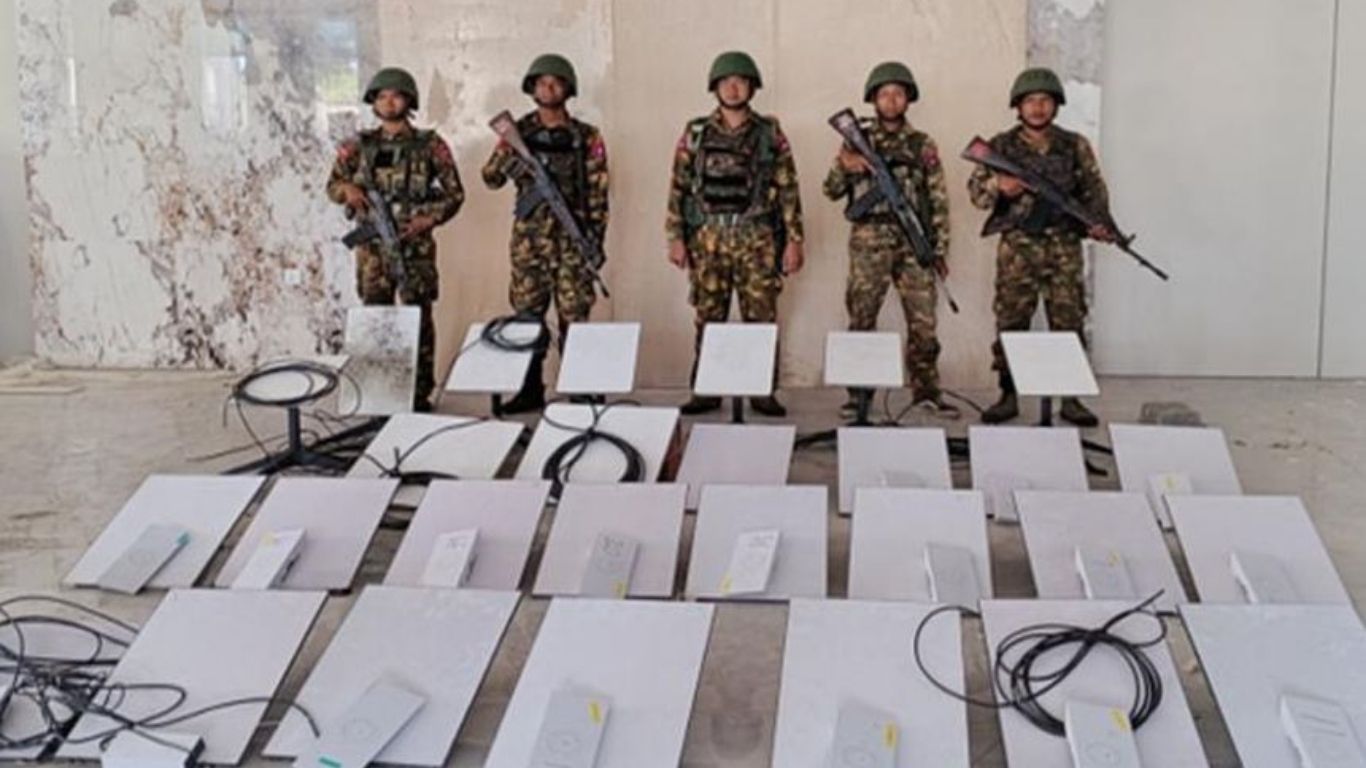
SpaceX’s service termination closely follows Myanmar military operations that reclaimed one of the largest scam compounds, KK Park, earlier this week. The military’s seizure freed more than 2,000 workers and resulted in the confiscation of 30 Starlink terminals, underscoring the compound’s reliance on satellite connectivity to sustain its illicit operations.
However, at least 30 other scam camps remain active along the border, continuing to exploit Starlink technology and protected by militias loyal to the military junta. The military’s dual role as both enforcer and protector of certain compounds complicates diplomatic efforts and creates a challenging environment for global anti-crime coalitions.
The Implications for Satellite Technology and Geopolitics
SpaceX’s intervention offers a powerful precedent in combating cyber-enabled crime through disrupting technological infrastructure. Cutting off satellite internet access not only curtails scam operations but also signals a growing responsibility among private technology firms to self-regulate and cooperate with international security agendas.
This move aligns with global trends urging tech companies to proactively prevent the misuse of their platforms by criminal enterprises and authoritarian regimes. The Starlink shutdown in Myanmar also exposes the vulnerability of satellite infrastructure to exploitation in conflict zones and contested regions.
Challenges of Enforcement and Future Prospects
Despite these successful disruptions, enforcing complete shutdowns remains difficult. Scam compounds are often sheltered by complex networks involving militias and military actors, shielding them from legal repercussions. Moreover, the border region’s rugged terrain and limited state control complicate monitoring and intervention efforts.
SpaceX’s action highlights the critical role of public-private partnerships in tackling transnational crime. Future strategies will likely involve closer collaboration between technology providers, governments, and international organizations to dismantle these networks effectively.
Strategic Impact on Myanmar’s Wartime Economy and Border Security
The removal of Starlink connectivity strikes a serious blow to the cybercrime networks fueling Myanmar’s wartime economy. These scams generate substantial revenue used to finance militia groups and bolster the junta’s grip on power during ongoing conflicts.
By disrupting satellite communications, SpaceX indirectly pressures the military junta and its allied militias, potentially curtailing their operational capabilities in these illicit economic zones. However, the persistence of numerous active camps indicates that technological cutoffs alone cannot resolve the deep-rooted structural and political issues that sustain these crimes.
Conclusion
SpaceX’s shutdown of Starlink services to scam camps in Myanmar represents a watershed moment in how global technology assets can be leveraged for security and ethical purposes. It also highlights the evolving nature of conflict and crime intersecting with cutting-edge communication technology.
While this action disrupts key nodes of international scam networks, sustained progress requires advancing diplomatic pressure, coordinated law enforcement, and humanitarian efforts to protect victims and dismantle militia patronage systems. The unfolding narrative at the Thai-Myanmar border sets a critical precedent for how satellite technology firms can engage responsibly in global security challenges without compromising their mission to connect the world.




