

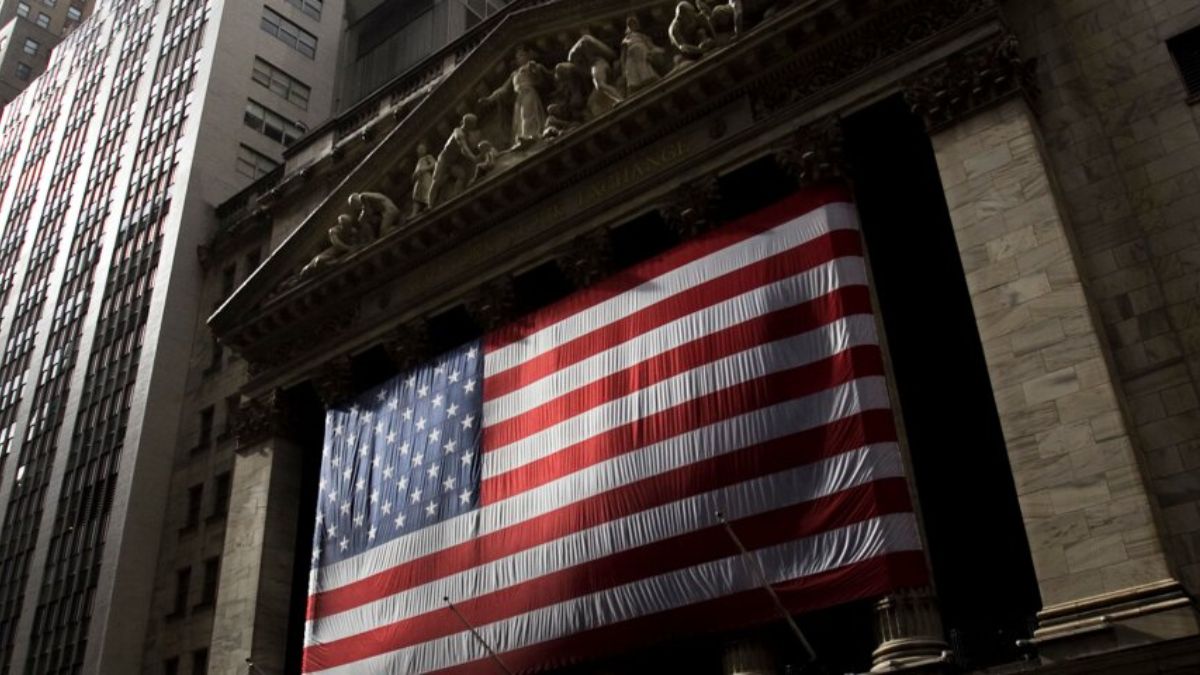
The numbers of the economy, at first glance, should be a source of comfort. The stock market hovers near record highs, buoyed by a historic boom in artificial intelligence. The official unemployment rate remains low, a statistic often waved as the ultimate proof of economic health. Yet, walking through any American city or town, a different reality permeates the air—a palpable sense of anxiety, a feeling that the foundation is cracking even as the roof appears shiny and new. This disconnect is more than a mood; it is the central economic puzzle of our time. Consumer sentiment, a key measure of how ordinary people feel about their financial prospects, has plummeted to levels not seen since the depths of the 2008 financial crisis. The question is no longer whether the data and the public perception are at odds, but why a seemingly benign economic picture masks a deepening crisis for the American worker, a crisis of opportunity, security, and a rapidly fading American Dream.
The Chasm Between Data and Despair
To understand the present unease, one must first look past the headline figures. The most commonly cited statistic, the unemployment rate, only counts those actively seeking work. It creates a paradox where an economy can appear stable while its engine is seizing up. The critical issue in today’s labor market is not mass layoffs, but a profound hiring freeze. The rate at which businesses are hiring new workers is languishing at levels alarmingly close to those witnessed during the worst of the Great Recession. Private data from job posting sites suggest the situation is deteriorating, not improving. This frozen job market creates a silent, pervasive fear among workers. As the influential Conference Board survey indicates, the spread between those who believe jobs are “plentiful” versus “hard to get” has collapsed from a 40-point gap in late 2019 to a mere 8 points today. Workers intuitively understand that while they may still have a job, their safety net has vanished. The risk of a fall has grown exponentially, crippling their bargaining power and their willingness to demand better pay or conditions.
This anxiety is not misplaced. The burden of this frozen economy is not being shared equally. Historical patterns of discrimination and economic disadvantage mean that Black workers are often the first to feel a downturn. While the overall unemployment rate has crept up only modestly, the Black unemployment rate has soared, a stark indicator of who is being shut out first as opportunities dry up. Furthermore, the number of long-term unemployed—those who have been jobless for more than six months—is rising sharply. These individuals face immense hurdles in re-entering the workforce, their skills eroding and their savings depleting. This situation is exacerbated by a climate of extreme policy volatility, where sudden tariffs and unpredictable regulatory shifts, as documented by analysts, create an environment where businesses outside the white-hot AI sector are too nervous to invest in new factories, new projects, or new people. The result is an economy running on one cylinder, leaving millions stranded on the roadside.
The K-Shaped Reality: A Nation Dividing in Two
The term “K-shaped recovery” entered the lexicon during the pandemic, but it has since evolved into a permanent feature of the economic landscape. The economy is not merely recovering unevenly; it is actively bifurcating, creating two distinct and separate Americas. On the upward stroke of the ‘K’ are the affluent and the asset-rich. The top 10% of households, who own a staggering 87% of all equities, are riding a wave of wealth driven by the AI-fueled stock market surge. They are spending freely on luxury goods, travel, and experiences, their financial reality completely divorced from the struggles on Main Street. For them, the economic news is not just good; it is spectacular.
On the downward stroke of the ‘K’ lies the majority of Americans. For them, the story is one of relentless pressure and retreat. Clear, objective data shows middle- and low-income consumers are struggling to keep their heads above water. Delinquency rates on auto loans and credit cards are climbing, signaling severe financial strain. Major grocery chains report a consistent trend of shoppers “trading down”—opting for cheaper store-brand items and cutting back on discretionary food purchases. This is not a “mental recession”; it is a very real contraction in living standards. The wage gains that briefly flourished in the tight post-COVID labor market, leading to what economists David Autor, Arindrajit Dube, and Annie McGrew called an “unexpected compression” in inequality, have now reversed. The Atlanta Fed’s Wage Growth Tracker shows that wage growth for the bottom quartile of workers, which once outpaced that of the top quartile, has now fallen behind. The brief moment where working-class Americans saw their fortunes genuinely improve has ended, and the old patterns of widening disparity have returned with a vengeance.
The AI Boom and the Everything Else Bust
What is driving this great divergence? The primary force is the concentration of economic vitality in a single, narrow sector: artificial intelligence. The AI boom is real, generating immense revenues and stock valuations for a handful of technology companies. However, it is not the rising tide that lifts all boats. Its economic benefits are remarkably insular. The boom is capital-intensive, not labor-intensive, creating vast wealth for investors but relatively few new jobs for the broader population. It functions less like a traditional industrial expansion and more like a modern-day gold rush, where the fortunes are made by those who own the mines, not the thousands of prospectors.
This creates a dangerous paradox. As noted by economists like Mark Zandi of Moody’s Analytics, without the massive spending and investment in the AI sector, the U.S. economy might already be in a textbook recession. The AI boom is thus masking profound weakness elsewhere. Meanwhile, the erratic policy environment emanating from Washington has cast a pall over the rest of the business world. As explored in a recent dispatch, the combination of whipsawing tariffs, vindictive regulatory actions, and general political instability has created a climate of deep uncertainty. For a medium-sized manufacturer, a retail chain, or a construction company, the potential rewards of expansion are outweighed by the risks of a sudden policy shift that could wipe out their investment. Consequently, they freeze. They halt hiring, delay capital expenditures, and adopt a defensive posture. The result is that the “everything else” economy—the part that employs the vast majority of Americans—is stagnating, leaving workers with nowhere to go.
A Frozen Future: The Long-Term Consequences of Worker Insecurity
The immediate pain of a frozen economy is clear in the data on wages and delinquencies. But the long-term consequences of eroded worker power could reshape American society for a generation. When employees believe they have no alternatives, their ability to advocate for themselves evaporates. Employers, aware that their workers are trapped, can claw back benefits, enforce stricter in-office mandates, and suppress wage growth without fear of a mass exodus. The recent push to end remote work, for instance, is not just a managerial preference; it is a power move made possible by a weakened labor force. The psychological toll is immense, fostering a culture of silent resignation and chronic stress.
This dynamic also stifles innovation and economic dynamism. A “no-hiring” economy is a “no-mobility” economy. Workers are unable to move to better, more productive jobs, and new entrants to the workforce, particularly recent graduates, face a wall of rejection that can scar their career prospects for years. The historical context is crucial; as the Library of Congress archives on the Great Depression show, prolonged periods of high unemployment can alter the trajectory of an entire generation, instilling a lasting conservatism and risk-aversion. The current situation may not be a full-blown depression, but the mechanisms of fear and limited opportunity are similar. The great engine of American prosperity has historically been its fluid, flexible labor market. When that market freezes, the very mechanisms of growth and renewal begin to break down. The fact that this is happening alongside a surge in wealth for the few creates a tinderbox of social and political resentment, undermining the social contract that holds the nation together.
The official statistics will eventually catch up, revealing whether this period was a prelude to a formal recession or something new altogether—a “silent depression” where key indicators remain deceptively calm while the lived experience for millions deteriorates. The current administration’s focus on dramatic, high-profile actions, which some critics have compared to wanting to rebuild the White House rather than repair the nation’s economic foundations, only deepens the sense of misprioritization. The gleaming towers of the tech industry cannot conceal the fact that the economic ground beneath most Americans is growing increasingly unstable. The frozen labor market is not a temporary anomaly; it is a symptom of a deeper structural sickness, one that promises to define the American experience long after the current AI bubble has either burst or solidified into a new, equally exclusive, economic order.




