

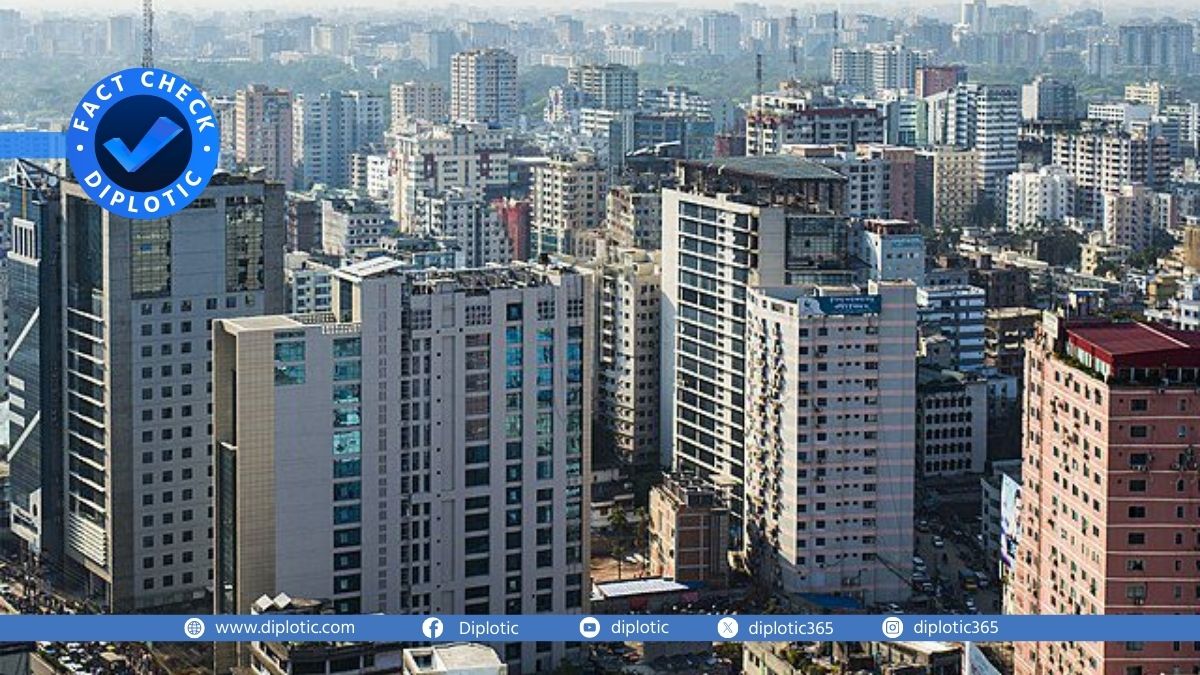
Dawn breaks over Dhaka’s chaotic skyline, where rickshaws weave through a haze thicker than monsoon fog, and schoolkids clutch masks like lifelines. In this megacity of 20 million, where the Buriganga River once sparkled but now chokes on industrial runoff, air pollution isn’t just an environmental footnote—it’s a daily death sentence. Breathing Dhaka’s air equates to smoking 1.7 cigarettes a day, per World Bank estimates, fueling a silent epidemic of lung cancers, heart failures, and childhood asthma that claims 78,000 lives yearly across Bangladesh. As 2025 unfolds with AQI spikes topping 392—worse than Delhi’s infamous smog—the debate rages: Are government crackdowns on brick kilns and vehicle emissions finally clearing the skies, or is Dhaka’s “improvement” just a cruel mirage? With climate change supercharging dust storms and global trade dumping dirtier fuels at the door, this isn’t mere meteorology—it’s a geopolitical gamble on human endurance. We dissect five persistent claims, layering data with history’s grit and ethics’ edge to expose if Dhaka’s air is healing or hemorrhaging.
Claim 1: Recent Government Initiatives Are Driving Measurable Improvements in Dhaka’s AQI
The upbeat spin: Bangladesh’s Clean Air and Sustainable Environment (CASE) project, with its 16 monitoring stations and real-time AQI dashboards, is turning the tide. Launched post-2010s pollution peaks, it promises emission curbs on factories and a shift to cleaner fuels, echoed in the 2024 National Air Quality Management Plan (NAQMP) that eyes zero fossil fuel reliance by 2030. Proponents point to isolated wins—like a 14.78% PM2.5 drop during the 2020 COVID lockdown—as proof that enforced measures work.
But the numbers tell a harsher story. Cross-referencing IQAir and U.S. Embassy data, Dhaka’s annual PM2.5 average soared to 171 μg/m³ in 2024—the highest in nine years, 34 times the WHO’s 5 μg/m³ guideline. Historical context bites: Colonial-era industrialization left Dhaka with outdated grids, and post-independence booms prioritized GDP over lungs, birthing a brick kiln frenzy (1 billion fired yearly) that spews black carbon. Science confirms: While monsoon rains dilute pollutants (AQI dipping to 46 in September 2025), winter inversions trap toxins, with January 2025 logging 11 days above 243 AQI—Dhaka topping global filth charts.
Philosophically, it’s Bentham’s utility twisted: Policies aim at greatest good, but without teeth—lax enforcement lets 60% of vehicles evade CNG mandates. Trade-off? Initiatives boost monitoring but breed complacency, as funds flow to tech over toxicant takedowns. Implication: Celebrating pilots ignores the pandemic’s accidental gift, masking how growth outpaces green gains.
Verdict: False. Initiatives monitor more than they mend; AQI trends scream regression, not redemption.
Claim 2: Seasonal Variations Mask Long-Term Gains in Air Quality
The nuanced take: Dhaka’s air “improves” in monsoons (June-September), with AQI often below 100 thanks to rain-washed skies, suggesting underlying progress amid natural ebbs. Data from aqicn.org shows 2025’s wet season averaging 66 AQI—moderate, versus winter’s hazardous 200+—framing pollution as cyclical, not chronic.
Reality rains on this parade. A 2024 CAPS analysis reveals even “good” seasons exceed WHO limits by 8-13 times, with PM2.5 at 90 μg/m³ yearly averages. Historical lens: Mughal-era Dhaka thrived on breezy Buriganga trade winds, but 20th-century deforestation and urbanization felled urban forests, amplifying seasonal swings into year-round peril. Science sharpens it: Brick kilns and transboundary dust from India/Pakistan spike winter PM10 by 50%, per Frontiers studies, while summer ozone from vehicle NOx brews photochemical soup.
Ethically, it’s a veil of ignorance—blaming seasons excuses systemic sins, like subsidizing coal plants that export haze. Contradiction? If variations signal gains, why did 2024 log just 31 “clean” days in nine years, per CAPS? Deeper ripple: This claim lulls policymakers, delaying resilient infrastructure like green belts that could buffer both seasons.
Verdict: Misleading. Seasons dilute but don’t detoxify; long-term data shows deepening seasonal despair.
Claim 3: Economic Growth and Urbanization Are the Main Culprits, Not Fixable by Policy Alone
Cynics argue: Dhaka’s 7% GDP surge and 77% urbanization rate inevitably foul the air—more cars, factories, construction dust—outstripping any decree. With vehicles tripling since 2010 and rickshaws alone numbering 500,000, the claim posits pollution as progress’s price, per World Bank nods to “unavoidable” trade-offs in developing hubs.
Yet policy’s pivot proves pivotal. Cross-check with a 2025 ResearchGate forecast: Without interventions, PM2.5 could hit 200 μg/m³ by 2030, but NAQMP’s electric vehicle push and kiln relocations could halve it. Geopolitics layers irony: Bangladesh’s low per-capita emissions (1 ton CO2) get dwarfed by imported dirty diesel, subsidized to fuel export zones that choke locals. Cultural context: Post-1971 liberation, rapid industrialization honored independence’s hustle but ignored health’s cost, birthing “brown lungs” in garment workers.
Theoretically, it’s a Malthusian trap—growth devours air—but Singapore’s green urbanism shows escape routes. Trade-off? Economic zeal creates jobs but jobs in smog-shrouded factories. Hypocrisy glare: Elites jet to clean-air retreats while preaching policy; implication: Abdicating to “growth” dooms the poor, who bear 48% of pollution deaths in Dhaka-Chattogram.
Verdict: False. Urban booms burden, but targeted policies—like Sweden-backed metrorails—can lighten the load without halting hustle.
Claim 4: International Aid and Tech Are Accelerating Air Quality Recovery
The globalist glow: Partners like the World Bank and Sweden pump funds into CASE and NAQMP, deploying AI forecasts and solar incentives to slash emissions. A 2024 Atlantic Council report hails nuclear bids like Rooppur as clean-energy lifelines, with aid bridging Bangladesh’s $12 billion green gap.
But delivery drags. A Lancet 2025 editorial slams aid’s 25% absorption rate, tangled in debt servicing for fossil projects. Historical echo: 1990s CNG rollout cut two-stroke fumes but clogged roads, worsening NOx; today’s tech imports often favor urban elites, per Prothom Alo audits. Science tempers: While mangroves buffer coastal haze, Dhaka’s inland kiln soot defies satellite fixes, with 2025’s AQI 323 on January 24th mocking monitors.
Ethically, it’s neocolonial calculus—North’s “help” funds Southern sacrifice zones. Contradiction: If aid accelerates recovery, why forecast 88,000 pollution deaths by 2030 without bolder buys? Implication: Tech dazzles donors but dusts the ground, widening inequities as rural remittances fund urban escapes.
Verdict: Uncertain. Aid equips but doesn’t enforce; recovery hinges on local leverage, not foreign largesse.
Claim 5: Public Awareness and Behavior Change Are Key to Sustained Improvement
The empowering angle: Campaigns like BAPA’s tree drives and CAPS’ school alerts are shifting mindsets, with 2025 polls showing 70% Dhaka residents masking up—curbing open burning and carpooling as grassroots wins. Rooted in social ecology, it posits collective action as the cleaner than top-down edicts.
Evidence exhales doubt. A 2023 PMC study links awareness to minor dips in biomass burning, but 58% of pollution still stems from unchecked industries, per IQAir. Social context: In Dhaka’s informal economy, where 40% hawk wares amid traffic, “behavior change” buckles under survival—women in slums burn trash for warmth, inhaling equivalents of 20 packs daily. Philosophically, it’s Habermas’ public sphere stifled: Awareness rallies but regulations rule, as corruption siphons fines into pockets.
Trade-off? Empowerment inspires but exhausts the exposed. Wider consequence: Without enforcement, it greenwashes guilt, letting polluters off while citizens choke. Contradiction: If awareness suffices, why persist hazardous days despite education surges?
Verdict: Misleading. Shifts stir but can’t scrub systemic stains alone.
Science charts the toxins, history haunts with hasty hubs, and ethics indicts inaction’s inequity. As 2025’s COP30 eyes adaptation, the ethical fork looms: Will Bangladesh’s leaders—buoyed by 2030 zero-fuel vows—enforce or evade? The stakes? Not just clearer skies, but breaths unburdened for millions. For a global benchmark on urban air woes, the WHO’s air quality guidelines offer vital baselines. On Dhaka’s monitoring network, the UN’s clean air strategy spotlights scalable fixes.




