

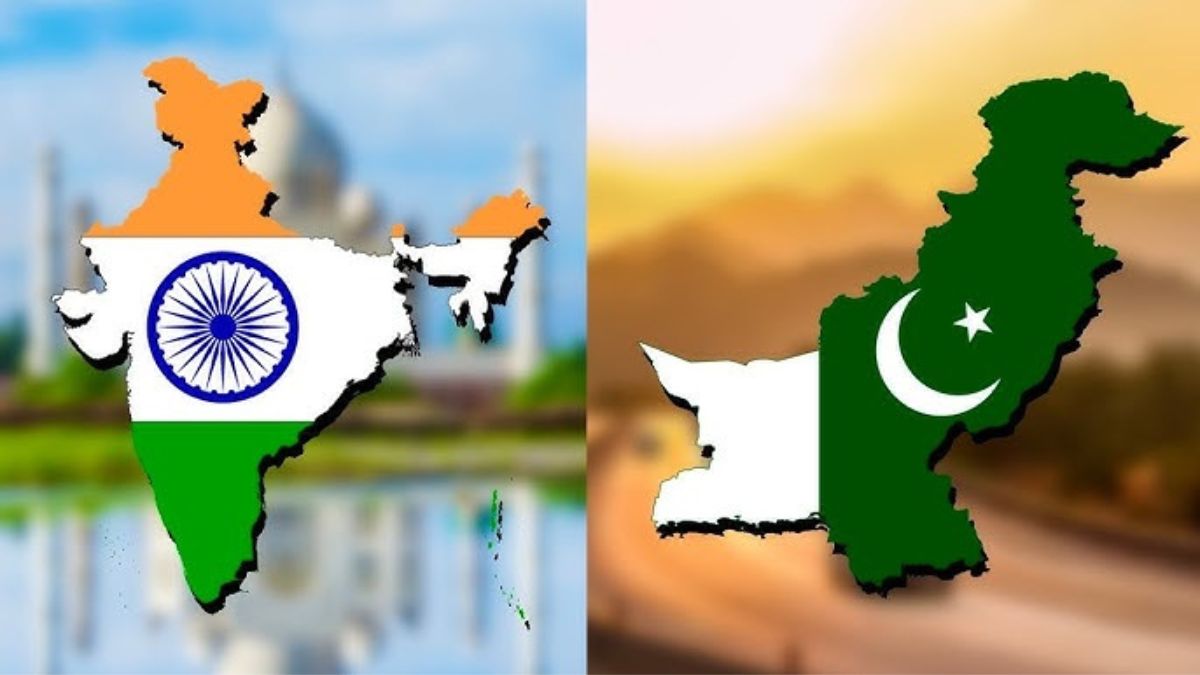
A Historic Embrace Amid Simmering Tensions
On September 17, 2025, in the opulent halls of Riyadh’s Al-Yamamah Palace, Pakistan’s Prime Minister Shehbaz Sharif and Saudi Crown Prince Mohammed bin Salman sealed a pact that reverberated far beyond the Gulf. The “Strategic Mutual Defence Agreement” formalized decades of quiet military ties, pledging that aggression against one nation would be met as an attack on both. For Pakistan, the Islamic world’s sole nuclear power, this bond with the Gulf’s economic heavyweight promised financial lifelines amid a teetering economy on the brink of bankruptcy. For Saudi Arabia, it signaled a bold diversification of security partnerships, driven by waning faith in American guarantees after Israel’s strikes on Doha in early September rattled the region.
The timing could not have been more fraught for India. Just months earlier, in April 2025, a four-day border clash with Pakistan—sparked by cross-border incursions in Kashmir—had escalated to artillery duels and air skirmishes, leaving dozens dead and exposing the fragility of their 1972 ceasefire. Nuclear-armed rivals since 1998, India and Pakistan have clashed four times over Kashmir, a disputed Himalayan territory divided since partition in 1947. The 1947 war birthed the Line of Control; 1965 and 1971 conflicts redrew borders, with the latter carving out Bangladesh from East Pakistan. The 1999 Kargil incursion nearly went nuclear. Against this backdrop, the pact’s mutual defense clause struck like a thunderbolt in Delhi, where analysts decried it as a direct security threat. As Indian strategist Brahma Chellaney observed, Riyadh proceeded despite knowing India would interpret it as an existential risk, binding a “chronically dependent” Pakistan to provide manpower and nuclear deterrence.
India’s official response was measured restraint. Foreign Ministry spokesman Randhir Jaiswal stated Delhi would scrutinize the pact’s implications for national security and regional stability, while expressing hope that the India-Saudi strategic partnership—forged through high-level visits and $50 billion in annual trade—would honor mutual sensitivities. Yet beneath the diplomacy lurked alarm. Former Foreign Secretary Kanwal Sibal labeled it a “grave misstep,” arguing a politically unstable Pakistan as Riyadh’s security guarantor was inherently dangerous, potentially emboldening Islamabad against India. This unease echoed historical frictions: Saudi Arabia backed Pakistan in the 1965 and 1971 wars, providing oil on deferred payments and rhetorical support, while India cultivated ties with Iran and later Israel for balance.
The pact’s roots stretch to the 1960s, when Pakistan deployed troops to bolster Saudi defenses against pan-Arab threats. Pakistani commandos quelled the 1979 Grand Mosque siege in Mecca, and Riyadh has since invested in Pakistan’s arms industry, from JF-17 jets to ballistic missiles. In 2017, a retired Pakistani general led Saudi’s anti-ISIS coalition. These bonds, as detailed in geopolitical histories (https://www.britannica.com/place/Saudi-Arabia/Foreign-policy-since-the-1930s), reflect Riyadh’s quest for ideological and military anchors in the Muslim world. For India, a nation that avoided formal alliances post-independence under Nehru’s non-alignment, the pact disrupts this equilibrium, anchoring Pakistan to a trio of patrons—China, Turkey, and now Saudi Arabia—that supplied arms during the April clash.
Echoes of the Past: Formalizing a Shadowy Alliance
The agreement’s significance lies not just in its novelty but in its codification of longstanding shadows. Saudi officials downplayed it as an “institutionalization of deep cooperation,” yet its mutual aggression clause evokes NATO’s Article 5, raising specters of an “Islamic NATO” that could encircle India. Pakistan, with its 600,000-strong army and nuclear arsenal developed in the 1980s amid Afghan jihad funding, gains Riyadh’s economic muscle—over $6 billion in 2025 loans and deposits—to modernize forces strained by debt. This mirrors Cold War dynamics, where the U.S. funneled aid to Pakistan to counter India and the Soviets, as former ambassador Husain Haqqani noted, positioning Saudi Arabia as a new patron to tilt the South Asian balance.
For Saudi Arabia, the pact addresses existential vulnerabilities. Israel’s 2025 Doha strike, targeting Hamas leaders and exposing Gulf airspace gaps, compounded Riyadh’s rivalry with Iran—fueled by proxy wars in Yemen and Syria since 2015. With 40,000-50,000 U.S. troops in the Gulf but sanctions on Pakistani missile tech under Biden, Riyadh seeks alternatives. Pakistan’s nuclear umbrella offers deterrence without American strings, while its manpower fills gaps in Saudi’s 250,000-strong forces. Ahmed Aboudouh of Chatham House described it as signaling diversification, not direct confrontation, viewing Iran and Israel as twin threats. This shift, rooted in post-9/11 realignments where Saudi hedged against U.S. interventions, unsettles India by embedding Pakistan in Middle Eastern security, potentially drawing Gulf resources into Kashmir flashpoints.
India’s concerns amplify through historical lenses. The 1971 war saw Saudi tilt toward Pakistan, delaying recognition of Bangladesh. Recent strains—Pakistan’s 2019 Pulwama attack prompting Indian airstrikes—heighten fears of Saudi enabling Islamabad’s adventurism. The pact arrives as India deepens Gulf ties: $100 billion in Saudi investments since 2016, including refineries and infrastructure. Yet, as Michael Kugelman cautioned, Riyadh prioritizes balance—India buys 20% of its oil exports—making outright hostility unlikely. Still, the optics sting: Modi and bin Salman’s April 2025 Jeddah summit underscored warmth, only for this pact to underscore Riyadh’s multipolar maneuvering. Pakistan’s economic fragility—IMF bailouts since 2019, 40% inflation in 2024—undermines its reliability, yet Saudi’s ambitions, from Vision 2030 diversification to nuclear hedging, override such doubts.
The agreement’s vagueness—undefined “aggression” thresholds—fuels speculation. Does a Kashmir incursion qualify? Haqqani warned of definitional clashes, potentially straining Saudi-India ties. For Delhi, it complicates the India-Middle East-Europe Economic Corridor (IMEC), a 2023 G20 initiative linking ports and rails to bypass China, now vulnerable to Pakistani-Saudi leverage in the Gulf. This echoes 1980s alignments, when Saudi-Pakistani ties during the Afghan war isolated India regionally (https://www.britannica.com/place/Pakistan/Relations-with-the-United-States).
Regional Ripples: Balancing Acts and Broader Realignments
The pact reshapes South Asian and Gulf geopolitics, thrusting India into a web of emerging blocs. Pakistan, anchored by China’s $62 billion China-Pakistan Economic Corridor and Turkey’s drone supplies, now boasts Saudi as a third pillar, enhancing its deterrence against India’s superior conventional forces—1.4 million troops and a $81 billion defense budget versus Pakistan’s $10 billion. Kugelman termed it a “checkmate,” bolstering Islamabad without directly hindering Delhi. Yet, it signals Riyadh’s assertiveness: post-Doha, Gulf states question U.S. shields, with 19 American bases in the region offering scant comfort against Iranian drones or Israeli preemption.
For India, the stakes extend beyond Kashmir. The pact could harden into a Sunni axis, complicating Modi’s “Look West” policy—$200 billion in Gulf remittances, joint military drills with UAE and Qatar. Aboudouh envisioned an “Islamic NATO,” uniting Muslim states against shared foes, leaving India to counter with Russia, Israel, and France. Israel’s 2025 strikes on Gaza and Lebanon, displacing millions, heighten this: Saudi views Pakistan’s nukes as insurance, mirroring India’s 1998 tests amid Pakistani parity. The April India-Pakistan clash, where Chinese and Turkish arms aided Islamabad, underscores the pact’s potential to prolong such standoffs.
Saudi’s motivations blend security with ambition. Vision 2030 demands non-oil revenue, but Iran’s nuclear advances—post-2018 JCPOA collapse—and Houthi attacks on Aramco since 2019 expose gaps. Binding Pakistan provides cheap labor—2 million expatriates in Saudi—and ideological solidarity, rooted in shared Wahhabi strains. Yet contradictions lurk: Riyadh’s $50 billion India trade dwarfs Pakistan’s $5 billion, and bin Salman’s pragmatism—normalizing with Israel via Abraham Accords—suggests the pact targets Tehran more than Delhi. India’s response—diplomatic probing, not rupture—reflects this calculus, but whispers of closer Indo-Israeli ties, including joint IMEC stakes, hint at countermeasures.
Historically, such pacts have realigned power. The 1955 Baghdad Pact isolated India during the Cold War; today’s echoes risk similar encirclement. As Haqqani noted, Saudi’s economic aid—deferred oil since the 1970s—has sustained Pakistan against India, now formalized amid U.S.-China rivalry. With Biden-era sanctions on Pakistani missiles and Trump’s 2025 isolationism, Riyadh hedges, potentially fueling arms races: Pakistan eyes Saudi-funded hypersonics, India accelerates BrahMos exports.
Horizons of Hazard: India’s Path in a Shifting Sands
Looking ahead, the pact portends a volatile equilibrium for India. Short-term, it emboldens Pakistan, risking Kashmir escalations—perhaps drone incursions echoing April’s clash—while straining Delhi-Riyadh trust. Midterms in Pakistan and Saudi’s 2026 municipal votes could test the alliance’s resilience, with economic woes curbing implementation. Yet, if operationalized—joint bases, nuclear sharing—the “attack on one” clause could deter Indian strikes, forcing Delhi to multilateral forums like the UN, where Pakistan holds veto allies.
India’s toolkit includes economic leverage: as Saudi’s second-largest oil buyer, Delhi could pivot to Russia or Iraq, though at higher costs amid $80-barrel Brent. Diplomatic deftness—Modi’s 2025 Gulf tour secured $10 billion UAE pacts—offers buffers, while QUAD and I2U2 with Israel counterbalance. The pact may accelerate IMEC’s militarization, with Indian frigates patrolling chokepoints. For Riyadh, overreach risks alienating India, its $100 billion investment hub, echoing 2019’s Kashmir snub that cooled ties temporarily.
Broader consequences loom: a Gulf-South Asia axis could draw Pakistan into Yemen or Syria, draining resources and inviting Indian opportunism in Balochistan. U.S. influence wanes, with 2025 Doha fallout accelerating Saudi’s pivot, fueling China’s Belt and Road. India’s non-alignment, once a strength, now demands adaptation—perhaps a Quad-plus Gulf framework. As Chellaney warned, the pact underscores Saudi’s independence, not Pakistan’s prowess, but in nuclear shadows, symbolism yields to strategy. Delhi watches, recalibrating in a world where old foes forge new shields, leaving India to navigate alliances not of its making.




