

The Envoy’s Candid Voice Amid Shifting Sands
Tom Barrack steps into the spotlight not as a typical diplomat, but as a figure with deep personal ties to the region. His grandparents hailed from Lebanon, giving him a unique vantage point in his roles as the US ambassador to Turkey and special envoy for Syria under President Donald Trump. Appointed in May 2025, Barrack has navigated a landscape reshaped by recent upheavals, including the fall of Bashar al-Assad’s regime in Syria last December and ongoing tensions in Lebanon following a fragile ceasefire in November. In a revealing 23-minute interview with journalist Hadley Gamble for The National, published on September 23, 2025, Barrack laid bare his views on US policy, Israel’s actions, and the elusive quest for stability. This conversation comes at a time when the Middle East grapples with the aftermath of Israel’s military campaigns, including strikes in Gaza, Lebanon, and even Qatar earlier this month.
Historically, US involvement in the Middle East has oscillated between intervention and withdrawal. Post-World War II, America positioned itself as a counterweight to Soviet influence, forging alliances through aid and military support. The 1979 Camp David Accords marked a pivotal moment, securing peace between Israel and Egypt while committing billions in annual aid to both. By the 2000s, invasions in Afghanistan and Iraq aimed at regime change and counterterrorism, but they often bred resentment and instability. Trump’s first term emphasized disengagement, echoing his doctrine of avoiding endless wars. Barrack echoed this in the interview, quoting Trump: “I’m not going to lose any more American lives. We’ve been there. I’m not going to take over any more countries and try and teach them the colonial method. It never worked.” Yet, exceptions persist, particularly for Israel, which receives around $3.8 billion in annual military aid under a 2016 memorandum, with additional emergency funds pushing it closer to $4-5 billion as Barrack noted.
Barrack’s remarks reveal a pragmatic, if cynical, approach. He dismissed peace as “an illusion,” arguing that conflicts stem not from borders but from struggles for dominance and legitimacy. This view contrasts with past diplomatic efforts like the Oslo Accords of the 1990s, which sought incremental peace but faltered amid mutual distrust. In Lebanon, Barrack highlighted the government’s failure to disarm Hezbollah, a group formed in the 1980s during Israel’s occupation. The Taif Accord of 1989, ending Lebanon’s civil war, called for disarming all militias except in resistance to occupation, but Hezbollah retained arms, citing ongoing threats. Recent attempts, including UN Resolution 1701 after the 2006 war, have urged disarmament, yet violations continue, with Israel breaching the Lebanon ceasefire near-daily. Barrack’s frustration is palpable: “All they do is talk.” He suggested the US provides advice but no direct intervention, leaving it to locals or, implicitly, Israel.
Reactions to the interview flooded social media, with outlets like Middle East Eye and The Cradle amplifying his admissions. One post from Drop Site News noted Barrack’s confirmation of Israel’s strike on the Global Sumud Flotilla in Tunisia, framing it as part of broader aggression. Critics pointed out hypocrisies, such as arming the Lebanese army not against external foes but internals. This echoes historical US strategies in Vietnam or Iraq, where propping up allies often led to internal fractures. As the region evolves, Barrack’s words signal a US pivot toward economic incentives over military might, betting on prosperity to quell unrest. Yet, with Israel’s actions unchecked, this approach risks alienating partners and perpetuating cycles of violence.
Assaults Without Borders: Israel’s Expanding Reach and US Complicity
Barrack’s interview pulls back the curtain on Israel’s aggressive posture, which he described bluntly: “Israel is attacking everybody.” He listed Syria, Lebanon, and Tunisia as targets, referencing frequent strikes in Syria since Assad’s fall, breaches in Lebanon, and a suspected drone attack on the Global Sumud Flotilla en route to Gaza. Israel has not claimed the Tunisia incident, but Barrack’s mention lends credence to suspicions. This pattern fits a broader history of Israeli preemptive actions, rooted in security concerns but often expanding influence. For instance, during the 1982 invasion of Lebanon, Israel aimed to eliminate Palestinian groups, leading to the rise of Hezbollah as a resistance force. Today, that group, detailed in Britannica’s comprehensive overview (https://www.britannica.com/topic/Hezbollah), remains a thorn, armed by Iran and embedded in Lebanon’s Shia communities.
The US envoy critiqued Israel’s strike on Qatar, calling it “not good,” especially since Doha hosts Hamas and Taliban officials at America’s request. This highlights a contradiction: Washington relies on Qatar as a mediator—facilitating talks that led to brief Gaza ceasefires—yet tolerates Israeli overreach. Barrack noted, “If we didn’t have some conduit to be able to speak to them, we would never get there.” White House press secretary Karoline Leavitt’s response post-strike praised eliminating Hamas as a “worthy goal,” underscoring mixed signals. Historically, US-Israeli ties have been ironclad since the 1967 Six-Day War, when America became Israel’s primary backer amid Cold War dynamics. Aid flows unconditionally, enabling operations that strain regional alliances.
In Lebanon, Barrack urged the government to disarm Hezbollah, but admitted the Lebanese Armed Forces (LAF) are under-equipped: “We don’t want to arm them… so they can fight Israel? I don’t think so.” Instead, he said, arms are for internal confrontations—”fight their own people.” This risks civil strife, reminiscent of Lebanon’s 1975-1990 war, where sectarian divisions tore the nation apart. Barrack warned, “You’re not going to have LAF go knock on the door of a Shia house… and say, ‘Excuse me, ma’am, can I go and take the rockets and the AK-47s out of your basement?'” He suggested Israel would handle it: “Jerusalem is going to take care of Hezbollah.” Social media erupted, with Hala Jaber labeling it a “plan for civil war,” arguing it sabotages rather than supports Lebanon.
Barrack tied Hezbollah’s strength to Iranian funding, estimating $60 million monthly, far outpacing LAF salaries. Fighters earn $1,000-2,000 monthly versus soldiers’ $200-300, forcing moonlighting. He advocated choking Iran: “Cut the heads off of those snakes.” This echoes past US sanctions under Trump, which crippled Iran’s economy but failed to curb proxies. Recent June clashes between Israel and Iran underscore escalating risks. Barrack’s neutrality slips when praising Israel’s resolve: “They tell you exactly what’s going to happen.” Yet, he admitted no blind trust, even for Israel: “It’s not the United States of Israel.” This exposes strategic miscalculations—US aid empowers Israel but erodes credibility elsewhere, as seen in pivots toward China. Future consequences loom: unchecked aggression could ignite wider wars, drawing in powers like Turkey or Saudi Arabia, unraveling fragile balances.
Illusions of Peace: Gaza, Demographics, and the Quest for Legitimacy
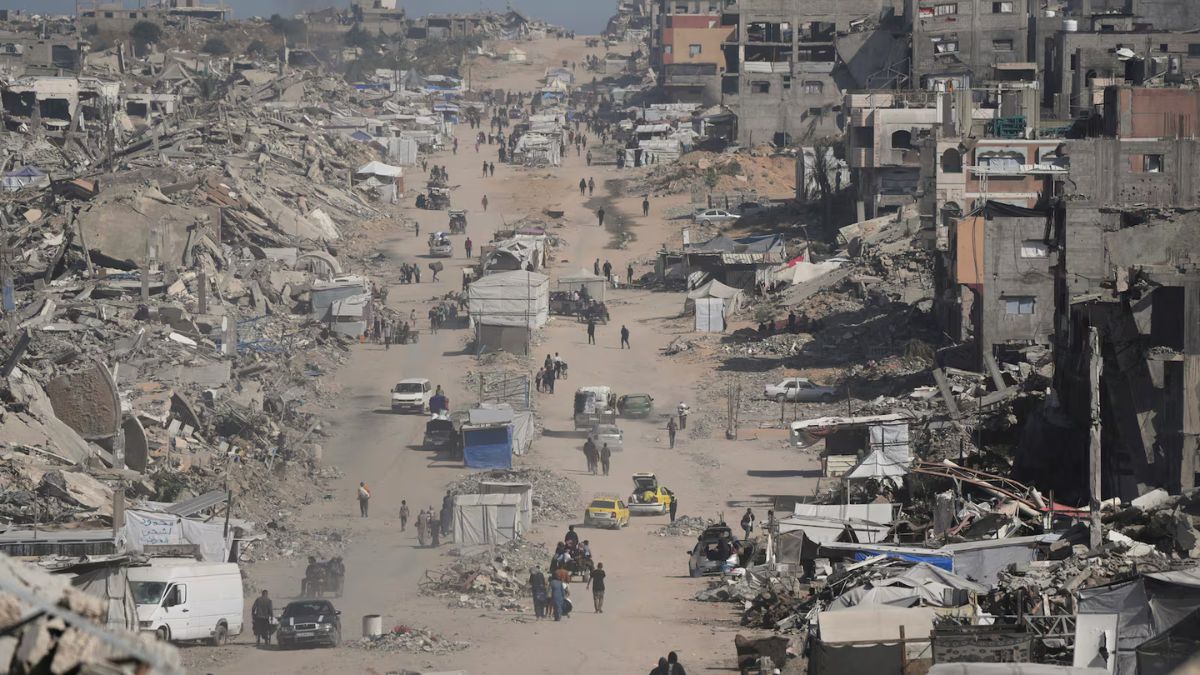
Barrack dismissed ceasefires in Gaza, claiming “27 ceasefires” have failed, though records show only two brief halts since October 2023—one in November 2023 and another from January to March 2025, ended by Israel. He called the war “unsettling” for all sides, blaming Hamas for holding two million hostages or Israel for over-aggression, but insisted it must end. Yet, rejecting truces, he questioned why Arabs won’t accept Palestinians: “Why won’t Egypt take them, why won’t Saudi Arabia take them?” When challenged on their right to land, he retorted it’s about legitimacy, not territory. This ignores historical displacements, like the 1948 Nakba, when 750,000 Palestinians fled or were expelled, shaping today’s refugee crisis.
The envoy’s demographic warnings add urgency. He predicted by 2045, a world of 10 billion people with five billion Muslims, questioning pounding “little Israel” against them. Projections contradict this; Pew Research estimates Muslims at about 2.8 billion by 2050, growing fastest but not doubling. Current figures hover at two billion, per recent studies. Barrack’s exaggeration highlights fears of shifting power, urging befriending “Islam and the East.” This nods to economic realignments, like Gulf states’ ties with China amid US unreliability post-Doha strike.
Gaza’s plight ties into broader legitimacy battles. Israel’s actions, amid accusations of genocide, strain US support, dividing Americans. Barrack noted potential blowback: “People can vote with their feet the next time around.” Historically, Palestinian statehood has global backing, but lacks enforcement. The 1947 UN partition plan aimed for two states, but wars altered maps. Concepts like Greater Israel, explored in Britannica’s historical analysis (https://www.britannica.com/place/Israel), envision expanded borders, fueling current expansions in the West Bank and Golan. Barrack saw prosperity as the answer: “The end result is somebody wants dominance, which means somebody has to submit.” He erred on Arabic for “submit,” ignoring “Islam” meaning submission to God, drawing online backlash.
Looking ahead, Barrack wouldn’t rule out strikes on Iran, praising its people but eyeing regime control to tame proxies like Houthis and Hezbollah. June’s Israel-Iran conflict hints at escalation. US strategy—distancing from China in trade deals—seeks alignment, but contradictions abound. Barrack’s distrust of all actors, including Israel, reveals fractured alliances. If unaddressed, this could lead to isolation, with regions turning eastward, perpetuating instability over resolution.
Navigating Contradictions: US Strategy’s Perilous Path Forward
Barrack’s interview exposes US policy’s inherent tensions, balancing withdrawal with selective engagement. Trump’s doctrine prioritizes American lives, cooperating on counterterrorism but shunning nation-building. Yet, Israel’s “special place” persists, subsidized heavily amid “confusion” in transitions. This selectivity breeds hypocrisy: criticizing Israel’s Qatar strike while admitting Doha acts at US behest. Barrack respected Netanyahu’s resolve—”he will go anywhere”—but this autonomy risks dragging America into conflicts, echoing past missteps like the 2003 Iraq invasion, which empowered Iran.
In Syria, post-Assad chaos sees Israeli strikes, complicating US efforts. Barrack’s role focuses on stability, but his realism—peace as illusion—questions viability. Lebanon’s impasse exemplifies: pushing disarmament without full support invites failure. Historical parallels, like arming mujahideen in 1980s Afghanistan, show blowback. Barrack’s civil war hint drew ire; The Cradle post dissected it as pitting Sunni LAF against Shia Hezbollah, risking sectarian implosion.
Future scenarios hinge on economics. Barrack bet on prosperity, but sanctions alone haven’t subdued Iran. Demographic shifts, though overstated, underscore need for inclusive policies. US demands to distance from China in trade could alienate Gulf states, as Barrack dismissed pivots as rhetoric. Yet, with Israel’s actions unchecked, resentment grows. Gaza’s “mess” affects Jordanians, Syrians, Turks—Barrack’s list—potentially fueling radicalism.
Neutrality demands highlighting miscalculations: over-reliance on Israel erodes trust, as Barrack admitted no “blind trust.” This could lead to isolation, with allies seeking alternatives. If Iran faces strikes, escalation might engulf the region, costing trillions and lives. Barrack’s words, while frank, connect dots from historical interventions to present dilemmas, urging a recalibration toward genuine diplomacy over proxy battles. Without it, the Middle East’s fractures deepen, illusions intact.




