

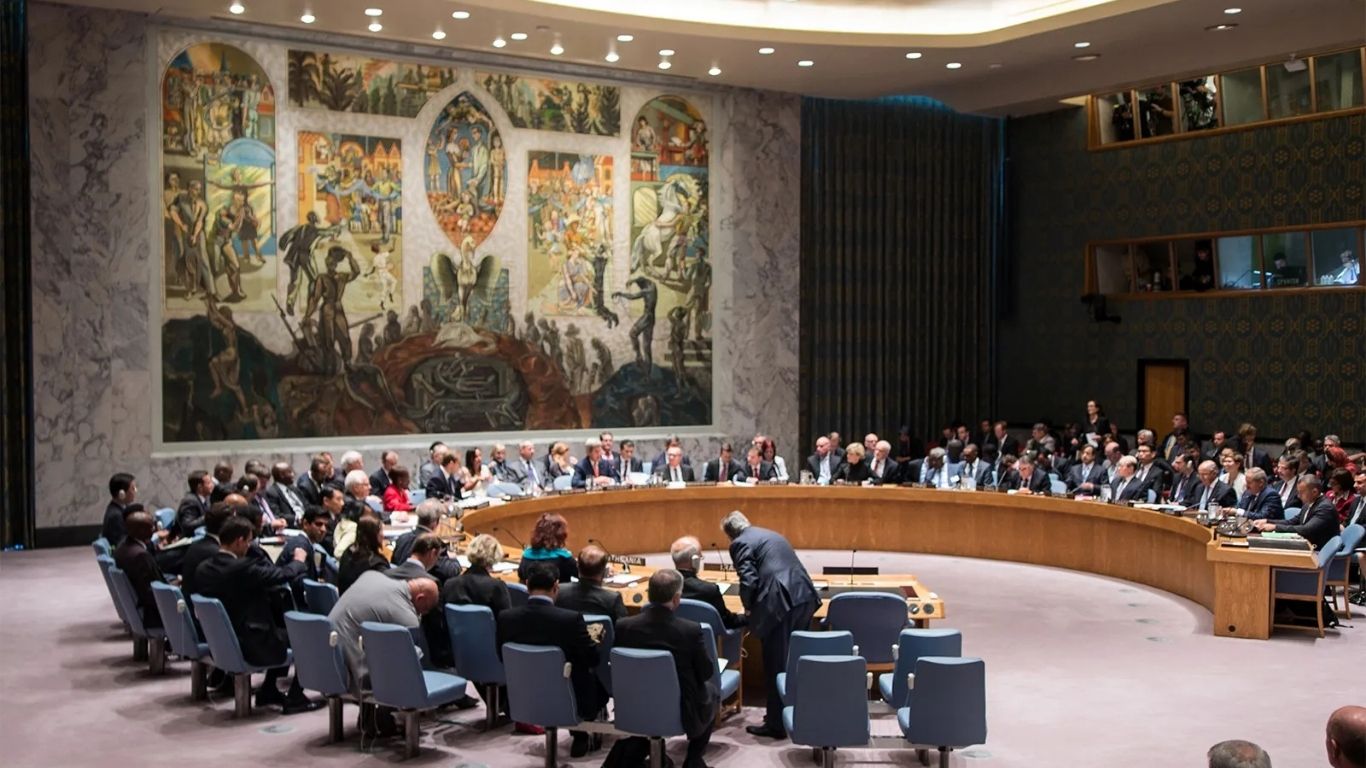
The United Nations (UN), founded in 1945 with the noble purpose of maintaining international peace and security, has faced increasing criticism for its ineffectiveness in managing and resolving some of the most severe global conflicts in recent decades. From entrenched territorial disputes like the Israel-Palestine conflict to large-scale wars such as the Russia-Ukraine crisis, and earlier interventions like Afghanistan, the UN’s role has often appeared limited, inconsistent, or compromised. This pattern reveals fundamental structural weaknesses and political constraints that undermine its ability to fulfill its mission in the present world.
Israel-Palestine Conflict
The Israel-Palestine conflict has continued for over seven decades with numerous UN resolutions calling for peace, respect for human rights, and a two-state solution. Despite this, the UN has struggled to enforce its decisions. Security Council resolutions condemning settlement expansions, military actions, or violations of international law by Israel are frequently blocked or weakened due to the geopolitical alliances and veto powers of permanent members, especially the United States. Meanwhile, Palestinian issues often become subjects of repeated General Assembly debates without concrete outcomes. The UN’s peacekeeping and humanitarian agencies on the ground, such as UNRWA (United Nations Relief and Works Agency for Palestine Refugees), provide crucial aid but cannot stop violence or resolve core disputes. This leaves millions of Palestinians in protracted displacement and Israeli-Palestinian relations marred by repeated cycles of violence, deep mistrust, and failed negotiations, with the UN seen by many as a largely symbolic actor.
Russia-Ukraine War
The ongoing conflict between Russia and Ukraine since 2014, intensifying dramatically in 2022 with Russia’s full-scale invasion, exposed significant limitations within the UN’s peace and security framework. Russia’s role as a permanent member of the Security Council with veto power has blocked virtually all attempts at binding UN resolutions condemning its actions or authorizing peacekeeping forces and sanctions. This paralysis has reduced the UN’s potential to mediate effectively or uphold international law and sovereignty norms. Although the General Assembly and other UN bodies have condemned the invasion and called for respect for Ukraine’s territorial integrity, these are non-binding measures without enforcement. The continued conflict has caused massive civilian casualties, displacement, and a widespread humanitarian crisis that the UN and its agencies struggle to fully address amidst limited access and ongoing hostilities.
Afghanistan Intervention
The UN’s experience in Afghanistan highlights both its ambitions and constraints as an international actor in conflict zones. Following the US-led invasion in 2001 aimed at dismantling terrorist networks and overthrowing the Taliban, the UN assumed responsibilities in coordinating humanitarian aid, state-building, and human rights monitoring. However, the absence of a clear peace process, the persistence of insurgency, and the complex involvement of multiple international and regional actors undermined these efforts. Despite the presence of the UN Assistance Mission in Afghanistan (UNAMA), continuing violence, civilian suffering, and the eventual return of the Taliban to power in 2021 demonstrated the UN’s limited influence over evolving ground realities. The mission highlighted how global political interests, lack of a unified strategy, and insufficient enforcement capabilities can hamper the UN’s effectiveness in post-conflict reconstruction and long-term peacebuilding.
Systemic Issues: Veto Power and Political Will
Central to the UN’s challenges is the structure of the Security Council, where five permanent members (the United States, Russia, China, the United Kingdom, and France) hold veto power. This mechanism often leads to deadlock, especially when those members have direct stakes in the conflict. It allows powerful nations to shield themselves or allies from accountability, preventing timely and decisive action to stop aggression or human rights abuses. Additionally, the UN’s dependence on member states for funding, troops for peacekeeping, and political cooperation means its initiatives can be delayed, weakened, or purely symbolic. Bureaucratic inertia and competing national interests frequently slow down urgent interventions or limit the scope of UN mandates.
The UN remains a crucial platform for dialogue and coordination on the world stage, but its role in contemporary conflicts demonstrates troubling limits. The inability to enforce resolutions, the paralysis caused by veto power, and reliance on member states’ political will often render the UN ineffective in preventing or resolving major crises. Without profound reforms such as revising veto powers, improving enforcement mechanisms, and enhancing impartial mediation capacity the UN risks losing credibility as a guardian of international peace. The present world, marked by complex and volatile conflicts, requires a more robust and responsive international organization capable of acting impartially and decisively to uphold peace, security, and human rights.




