

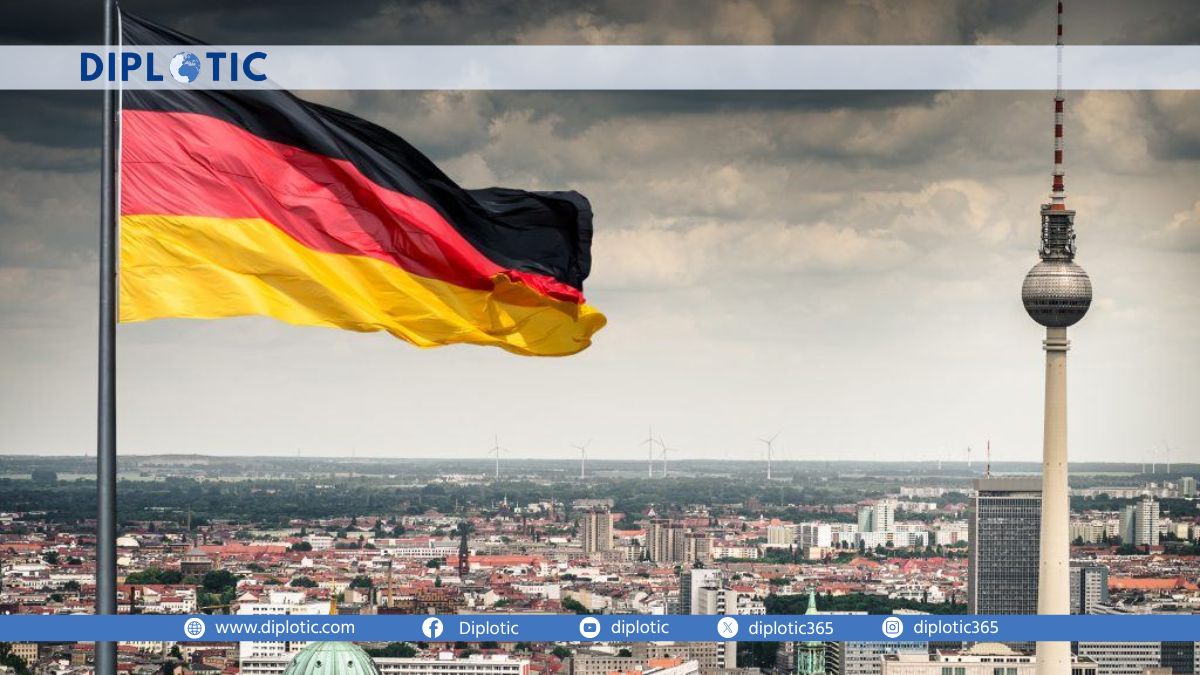
Memory and the Weight of History
Germany was built after 1945 on one clear premise: never again. The idea was not empty ritual. It shaped law, schools, museums and a national habit of looking backward to resist a dangerous future. That culture of memory grew from the rubble of the Weimar failure and the Nazi catastrophe. The Weimar story is a familiar warning about how democracy can unravel when institutions fray and anger fills public spaces. For a concise account of those fragile years, the history of the Weimar Republic captures the political and economic forces that allowed extremism to rise. (Encyclopedia Britannica)
That habit of memory mattered in daily life. In Germany, Holocaust education became compulsory in schools. Memorials and trials kept facts visible. Museums and public ceremonies taught young people why the past must remain a warning. For many residents and for visitors like Jonathan Garfinkel, Berlin felt like a city that bore its guilt on its sleeve. The art, the plaques and the stained glass all asked citizens to remember and to refuse repetition. That compact between memory and politics was a safeguard.
But memory is not automatic. It needs institutions, funding and public expectations to remain alive. Over decades, a new generation grew up under different pressures. The shock of reunification, demographic loss in eastern states, globalisation and rapid cultural change created dislocations. Political memory can soften when economic anxiety meets cultural change. That is the space where political entrepreneurs can reframe history and appeal to resentments. They do so by recasting the past as grievance, not lesson.
We face a sharp test of that social compact now. The recent political shifts show how fragile historical vigilance can be. When a party that traffics in national myths gains traction, the question is not only why voters turn to it. It is how institutions and culture began to loosen their hold. To understand the present, we must link the Weimar lessons to the circuits of memory and forgetting that run through today’s schools, media and towns. That link is the core political risk: forgetting does not happen overnight. It arrives in stages, in jokes that become slogans, in graffiti that normalises hatred, and in votes that legitimise the unthinkable.
The Electoral Earthquake: Data, Youth, and the AfD’s Rise
The 2025 federal election delivered a shock. The far-right Alternative for Germany moved into the country’s second-largest parliamentary bloc with roughly one-fifth of the vote. That result doubled the party’s share from only a few years earlier and put AfD seats into national prominence. The electoral map shows clear geography: the highest AfD support came from eastern states, where the party scored well above its national average. International reporting and national tallies make the scale plain. (Reuters, Wikipedia)
What made the result especially worrisome was who the AfD won over. Young voters, a group normally leaning toward progressive parties in many democracies, provided a surprising share of AfD’s support. Exit polls and reporting from the election period found that many voters under 35 gave the far right more support than they did to centrist parties. Commentators and sociologists noted that parts of the youth electorate are receptive to identity arguments and cultural anger. The phenomenon is not limited to isolated towns; it appears across a belt of former East German regions and some rural western areas. (Al Jazeera, Le Monde Diplomatique)
At the same time, Germany’s domestic intelligence agency took an unprecedented public step. After a lengthy probe, the Federal Office for the Protection of the Constitution concluded that AfD’s ideology and conduct merited classification as extremist. The agency’s report described rhetoric and networks that, in its view, undermined constitutional values. That classification would expand surveillance powers. Political opinion in Germany reacted in two directions. Some urged strong enforcement; others warned that labelling a major party could deepen polarisation and fuel the party’s victim narrative. The intelligence conclusion and the legal pushback that followed have become central fault lines in the country’s debate about how to constrain extremism in a democracy. (Financial Times, Reuters)
On the ground, activists and local organisations record more than abstract trends. Groups working in towns like Dessau-Roßlau and other smaller cities report swastika graffiti, public displays of banned symbols, and open praise for fascist figures among youth subcultures. Local anti-extremism projects document how music scenes and social spaces sometimes become recruitment vectors. These episodes help explain the data: votes do not appear from nowhere. They emerge from networks, language, art and a steady diet of grievance. (PROJEKT GEGENPART)
This combination—electoral gains, youth traction, and surveillance findings—creates a political dilemma. If institutions act too slowly, the party’s public legitimacy will harden. If they respond too harshly, they risk giving the AfD the persecution narrative it uses to grow support. That is the tightrope Germany faces: defend the constitution and avoid feeding the flames that help the extremists.
Roots and Drivers: Economics, Geography, and Cultural Drift
The AfD’s growth did not happen in a vacuum. It rode a wave of longer economic and geographic trends that left many citizens feeling left behind. The east-west divide remains real, even three decades after reunification. Wages and productivity in many eastern states lag behind the national average. Analysts identify a persistent wage gap and structural differences in industry mix and firm size as durable causes. The ifo institute estimates that employees in eastern states still earn notably less per hour than their western counterparts and that structural factors account for much of the gap. These economic facts feed anxieties that identity politics then exploits. (ifo Institut)
Beyond wages, the macro picture has been fragile. Growth slowed in 2024 and 2025, and the economy has shown regional variation in resilience. The OECD and Germany’s statistical agencies document slow productivity gains and weak private investment in key sectors. Parts of the service economy expanded, but the industrial base in specific regions weakened, creating fewer high-paying opportunities. Young people who see limited prospects are more likely to be susceptible to radical narratives. The perception of decline matters as much as the numbers. (OECD, ifo Institut)
Demography compounds the problem. Eastern states lost population after reunification. Younger, highly skilled people often migrate west or abroad. This demographic thinning leaves towns with an older electorate and narrower civic networks. In that context, populist movements find social momentum. Social media and online communities amplify grievances. Symbols, memes and music can normalise extremist tropes. In places where local institutions are weaker, countering that cultural drift becomes harder.
Cultural memory itself has frayed under strain. Schools still teach the Holocaust and German history. But memory requires constant reinforcement. Funding for local memorials and for youth education programs is uneven. Where remembrance work is robust, communities tend to resist radical turn-taking. Where resources have been cut or attention diverted, the default narratives are easier to reshape. That is a policy lesson as much as a moral one: memory is expensive and active. It requires investment in curricula, museums, and local civic life.
Finally, migration and globalisation heighten tensions. Political entrepreneurs make migration a simple lens for complex social changes. Economic stagnation, perceived cultural displacement and the speed of change provide a market for simple stories and villains. The AfD sells narratives that tie economic grievance to cultural identity. Where institutions deliver visible improvement and inclusion, those narratives lose force. Where delivery lags, they gain traction. That truth is uncomfortable but clear.
Where This Leads: Policy Choices, Historical Warnings and European Comparisons
Germany faces a choice between two paths. One path preserves the democratic consensus and renews the public institutions that anchor memory. The other allows drift into normalized radicalism and political fragmentation. The contrast is stark because the lessons of the past are not academic. The history of fascism shows how social fracture, economic crisis and political miscalculation can combine into catastrophe. For a concise account of how extremist movements thrived in the twentieth century, consider authoritative descriptions of Nazism and its political mechanics. Those accounts underline why vigilance is not a posture but a continuous set of policies and practices. (Encyclopedia Britannica)
Policy responses fall into three broad groups: legal enforcement, social investment, and democratic renewal. Legal enforcement uses the tools of the state: intelligence surveillance against violent cells, prosecutions for hate crimes, and careful use of party-monitoring powers. The BfV’s classification moves sit here and demand legal care. Social investment means targeted funds for schools, youth programmes and local economies. It means rebuilding the civic institutions that teach memory and create opportunity. Democratic renewal requires mainstream parties to respond to real grievances with policies that deliver results, not only rhetoric.
There are also regional and European dimensions. Other European democracies show similar patterns of far-right growth where economic and cultural discontent intersect. Germany’s democratic culture was long an exception in Europe because of its deep, institutional memory of the Nazi past. If that culture erodes, Germany will not simply be another country with a strong right-wing party. It will be a place where the lesson of the twentieth century is at risk of being treated as optional.
The policy frame must be honest about trade-offs. Heavy-handed suppression risks feeding the grievance narrative. Lax response risks normalizing extremism. The right answer blends effective law enforcement with visible, measurable investments in education, regional development and civic life. It means funding memorial work, supporting local cultural centres, and rebuilding the pathways to decent jobs. It means reinventing remembrance so memory connects to daily life, not just ceremonial moments.
History offers no guarantee. The Weimar era warns us that democracies can fail from slow decay as much as from violent assault. The striking thing today is how much of the risk is reversible. Cultural memory can be restored. Civic life can be rebuilt. Economic policy can close gaps. The alternative is to treat the AfD’s rise as an immutable fact. That path would make Benjamin’s angel look right: catastrophe piling wreckage upon wreckage. The better path is hard, practical and political. It requires clear choices by citizens and leaders alike. The question now is whether Germany will choose renewal or repeat the errors that made the twentieth century possible.




