

The Enduring Grip: OPEC’s Journey from Post-Colonial Upstart to Oil Market Arbiter
The Organization of the Petroleum Exporting Countries, or OPEC, began as a quiet rebellion against the dominance of Western oil giants. In September 1960, five nations—Iran, Iraq, Kuwait, Saudi Arabia, Venezuela, and later others—gathered in Baghdad to form the group. They aimed to counter the price-slashing tactics of companies like the “Seven Sisters,” the major Western firms that controlled global oil flows. This move marked a shift in power. Developing countries, rich in black gold but poor in bargaining leverage, sought unity to stabilize prices and reclaim sovereignty over their resources. As detailed in the comprehensive overview on OPEC’s formation and evolution, the cartel quickly grew to represent nations holding vast reserves, accounting for about four-fifths of the world’s proven petroleum stocks today.
In the decades that followed, OPEC’s influence waxed and waned with global events. The 1973 Yom Kippur War became a turning point. Arab members, through their subgroup OAPEC, imposed an embargo on oil exports to the United States and its allies supporting Israel. This action quadrupled prices almost overnight, from around $3 per barrel to over $12. The crisis exposed the West’s vulnerability to Middle Eastern supply disruptions. Inflation soared, economies stuttered, and long gas lines became a symbol of energy insecurity. OPEC’s revenues exploded, funding infrastructure booms in member states and petrodollar recycling into global banks. Yet this power came with contradictions. While the cartel preached stability, internal rivalries simmered. Saudi Arabia, with its massive spare capacity, often acted as the swing producer, adjusting output to balance prices. But overproduction by some members undercut collective discipline, leading to price collapses in the 1980s.
The 1986 crash, when prices dipped below $10 per barrel, forced a rethink. Non-OPEC suppliers like the United States, Norway, and the Soviet Union ramped up output, diluting the cartel’s market share. OPEC responded with production quotas, but compliance faltered. Geopolitical shocks, such as the Iran-Iraq War from 1980 to 1988, fractured unity further. Iraq’s invasion of Kuwait in 1990 triggered another crisis, with Saudi Arabia flooding the market to offset lost Iraqi and Kuwaiti supply, stabilizing prices at a cost to its own revenues. By the 1990s, OPEC adapted, cooperating with non-members like Mexico and Russia to manage gluts. The early 2000s saw prices climb to $140 per barrel in 2008, driven by Chinese demand and Middle East tensions, only to plummet during the financial crisis.
This history reveals a pattern: OPEC thrives on scarcity but struggles with abundance. Policy contexts evolved from outright embargoes to subtle quota systems. Comparisons to other cartels, like the rubber producers in colonial Malaya, highlight OPEC’s unique scale—its decisions ripple through every economy. Saudi Arabia’s Vision 2030 diversification efforts underscore the hypocrisy: members decry Western overconsumption while relying on oil rents. As the cartel enters its seventh decade, its strategies reflect lessons from past miscalculations, such as the 1980s share-defense pivot that eroded prices but preserved long-term influence. These foundations set the stage for today’s maneuvers, where historical ghosts of unity and betrayal loom large. The V8 group’s recent decision to hike output echoes those 1980s gambles, betting volume against value in a world forever changed by the 1973 shockwaves.
Breaking the Dam: OPEC’s Unexpected Hike and the Quest for Market Dominance
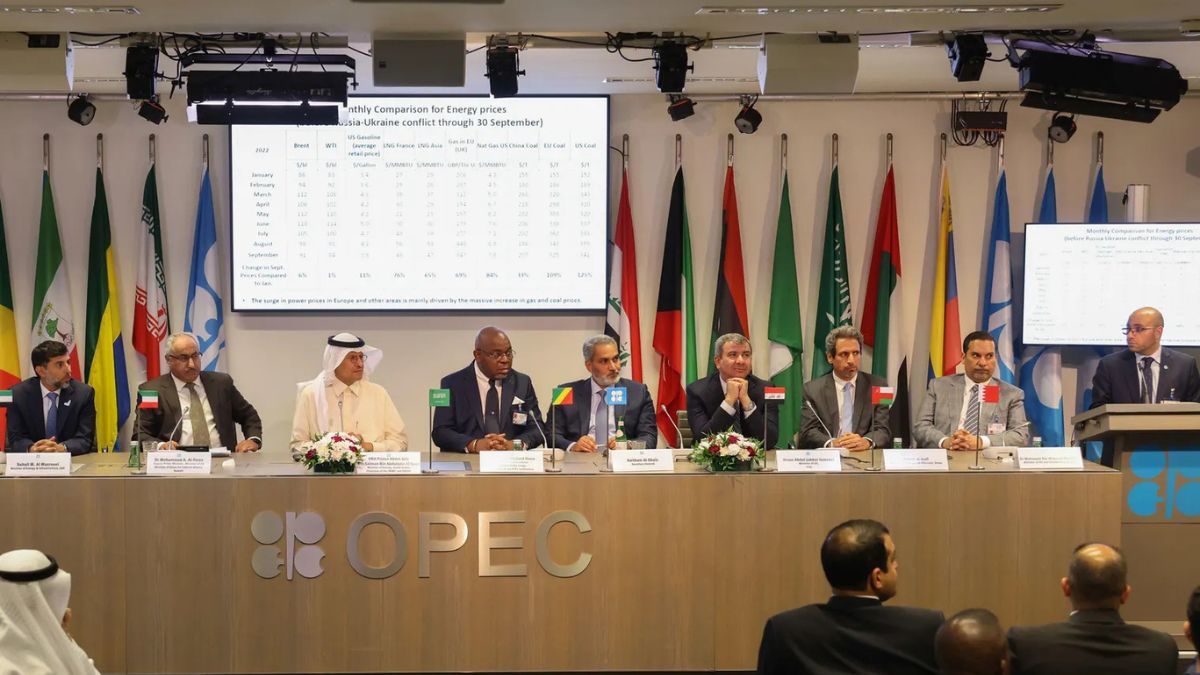
Just days ago, on September 7, 2025, eight key OPEC+ members—the V8 alliance of Saudi Arabia, Russia, Iraq, the United Arab Emirates, Kuwait, Kazakhstan, Algeria, and Oman—announced a production increase of 137,000 barrels per day starting in October. This move surprised analysts who expected a pause after recent hikes totaling 2.2 million barrels per day since earlier this year. The decision signals a strategic shift. After years of deep cuts totaling nearly six million barrels per day to prop up prices, OPEC now prioritizes regaining lost ground. Oil prices, hovering at $65 to $70 per barrel, have fallen 12 percent in 2025 alone, battered by non-OPEC surges from the US and Brazil, alongside trade tariffs curbing demand.
The context here ties back to 2023, when OPEC+ first implemented voluntary cuts of 2.2 million barrels per day in November, extended into 2025 amid sluggish growth. By April 2025, they accelerated unwinding, adding increments monthly. Yet compliance remains spotty; some members overproduce, diluting the effect. Jorge Leon of Rystad Energy captured the intent: “OPEC caught the market off guard today—instead of pausing, the group signalled ambition with a production hike. The barrels may be small, but the message is big.” This “big message” aims at non-OPEC rivals. US shale, now the world’s top producer, added over a million barrels daily in recent years, eroding OPEC’s share from 40 percent to around 30 percent. The V8’s plan could eventually add 1.65 million barrels, though actual flows will lag due to capacity limits and compensation rules for past overproduction.
Economically, this risks a price slide below $60, pressuring budgets in oil-dependent states. Saudi Arabia, with its low $80 breakeven, can absorb hits better than Iraq or Algeria, where fiscal strains mount. The hypocrisy glares: Russia, funding its Ukraine war through oil sales, needs high prices, yet aligns with the hike. This unity masks tensions; past cuts favored Gulf heavyweights, leaving others sidelined. Compared to the 2014-2016 price war, when Saudi flooded markets to crush US shale, today’s action feels measured but portentous. That earlier battle halved prices to $30, forcing OPEC to concede share but ultimately strengthening survivors.
Policy-wise, the hike aligns with broader OPEC+ frameworks, including the 3.66 million barrel cut extended to 2025’s end. Yet it contradicts the cartel’s recent rhetoric on stability. As global demand grows modestly—projected at 680,000 barrels per day in 2025 per IEA estimates—the surplus looms. Tariffs, like those curbing Chinese imports, add drag. This pivot from austerity to expansion tests OPEC’s cohesion, revealing strategic miscalculations if prices crater further. The narrative flows from historical restraint to bold assertion, setting up clashes with external forces.
Entangled Alliances: The Ukraine War, Trump’s Tariffs, and OPEC’s Geopolitical Leverage
Geopolitics has always been OPEC’s shadow player, and the ongoing Russia-Ukraine conflict amplifies this dynamic. Russia’s invasion, now in its fourth year, relies on oil revenues exceeding $100 billion annually to sustain military efforts. Yet Moscow joins the V8 hike, prioritizing alliance over immediate fiscal needs—a contradiction that underscores OPEC+’s expanded role since including Russia in 2016. This partnership, born from 2014’s price crash, has stabilized markets but now frays under war pressures. US sanctions aim to choke Russian exports, down 20 percent since 2022, freeing space for OPEC barrels. But buyers like India and China fill the gap, purchasing discounted Urals crude at $10 below Brent.
Enter Donald Trump, whose second term has weaponized trade against Russian oil enablers. In August 2025, he slapped 50 percent tariffs on most Indian imports, punishing New Delhi for ramping up Russian purchases to over 1.5 million barrels daily—up from negligible pre-war levels. Trump, frustrated with EU laggards like Hungary and Slovakia, warned allies in a Paris video call: both sides in Ukraine must cede land for peace. This tariff salvo threatens India’s $50 billion US export surplus, potentially slowing its 7 percent growth and job market. Indian officials decry it as economic coercion, yet quietly maintain Russian ties for energy security. Trump’s strategy echoes his first-term Iran sanctions, aiming to redirect flows toward US LNG and allies like Saudi Arabia.
OPEC watches with opportunism. Curbed Russian exports could boost Gulf market share, especially if Ukraine escalates, disrupting Black Sea routes. Iraq, OPEC’s second-largest producer, eyes gains despite its own US ties and Kurdish oil disputes. Comparisons to the 1973 embargo highlight ironies: then, Arab states targeted the West over Israel; now, OPEC+ includes Russia, a US foe, while courting American frackers’ demise. Saudi Crown Prince Mohammed bin Salman’s US visits contrast with Riyadh’s quiet Russian deals, revealing hypocrisies in a multipolar world.
The war’s energy fallout extends to Europe, where Russian pipeline gas halved, pushing LNG bids and oil diversification. Yet Trump’s push for EU pressure on China over Ukraine ties into broader US containment. If tariffs bite, India might pivot to OPEC suppliers, benefiting the V8. This web of alliances tests OPEC’s neutrality—its charter bars politics, but reality intrudes. Strategic missteps, like Russia’s overreliance on oil amid sanctions, could fracture the group if prices tank, forcing bailouts or quotas. From 1973’s bold stroke to today’s calculated risks, geopolitics remains the cartel’s accelerator and brake.
For deeper insight into the 1973 parallels, the Yom Kippur War’s oil embargo dynamics illustrate how conflict once empowered OPEC; today, it offers both peril and promise.
Horizons of Uncertainty: Price Perils, Share Battles, and the Dawn of Energy Shifts
Looking ahead, OPEC’s production surge portends a volatile 2025 oil market, where short-term gains may yield long-term pains. With global supply set to rise 2.5 million barrels per day, per IEA forecasts, and demand edging up only 680,000, inventories will swell, pressuring prices toward $50 if no disruptions occur. The V8’s incremental hikes—137,000 in October, potentially scaling to 1.65 million—aim to claw back share from US producers, whose output hits 13.5 million barrels daily. Yet this echoes 2014’s miscalculation: Saudi’s flood then bankrupted shale firms but cratered revenues, delaying diversification.
Economic consequences ripple globally. For OPEC nations, lower prices strain budgets; Russia’s war chest shrinks, possibly prolonging the conflict or forcing de-escalation. Iraq and Algeria face unrest risks, as subsidies falter. Conversely, consumers in Asia and Europe benefit from cheaper fuel, easing inflation but hindering green transitions—ironic given OPEC’s nods to sustainability. Trump’s tariffs could redirect 500,000 barrels of Russian oil, boosting OPEC volumes but sparking trade wars. If India retaliates, global chains disrupt, echoing 2018’s US-China spat.
Future scenarios hinge on unity. If compliance holds, OPEC regains 35 percent share by 2026. But hypocrisies abound: Saudi’s Aramco invests in renewables while pumping more crude, betting on demand persistence. The energy transition adds urgency; EVs and renewables could cap demand at 105 million barrels by 2030, per IEA, rendering today’s fights pyrrhic. Geopolitical wildcards—Ukraine ceasefires or Middle East flares—could swing prices 20 percent. Trump’s mediation failures suggest prolonged uncertainty, benefiting OPEC’s opportunists.
Comparisons to the 1980s glut warn of overreach: then, prices halved, but OPEC endured. Today, with climate pledges, the stakes rise. Strategic foresight demands balance—cuts for prices, hikes for share. Yet the V8’s gamble highlights a core tension: in a fracturing world, OPEC’s cohesion may be its greatest asset and vulnerability. As historical patterns suggest, this surge could stabilize or shatter the cartel, shaping energy’s next era.




