
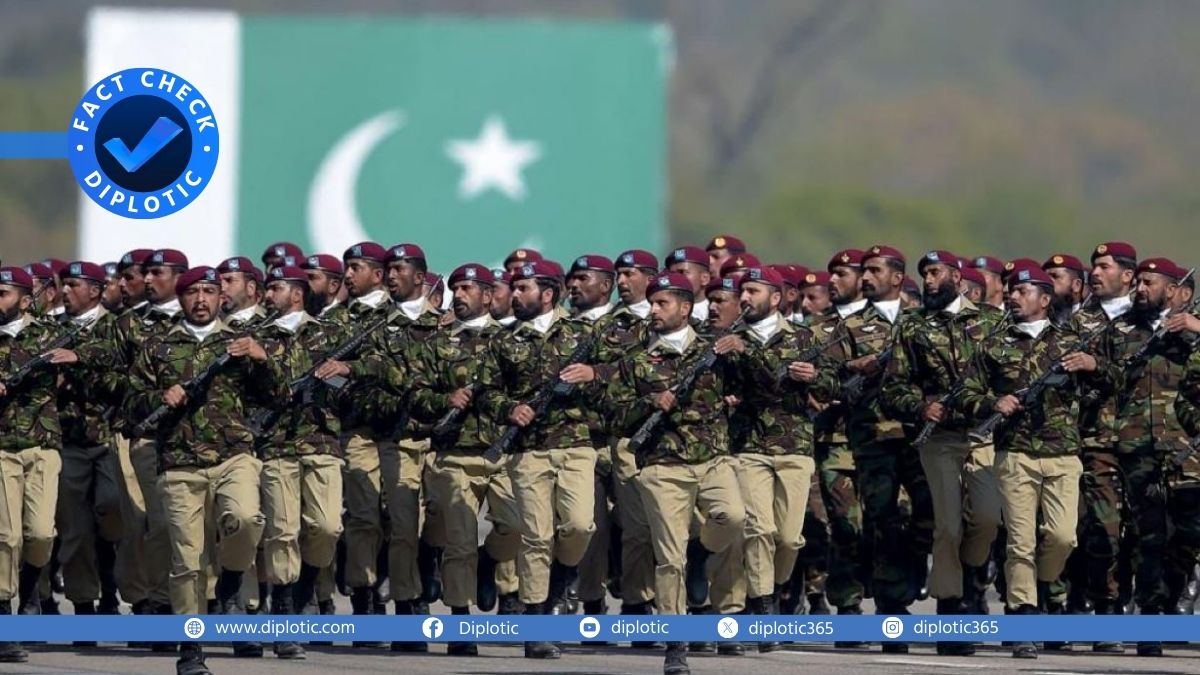
Pakistan’s military has long been a key player in the nation’s story, often stepping in during times of crisis. But in recent years, some voices—from army leaders to government officials—have claimed that the days of direct involvement in politics are over. This idea gained traction after statements from top brass, like former army chief Qamar Javed Bajwa, who admitted past meddling but promised a shift. As of 2025, with fresh elections, border tensions, and economic woes, the question lingers: Is the army really out of the political game, or is it just playing smarter? This fact-check dives deep into the claim, unpacking history, recent events, and what it means for Pakistan’s future. Buckle up—it’s a ride through power plays, protests, and the push for real democracy that could reshape the country.
The Claim: No More Meddling?
The core statement under scrutiny is that the Pakistan Army no longer interferes in politics. This notion popped up in public speeches and media bites, especially after the turbulent 2022 ouster of Prime Minister Imran Khan. Army leaders have said things like, “The military has learned from past mistakes and will stay neutral.” For instance, current army chief Asim Munir has echoed this, stressing the army’s focus on security over elections. Supporters of this view point to the army’s role in aiding elections as proof of restraint, not control.
But the claim isn’t just one line—it’s built on sub-parts. First, no direct coups or martial law since 1999. Second, the army says it doesn’t back specific parties anymore. Third, it claims to respect civilian rule, even amid crises like the 2024 polls. Critics, however, see these as smoke screens, with interference now happening behind the scenes through pressure on judges, media blackouts, and vote tweaks.
A History of Heavy Hands
To check if things have changed, we must look back. Pakistan’s military has shaped politics since the start. After independence in 1947, the army grew strong amid wars with India and internal chaos. The first big move came in 1958 when General Ayub Khan ousted President Iskander Mirza in a coup, ruling for over a decade. This set a pattern: When civilians falter, the army steps in as “guardian.”
More coups followed. In 1977, General Zia-ul-Haq toppled Zulfikar Ali Bhutto, hanging him later and imposing martial law until 1988. Zia’s era mixed Islamization with U.S. alliances during the Afghan war, but it also crushed dissent. Then, in 1999, General Pervez Musharraf seized power from Nawaz Sharif, ruling until 2008 amid 9/11 fallout and emergency rule.
Even without direct rule, the army pulled strings. It backed or broke coalitions, influenced courts, and controlled foreign policy. Over 34 years of Pakistan’s history have seen outright military dictatorships. Factors like weak parties, ethnic divides, and security threats fueled this. As Britannica notes, the military’s role stems from early instability, making it a “state within a state.”
This history shows a cycle: Army enters politics to “fix” things, but often worsens corruption and rights abuses. Socially, it bred distrust; politically, it stalled democracy. Yet, the army’s image as defender against India kept public support high—until recently.
Recent Twists: From 2022 to 2025
Fast-forward to now. The 2022 no-confidence vote against Imran Khan sparked claims of army orchestration. Khan accused the military of siding with rivals, leading to his arrest and party crackdown. By 2024 elections, PTI candidates ran as independents amid arrests and symbol bans.
The polls were chaotic. Mobile services shut down on voting day, delaying results. PTI allies led early, but final counts favored Nawaz Sharif’s PML-N. Allegations flew: Rigging via fake votes, stuffed ballots, and pressure on officials. A bombshell came from Rawalpindi Commissioner Liaqat Ali Chattha, who confessed to flipping 70,000-vote margins against PTI, implicating the election body and judiciary. He resigned, saying the guilt was too much.
Protests erupted nationwide. In Lahore and Karachi, crowds chanted against the army. International watchers, like the U.S. and EU, called for probes into “irregularities.” PTI claimed a stolen mandate, with Khan labeling it the “mother of all rigging.”
Into 2025, tensions rose. A brief India-Pakistan clash in May led to Munir’s promotion to field marshal, seen by some as rewarding loyalty amid domestic unrest. Airstrikes on Afghanistan and water disputes with India highlighted the army’s foreign sway. Domestically, reports of army pressure on PTI persisted.
Analysts note a shift: Interference is subtler now—through “hybrid” rule where civilians front but army calls shots. A May 2025 report called civilian governments “figureheads.”
Fact-Checking: True, False, or Smoke?
We cross-checked via reports from Al Jazeera, Guardian, NYT, and think tanks like Council on Foreign Relations. History confirms interference was rampant. Recent data? The 2024 rigging claims hold water—Chattha’s confession, delayed results, and observer concerns match patterns.
Sub-claim 1: No coups since 1999. True, but indirect influence persists, like Khan’s ouster.
Sub-claim 2: No party favoritism. False—2024 polls showed bias toward PML-N.
Sub-claim 3: Respect for civilians. Misleading—army still dominates security, economy, and courts.
Verdict: The claim is false overall. While direct rule ended, interference continues via subtle means. Sources like Freedom House’s 2025 report note army orchestration in elections. It’s a contradiction: Army vows neutrality but acts otherwise, highlighting hypocrisy in a system where generals admit past errors yet repeat them.
Impacts and Ironies
This meddling has deep effects. Politically, it weakens democracy—Pakistan ranks low on global indexes, with “perpetual instability.” Socially, it fuels protests; Gen-Z anger boils over army’s role. Economically, military businesses drain resources, worsening crises.
Irony abounds: The army, meant to protect, now faces backlash as a “burden.” Munir’s promotion amid 2025 India tensions shows how external threats justify internal control. Yet, public resentment grows, with diaspora protests in the U.S. demanding “unfettered democracy.”
Beyond the Ballot Box
It’s not just elections. The army’s economic empire—factories, real estate—gives it leverage over policy. Security-wise, fights against militants in Balochistan and Khyber Pakhtunkhwa blur lines, with accusations of turning inward on critics.
Public view shifts too. Once heroes, generals now face anti-army chants. Women and youth lead calls for change, adding social layers. Globally, U.S. ties complicate things—Washington backs stability, often via military, ignoring rights.
In the end, Pakistan’s path hinges on breaking this cycle. If the army truly steps back, it could spark real growth. But as 2025 unfolds, with protests and promotions, the game seems far from over. The real winner? Time will tell, but the people demand answers now.