

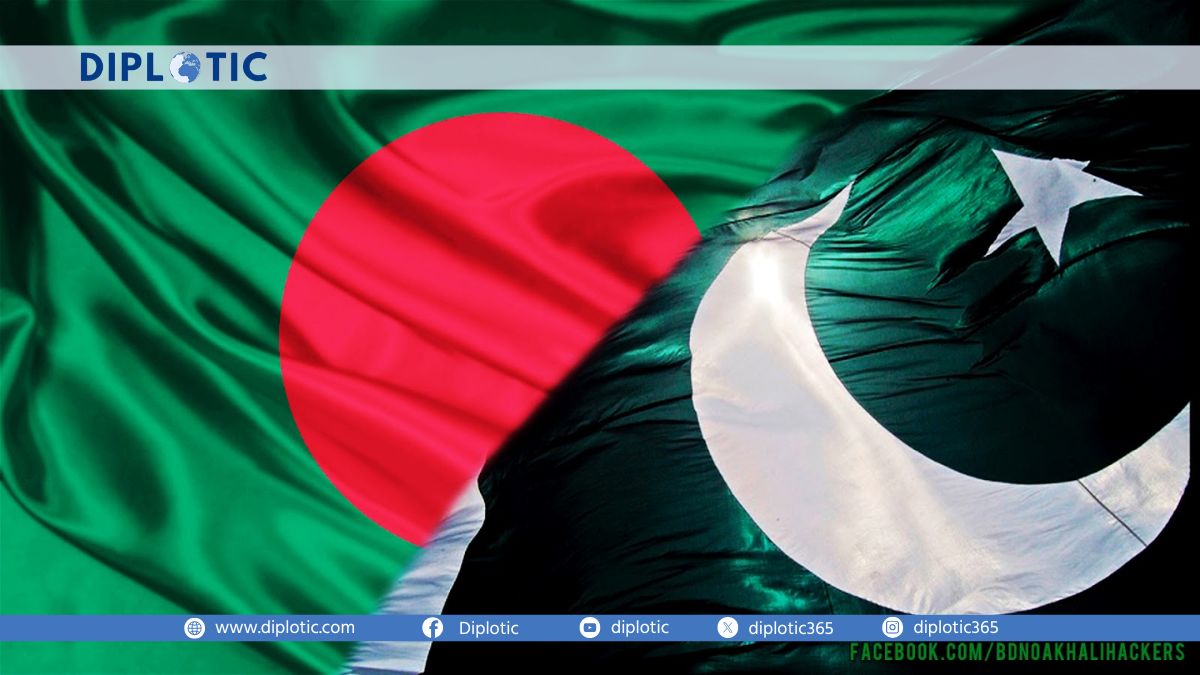
A Shared Past, a Fractured Present
The 1971 Liberation War, which birthed Bangladesh from the ashes of East Pakistan, remains a defining wound in South Asian history. The conflict, costing three million lives, saw Pakistan’s military defeated with India’s decisive intervention, cementing a bitter rivalry. For decades, Bangladesh aligned with India, its $12–16 billion annual trade dwarfing the $50–70 million it exchanges with Pakistan. Yet, on August 23, 2025, Pakistan’s Deputy Prime Minister Ishaq Dar’s visit to Dhaka signaled a shift. Six agreements, from visa-free official travel to a “Pakistan-Bangladesh Knowledge Corridor” offering 500 scholarships, aimed to revive ties strained since 1971. This thaw, as Jayanta Roy Chowdhury notes, is less about economics and more about a shared anti-Indian sentiment. Pakistan, led by General Asim Munir, faces an $87 billion debt and a 2.7% GDP growth rate, barely outpacing population growth. Bangladesh, under Muhammad Yunus’s interim government, grapples with 3.97% growth, 10% inflation, and rising lawlessness post-Hasina’s ousting. Both nations, reliant on IMF bailouts, prioritize geopolitics over domestic reform. Historical parallels, like Pakistan’s failed 1950s alliances against India (https://www.britannica.com/place/Pakistan/History), suggest such moves yield short-term optics but long-term instability. The question looms: is this rapprochement a strategic pivot or a distraction from internal crises?
The Politics of Revisionism: A Dangerous Nostalgia
The Yunus administration’s pivot away from India, a cornerstone of Sheikh Hasina’s 15-year rule, marks a bold foreign policy reset. Bangladesh’s outreach to Pakistan, China, and Turkey reflects a calculated effort to counter India’s regional dominance. Critics, including the Awami League, label this “Pakistanisation,” accusing Yunus of diluting the 1971 legacy. The interim government’s tolerance of pro-Pakistan groups, previously suppressed, and its pursuit of arms deals with Pakistan and Turkey, underscore this shift. Pakistan, meanwhile, sees opportunity. General Munir, facing scrutiny after a May 2025 clash with India exposed military vulnerabilities, frames the Dhaka outreach as a diplomatic coup. The “Knowledge Corridor” and cultural exchanges aim to recast Bangladesh’s youth in a narrative of Islamic solidarity, sidestepping 1971’s scars. This revisionism echoes Turkey’s early 20th-century efforts to reframe Ottoman history for nationalist ends (https://www.britannica.com/place/Turkey/History). Yet, both nations’ fragility—Pakistan’s debt servicing consumes 50% of its budget, while Bangladesh faces mob justice and communal violence—suggests this alliance is more symbolic than substantive. X posts capture skepticism: “Two broke countries teaming up to spite India won’t fix their problems.” By prioritizing anti-Indianism over governance, Yunus and Munir risk deepening domestic unrest, as seen in Bangladesh’s 2007 protests against military rule.
Economic Symbolism Over Substance
On paper, the Dhaka agreements promise trade and connectivity. Pakistan’s $778 million in exports to Bangladesh—cotton, cement, chemicals—far outstrips Dhaka’s meager $50–70 million in return, mostly scraps. Even if trade hits $1 billion, it pales against Bangladesh’s $12–16 billion trade with India, critical for its garment-driven economy. Pakistan’s $23 billion debt repayment looms in 2026, while Bangladesh’s inflation erodes purchasing power. Both rely on multilateral lifelines, with Pakistan securing a $7 billion IMF package in July 2025 and Bangladesh negotiating $3 billion from the ADB. The structural imbalance—Pakistan as a raw material supplier, Bangladesh as a low-value exporter—limits mutual gains. Historically, South Asian economic blocs, like SAARC, have faltered due to mistrust, as seen in its 2016 summit cancellation. The “Knowledge Corridor” scholarships, while symbolically potent, are unlikely to reshape economic realities for Bangladesh’s 170 million or Pakistan’s 240 million citizens. X users note: “Scholarships sound nice, but they don’t pay the bills.” This focus on optics over reform mirrors Pakistan’s 1980s Zia-era alliances, which failed to stabilize its economy. For Yunus, alienating India risks trade disruptions, while Munir’s gambit may not offset domestic pressures, including Baloch unrest and a 15% poverty rate increase since 2023.
The Regional Ripple Effect: India and Beyond
The Pakistan-Bangladesh thaw challenges India’s regional leadership, a cornerstone of its $4 trillion economy. New Delhi, which supported Hasina’s government, views Yunus’s pivot with alarm, especially after his March 2025 China visit, where he called India’s northeast “landlocked,” irking Assam’s leadership. India’s cancellation of a transshipment deal, critical for Bangladesh’s garment exports, reflects this tension. Pakistan gains a rare ally in a region where it has only Sri Lanka, diluting India’s influence. Yet, this alignment risks escalation. The May 2025 India-Pakistan clash, sparked by a Kashmir attack, showed both sides’ military limits—Indian drones hit Pakistani bases, but Munir claimed “victory.” A Pakistan-Bangladesh axis could embolden further provocations, though neither can afford conflict. China’s role, supplying J-10C jets to both, adds complexity, potentially entangling Bangladesh in Beijing’s debt-trap diplomacy, as seen in Sri Lanka’s $7 billion default. X sentiment warns: “Yunus and Munir are poking India, but China’s the real winner.” By 2030, this revisionist push could destabilize South Asia if domestic crises—Pakistan’s insurgency, Bangladesh’s lawlessness—persist. A balanced SAARC revival, as Yunus proposes, could mitigate tensions, but only if India is included. Without it, the alliance risks collapsing under the weight of mutual fragility.
Future Stakes: Unity or Collapse?
The Pakistan-Bangladesh rapprochement, driven by anti-Indianism, is a high-stakes gamble. For Yunus, it distracts from Bangladesh’s chaos—10% inflation, rising Hindu-targeted violence, and a judiciary ranked 110th globally in 2024. For Munir, it masks governance failures amid a 50% budget allocation to debt. Neither leader addresses root issues: Bangladesh’s youth unemployment (15%) and Pakistan’s energy crisis (20% shortfall). The 1971 narrative, central to Bangladesh’s identity, faces erosion, potentially radicalizing Awami League supporters, who command 30% support. Pakistan’s attempt to “manage” this history may inflame its own ethnic divides, as Baloch and Sindhi groups resent military dominance. By 2030, a failed axis could mirror ASEAN’s early struggles, where mistrust stalled integration. Alternatively, a pragmatic pivot—engaging India in trade and countering China’s influence—could stabilize both economies. The interim government’s 2026 election plan, if inclusive, offers hope, but excluding the Awami League risks low turnout, as in 2024’s 41.8%. X users urge realism: “Two weak regimes don’t make a strong bloc.” Success hinges on addressing domestic crises over chasing geopolitical wins, lest this alliance becomes a footnote in South Asia’s turbulent history.




