

A Resilient Rise Amid Historical Challenges
India’s economy has long navigated a complex path, shaped by its colonial past and post-independence reforms. After gaining freedom from British rule in 1947, India adopted a mixed economy, blending state-led planning with private enterprise. Early decades saw modest growth, hindered by bureaucratic red tape and import-substitution policies. The 1991 liberalization, spurred by a balance-of-payments crisis, unleashed market reforms, propelling India toward global integration. By 2025, India had overtaken Japan to become the world’s fourth-largest economy, with a nominal GDP of $3.78 trillion, according to the India Brand Equity Foundation. From 2014 to 2024, GDP growth averaged 6.5% annually, driven by domestic consumption and infrastructure investment. The June 2025 quarter’s 7.8% growth, exceeding Reuters’ 6.7% forecast, showcased this momentum. Manufacturing grew 7.7%, services 9.3%, and construction 7.6%, fueled by strong corporate earnings and low inflation.
This surge reflects structural shifts. The 2017 Goods and Services Tax (GST) unified markets, while digital initiatives like UPI boosted financial inclusion. Rural demand, lifted by a strong 2025 monsoon, and urban consumption, supported by tax cuts, underpinned growth. Yet, historical vulnerabilities persist. India’s reliance on domestic demand—60% of GDP—shields it somewhat from global shocks, but export sectors remain exposed. The US, India’s largest export market with $87.4 billion in 2024 shipments, accounts for 2% of GDP. The unexpected 7.8% growth in Q1 FY26, announced on August 29, 2025, came just before new US tariffs, signaling resilience but also fragility. As India eyes a $5 trillion economy by 2027, per IMF projections, its ability to sustain growth amid external pressures echoes past triumphs over adversity, like the 1991 reforms that turned crisis into opportunity.
The Tariff Threat: A Looming Economic Blow
The US imposition of 50% tariffs on Indian exports, effective August 27, 2025, casts a shadow over India’s economic outlook. Triggered by India’s purchase of Russian oil, these tariffs—initially 25% in early August, doubled later—target key sectors like textiles, footwear, and jewelry. Economists estimate a 0.3-0.8% GDP growth reduction, with Citigroup projecting a 0.6-0.8% hit and Nomura warning of a “trade embargo-like” impact. The Indian rupee hit a record low of 88.21 per dollar on August 29, 2025, reflecting market fears. Foreign investors sold $900 million in Indian equities in August, after $2 billion in July, per Moody’s. Labor-intensive industries, employing millions, face competitive losses to Vietnam and Bangladesh, where tariffs are lower.
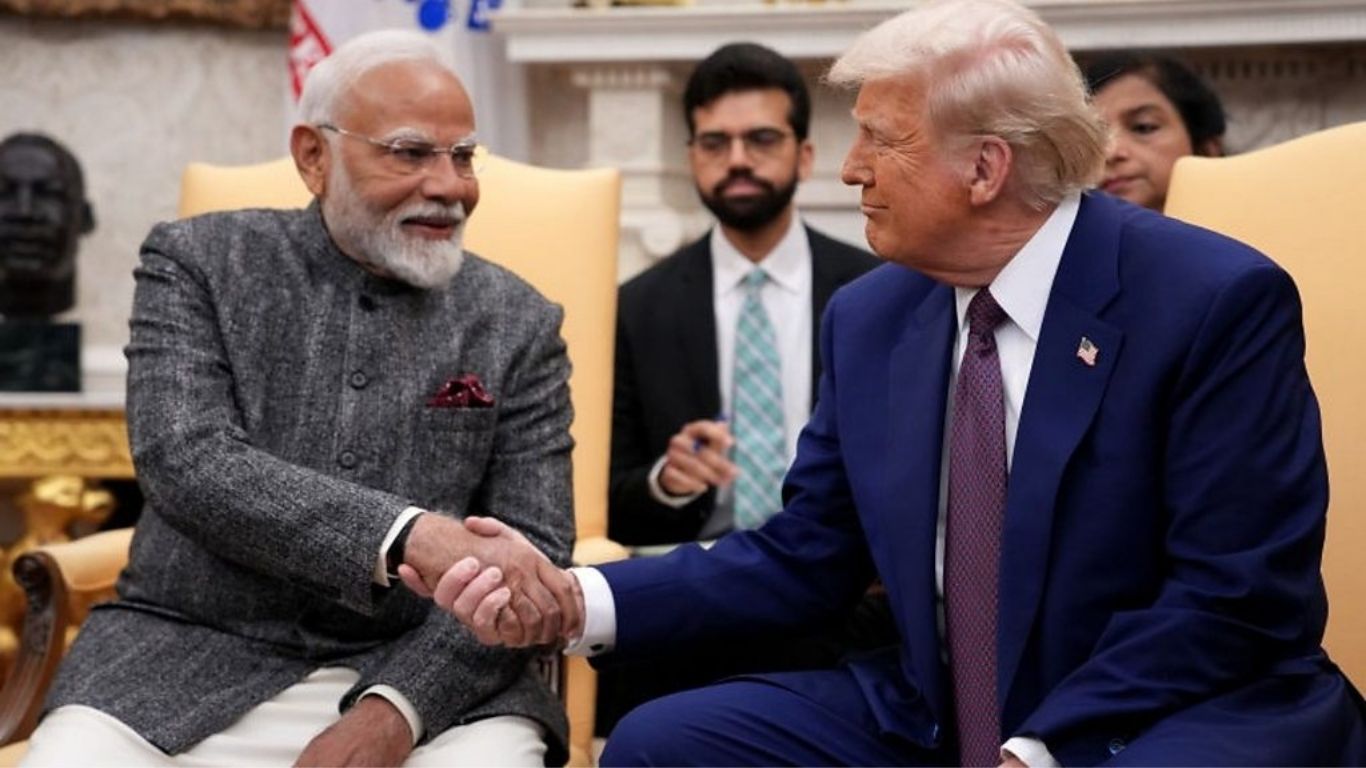
India’s response has been cautious. The Reserve Bank of India (RBI) cut rates by 50 basis points to 5.5% in June 2025, with hints of further cuts if growth falters. The government, under Prime Minister Narendra Modi, announced GST reductions to boost consumption, estimated to lift nominal GDP by 0.6% over 12 months, per IDFC First Bank. Diplomacy continues, with New Delhi and Washington negotiating an interim trade pact to ease the 26% reciprocal tariffs initially threatened. Yet, contradictions emerge. India’s Chief Economic Adviser, V. Anantha Nageswaran, calls tariffs an opportunity for domestic reforms, yet export-dependent sectors like textiles, contributing $40 billion annually, face immediate pain. X posts capture the tension: “India’s growth is a beast, but US tariffs could cage it.” If negotiations fail, growth may dip below 6% by late 2025, challenging India’s status as the world’s fastest-growing major economy, outpacing China’s 5.2% and the US’s 3.3%.
Domestic Strengths and Global Risks
India’s economy draws strength from its domestic focus. Private consumption, at 60% of GDP, benefits from tax relief and falling inflation, which hit an eight-year low of 1.55% in July 2025. The HSBC Manufacturing PMI reached 58.4 in June, a 14-month high, driven by robust demand and record job growth. Agriculture, supporting 50% of the workforce, thrives with monsoon-driven sowing, boosting rice exports worth $800 million yearly. Government spending, up significantly in Q1, and eased RBI liquidity rules since December 2024 under Governor Sanjay Malhotra, support lending. These factors cushioned the 7.8% growth, despite weak urban demand and slow private investment.
Globally, however, risks loom. The US tariffs, the highest among Asian nations, threaten $8 billion in exports, per UBS estimates. Moody’s warns of setbacks to India’s manufacturing ambitions, particularly in electronics, which grew 50.7% annually from 2020-2025. A prolonged tariff war could disrupt global supply chains, as seen in the 2019 US-China trade spat, which shaved 0.5% off global growth. India’s diversified export markets—Europe and the Middle East absorbed $150 billion in 2024—offer some buffer, but the US remains critical. The rupee’s fall raises import costs, risking inflation. X users lament: “Tariffs hit jobs, not just trade.” If growth slows to 6% by Q3 2025, as Nomura predicts, India’s 6.3-6.4% FY26 forecasts by the World Bank and IMF may prove optimistic, testing the resilience built over decades.
Future Horizons: Navigating the Storm
India’s economic trajectory hinges on balancing domestic resilience with global headwinds. The government’s focus on consumption—through GST cuts and tax relief for 1.2 million rupee earners—aims to offset tariff impacts. The RBI’s monetary easing, with 100 basis points cut since February 2025, supports lending. Yet, nominal GDP growth, at 8.8% in Q1, signals softening, driven by a low 0.9% GDP deflator. If tariffs persist, economists like HSBC’s Pranjul Bhandari warn of a 0.7% growth hit, impacting jobs in textiles and gems. Diplomacy offers hope. A trade deal by fall 2025 could lower tariffs to 15-20%, per Barclays Research, echoing India’s 2023 resolution of WTO disputes.
Comparisons to past global shocks are telling. The 2008 financial crisis saw India recover swiftly through stimulus, but today’s export reliance demands new strategies. Diversifying markets, as South Korea did post-1997 Asian crisis, could help. India’s $434 billion export engine needs new destinations. Failure risks a slide to 6% growth by 2030, stalling its $5 trillion goal. Yet, success in reforms—like production-linked incentives boosting industrial capex to $85 billion by 2030, per Crisil—could sustain 7% growth. X sentiment is cautiously optimistic: “India’s too big to fail, but tariffs test its mettle.” The coming quarters will reveal if India can turn this challenge into another chapter of resilience, or if global pressures will dim its economic shine.




