

A Controversial Rollback: The 2001 Roadless Rule Under Fire
The Trump administration’s push to rescind the 2001 Roadless Rule, which protects 58.5 million acres of national forest from road construction and logging, has ignited fierce debate. Announced on August 29, 2025, by U.S. Forest Service Chief Tom Schultz, the move aims to undo restrictions that “frustrate land managers” and limit wildfire suppression, per a USDA statement. The rule, enacted under President Clinton, covers 30% of National Forest System lands, including 92% of Alaska’s Tongass, the world’s largest intact temperate rainforest. Schultz argues that opening these areas will enhance forest management and reduce fire risks, citing 28 million acres at high wildfire risk. The USDA plans to formalize this rollback in weeks, following a notice of intent published August 28, 2025.
This isn’t the first challenge to the rule. During Trump’s first term, he stripped protections from 9 million acres of the Tongass, only for the Biden administration to restore them in 2023. The rule has long been a battleground, with over a dozen lawsuits from industry and Republican states claiming it oversteps congressional authority under the Wilderness Act. Environmentalists, like Earthjustice’s Drew Caputo, vow to sue again, arguing the repeal prioritizes industry over conservation. X posts reflect the divide: “Trump’s just handing forests to loggers,” one user wrote, while another countered, “Roads mean access for firefighters.” The rule’s history—born from Clinton’s effort to preserve pristine lands—sets the stage for a high-stakes fight, balancing economic interests against ecological integrity.
Wildfire Claims: Science vs. Policy
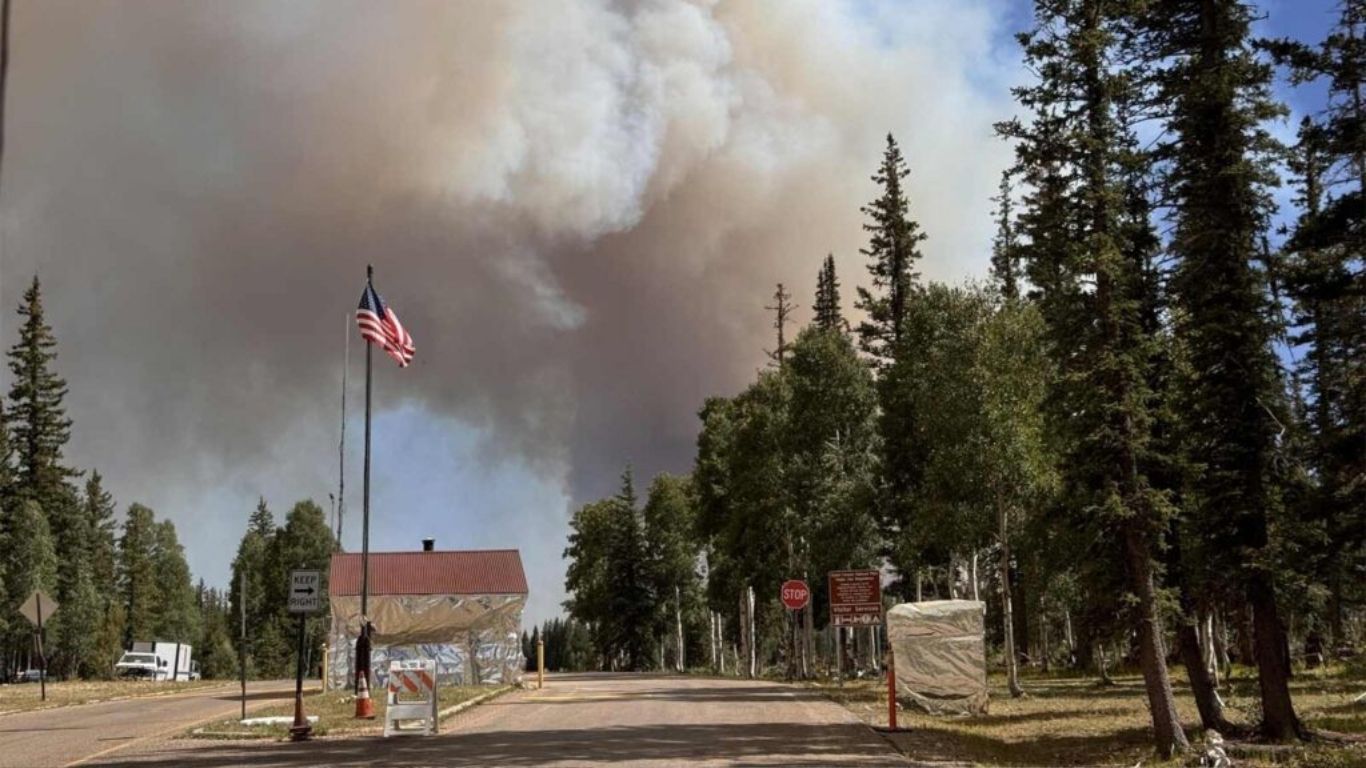
The administration’s rationale hinges on wildfire prevention, asserting that roads enable faster firefighting and fuel reduction. USDA Secretary Brooke Rollins claims the rule’s restrictions have left forests “trapped in a cycle of neglect,” with 8 million roadless acres burned since 2001. Yet, fire ecologists challenge this narrative. Alexandra Syphard, a 30-year wildfire researcher with the Global Wildfire Collective, warns that roads increase ignitions, noting wildfires are four times more likely within 50 feet of roads, as seen with California’s 2025 Gifford Fire. A 2020 Forest Service study found non-native, flammable plants twice as common near roads, concluding that road-building doesn’t improve forest health. Matt Thompson, a former Forest Service researcher, suggests “surgical” road placement could help as fire breaks, but questions the USDA’s claim of 28 million at-risk acres, which lacks transparency.
The Roadless Rule already allows exceptions for cutting small-diameter timber to reduce “uncharacteristic wildfires” or protect endangered species, as noted by former Forest Service Chief Dale Bosworth. He argues these provisions suffice for fire management without large-scale logging. Environmentalists, like Trout Unlimited’s Chris Wood, call the repeal “a solution in search of a problem,” pointing to existing tools for wildfire mitigation. X users echo this: “The rule lets you fight fires; this is about timber profits.” The science-policy gap raises doubts about the administration’s motives, especially given Trump’s March 2025 executive order for a 25% timber production increase, suggesting logging interests may outweigh fire concerns.
Economic and Ecological Stakes: Who Benefits?
Rescinding the rule could reshape national forests’ economic and ecological roles. Proponents, like the American Loggers Council’s Scott Dane, argue it will boost jobs in rural areas, where logging has declined. In Alaska, where 92% of the Tongass is roadless, opening 9 million acres could revive timber, though Bosworth notes most roadless areas lack harvestable timber due to sparse trees and high road-building costs. The USDA claims Utah’s 60% and Montana’s 58% roadless forestlands hinder economic development, estimating a 25% forestry sector loss in Utah. Nationally, forests contribute $200 billion annually, per Forest Service data, and increased logging could add jobs but risks long-term ecological costs.
Environmentalists warn of dire consequences. Roads fragment habitats, disrupt ecosystems, and increase erosion, polluting drinking water for 60 million Americans. The Tongass alone stores 10% of U.S. forest carbon, critical for climate change mitigation. The Sierra Club’s Alex Craven calls the repeal a “corporate giveaway,” risking clean air and wildlife, including Tongass’s bald eagles and salmon. A Wilderness Society study found roaded areas ignite fires four times more than roadless ones, contradicting fire-prevention claims. X posts highlight public anger: “Our forests aren’t for sale!” If logging surges, carbon sinks and biodiversity could erode, undermining global climate goals by 2030. Balancing economic gains with these losses will define the repeal’s legacy.
Future Horizons: A Path Forward or a Risky Gamble?
The repeal’s success hinges on execution and legal battles. Environmental groups, backed by decades of successful litigation, are poised to challenge it, potentially delaying or blocking implementation. The Forest Service, already strained by a 10% staff cut in 2025 and an $8.5 billion road maintenance backlog, may struggle to build new roads, as noted by researcher James Johnston. Thompson’s call for targeted roads near communities could work, but broad deregulation risks uncontrolled development. X sentiment is skeptical: “More roads, more fires, less forest. Great plan, Trump.”
If courts uphold the repeal, logging could expand by 2030, boosting rural economies but fragmenting ecosystems. Alternatively, maintaining the rule’s exceptions could achieve fire management without sacrificing conservation, as Bosworth suggests. A middle path—targeted thinning and strategic roads—might balance interests, but requires resources and transparency the USDA hasn’t provided. Without careful planning, the repeal could exacerbate wildfires and environmental loss, turning national forests into battlegrounds. Sustained dialogue between stakeholders, guided by science, is crucial to avoid a policy misstep that could haunt America’s wildlands for decades.




