

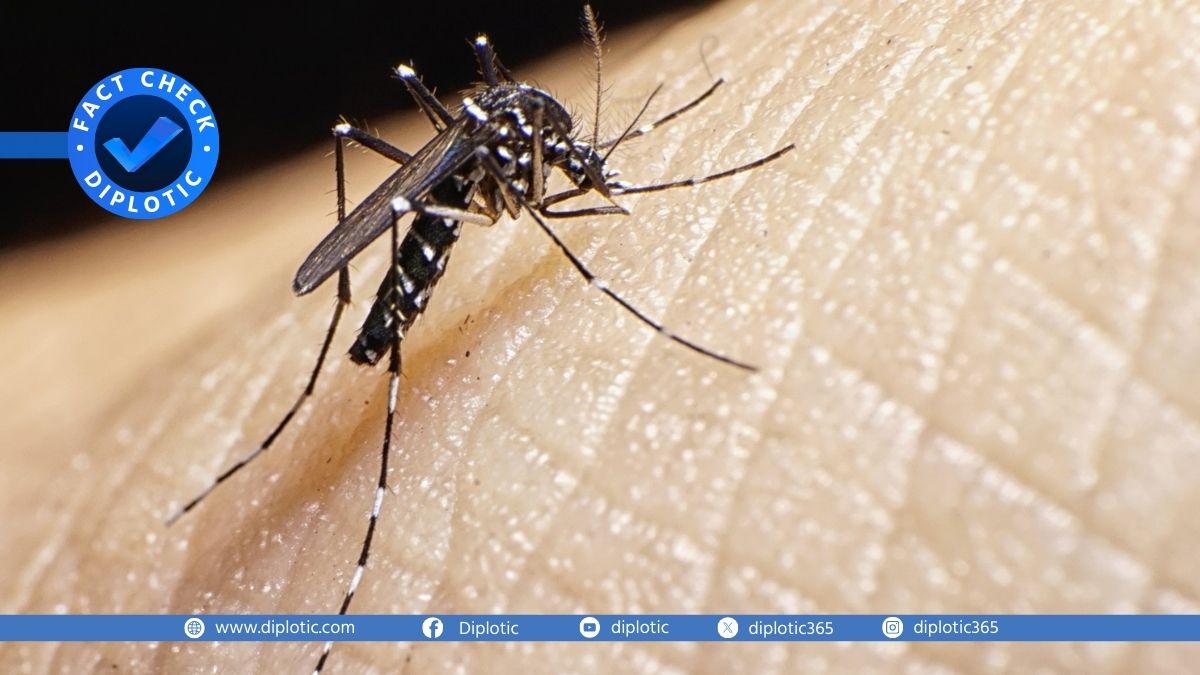
Picture this: a mosquito lands on your arm, its tiny proboscis piercing your skin. You swat it away, but a nagging thought creeps in—could that bite have just given you HIV? This fear, born from a mix of misunderstanding and the mosquito’s notorious reputation as a disease-spreading menace, has lingered for decades. It’s a myth that refuses to die, despite science waving a giant red flag. In this investigative fact-check, we’ll slice through the fog of misinformation, dissecting claims about HIV transmission via mosquito bites with cold, hard evidence. We’ll also explore why this myth persists, its social fallout, and what mosquitoes actually do to make our lives miserable. Buckle up for a truth-seeking ride, where we’ll chase down facts with a smirk and a microscope.
The Claims: What People Say About Mosquitoes and HIV
The idea that mosquitoes can transmit HIV has been buzzing around since the AIDS epidemic exploded in the 1980s. Let’s break down the main claims:
- Claim 1: Mosquitoes can spread HIV by biting an infected person and then biting someone else.
This is the big one—the notion that a mosquito, after sipping blood from an HIV-positive person, can inject that virus into its next victim. - Claim 2: Squashing a mosquito with HIV-infected blood on your skin can transmit the virus.
Some folks worry that if you crush a mosquito carrying HIV-positive blood, the virus could sneak into your bloodstream through a cut or scratch. - Claim 3: Mosquitoes are a significant vector for HIV, just like they are for malaria or dengue.
This claim lumps HIV in with other mosquito-borne diseases, assuming the virus behaves similarly to pathogens like the malaria parasite or Zika virus.
These claims aren’t just idle chatter—they’ve fueled fear, stigma, and even policy debates. But do they hold water? Let’s put them under the microscope.
Fact-Checking the Claims: What Science Says
To tackle these claims, we’re leaning on peer-reviewed studies, health organizations like the World Health Organization (WHO), and insights from the Centers for Disease Control and Prevention (CDC). We’ll cross-reference these with other credible sources to ensure we’re not just parroting one narrative. Here’s the breakdown.
Claim 1: Mosquitoes Spread HIV Through Bites
The Evidence:
HIV is a fragile virus that thrives in specific human body fluids—blood, semen, vaginal fluids, rectal fluids, and breast milk. For transmission to occur, these fluids must enter another person’s bloodstream through mucous membranes, open wounds, or shared needles. Mosquitoes, however, don’t work that way. Their proboscis, that needle-like snout, has two tubes: one injects saliva to keep blood flowing, and the other sucks blood up. When a mosquito bites, it’s not injecting blood from its last meal—it’s spitting saliva.
Here’s the kicker: HIV can’t survive or replicate in a mosquito’s gut. Unlike malaria parasites, which cozy up in the mosquito’s salivary glands, HIV lacks the receptors (like CD4 cells) it needs to infect mosquito tissues. Studies, like one published in AIDS in 1987 by Jupp and Lyons, showed that HIV disappears in mosquitoes within 1–2 days as it’s digested like a bad burrito. Even if a mosquito bites an HIV-positive person and then you, the amount of virus left on its mouthparts is negligible—far too small to cause infection. The CDC backs this up, stating, “There is no evidence of HIV transmission through insects, even in areas with high AIDS prevalence and large mosquito populations.”
Verdict: False.
Mosquitoes can’t transmit HIV through bites. The virus doesn’t survive in their system, and their feeding mechanism doesn’t involve blood transfer. Claim busted.
Claim 2: Squashing a Mosquito Spreads HIV
The Evidence:
This one sounds plausible if you squint—smash a mosquito, its HIV-laden blood splatters on your skin, and maybe it sneaks into a cut. But science begs to differ. First, HIV doesn’t live long outside the human body. Once exposed to air, it’s quickly inactivated. Second, the amount of blood on a mosquito’s proboscis is tiny—think microliters, not teaspoons. A 1999 study in The Journal of the Louisiana State Medical Society estimated that it would take 10 million mosquito bites, each carrying HIV-positive blood, to transmit even one unit of the virus. That’s not a typo—10 million. Compare that to the roughly 10 units of HIV in an infected person’s blood, and you see the math doesn’t add up.
Even if you squash a mosquito and its blood touches a fresh cut, the virus concentration is too low to infect. The CDC reinforces this: “Insect mouthparts do not retain large amounts of blood, and HIV doesn’t survive long in them.”
Verdict: False.
Squashing a mosquito won’t give you HIV. The virus is too weak, the blood volume too small, and the odds astronomical. Another myth swatted.
Claim 3: Mosquitoes Are a Vector for HIV Like Other Diseases
The Evidence:
Mosquitoes are indeed the world’s deadliest animals, spreading malaria, dengue, Zika, and yellow fever, which kill hundreds of thousands annually. These diseases rely on biological transmission, where pathogens replicate in the mosquito and are injected via saliva. HIV, however, doesn’t play that game. It can’t replicate in mosquitoes because they lack the human immune cells HIV targets. A 2017 study in Frontiers in Cellular and Infection Microbiology confirmed that mosquitoes don’t provide a suitable environment for HIV replication.
Contrast this with malaria, where the parasite matures in the mosquito’s gut and migrates to its salivary glands, ready to infect the next host. HIV, as Healthline notes, “is unable to replicate in a mosquito’s gut and is destroyed during digestion.” Unlike needle-sharing, where a syringe can carry enough infected blood to transmit HIV, mosquito bites involve no such transfer.
Verdict: False.
HIV isn’t a mosquito-borne disease. It’s a false equivalence to compare it to malaria or dengue. Mosquitoes are deadly, but not for HIV.
Why This Myth Persists: A Tangled Web of Fear
So why does this myth keep buzzing? It’s not just ignorance—it’s a cocktail of fear, misinformation, and historical context. When AIDS emerged in the 1980s, it was a mysterious, terrifying disease. People grasped at straws to explain it, and mosquitoes, already vilified for spreading malaria, were an easy scapegoat. Surveys in the 1980s and 1990s, like one in Papua New Guinea, showed that 34% of high school students believed mosquitoes could transmit HIV. Even today, in a world of instant information, the myth lingers in pockets of misunderstanding.
Fear of casual contact fueled stigma against HIV-positive people. If mosquitoes could spread HIV, then anyone, anywhere, could be at risk—amplifying panic and discrimination. This myth also dovetailed with broader anxieties about insects as vectors, especially in regions where mosquito-borne diseases are rampant. It’s no surprise that in countries like Zimbabwe or Zaire, where malaria is a daily threat, people assumed HIV followed the same rules.
The Cost of Misbelief
This myth isn’t just a harmless quirk—it has consequences. In the early AIDS epidemic, fear of mosquito transmission led to calls for extreme measures, like mass mosquito spraying in areas with high HIV rates. These efforts, often pushed by panic rather than science, diverted resources from actual prevention methods like condom distribution or needle exchange programs. In some communities, the myth fueled stigma, making people wary of casual contact with HIV-positive individuals, from handshakes to shared utensils.
Politically, the myth has been a distraction. Public health campaigns have had to dedicate time and money to debunking it, pulling focus from education about real transmission routes. In developing nations, where access to HIV testing and antiretroviral therapy is limited, myths like this can delay testing and treatment.
The Mosquito’s Real Sins: A Broader Perspective
Let’s not let mosquitoes off the hook entirely—they’re still public health enemy number one. They spread diseases that kill over 700,000 people annually, according to the WHO. Malaria alone caused 619,000 deaths in 2021, mostly in sub-Saharan Africa. Dengue, Zika, and West Nile virus add to the toll. These diseases thrive because mosquitoes are biological vectors, unlike with HIV. Understanding this distinction is key to prioritizing prevention, like using insect repellent or bed nets.
Another angle: climate change is making mosquitoes deadlier. Rising temperatures expand their range, bringing diseases like dengue to new regions. This reality underscores why we need to focus on actual mosquito-borne threats rather than chasing HIV myths. It’s also a reminder that public health messaging must be crystal clear to avoid confusion.
Swatting the Myth for Good
The evidence is overwhelming: mosquitoes don’t transmit HIV. Not through bites, not through squashing, not ever. The virus can’t survive in their system, and their feeding mechanism doesn’t allow blood transfer. This myth, born in the fear-soaked 1980s, has been debunked by decades of research, from lab studies to real-world observations in AIDS-heavy regions. Yet it persists, a stubborn ghost haunting public perception.
“The only thing mosquitoes spread faster than malaria is bad information.”
—A quip to remind us that myths can bite harder than insects.
The social cost of this misconception—stigma, misdirected resources, and delayed testing—shows why fact-checking matters. By understanding how HIV is transmitted (unprotected sex, shared needles, mother-to-child), we can focus on real prevention and treatment. Meanwhile, let’s keep swatting mosquitoes for the diseases they do spread. Science has spoken, and it’s time we listened.




