

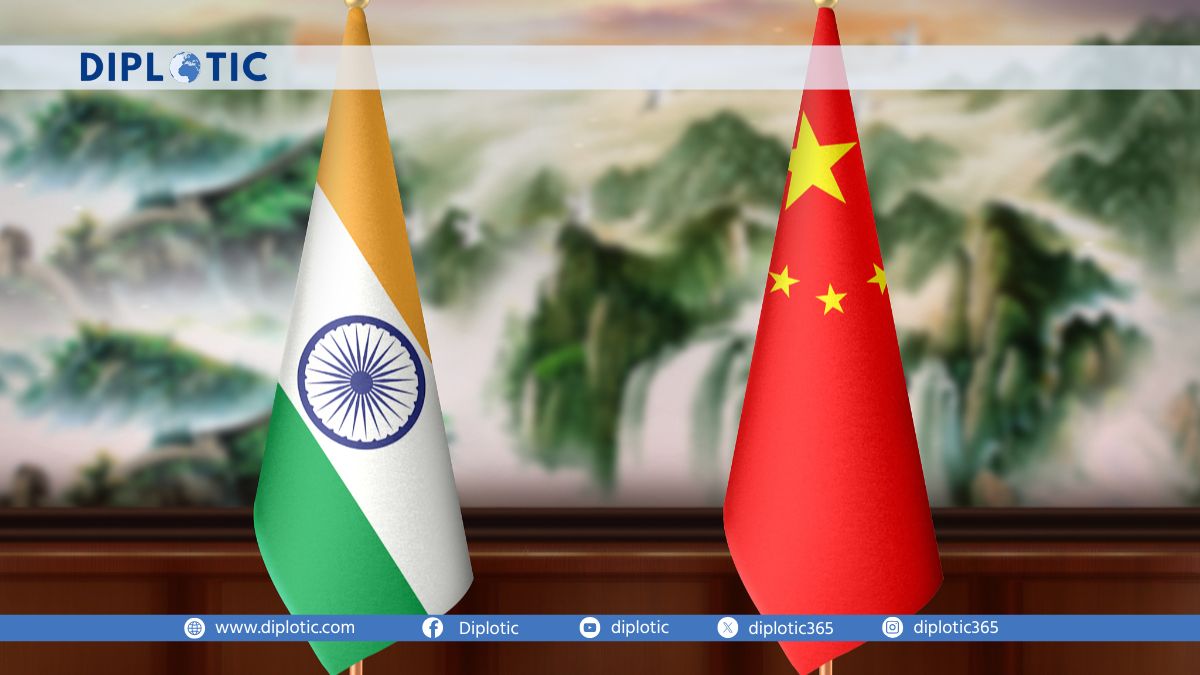
Historical Shadows: From Brotherhood to Border Clashes
The relationship between China and India has swung between harmony and hostility, shaped by ancient ties and modern conflicts. In the 1950s, the slogan “Hindi-Chini bhai-bhai” captured early goodwill, with India recognizing the People’s Republic of China soon after its founding. Centuries earlier, ancient trade networks fostered cultural exchange, spreading Buddhism from India to East Asia. But this warmth dissolved in the 1962 border war over the Line of Actual Control, sparked by disputes in Aksai Chin and Arunachal Pradesh. The 2020 Galwan Valley clash, killing 20 Indian and four Chinese soldiers, deepened mistrust, halting direct flights and chilling ties. Yet, trade grew to $136 billion annually, with China as India’s top partner.
During the Cold War, alignments shifted. India’s non-alignment contrasted with China’s growing bond with Pakistan, solidified by the 1963 Sino-Pak agreement ceding parts of Kashmir. The Sino-Soviet split and U.S.-China rapprochement in 1971, facilitated by Pakistan, pushed India toward the Soviet Union. After the Cold War, India’s 2005 strategic partnership with the U.S., aimed at countering China through the Quad (India, U.S., Japan, Australia), heightened tensions. Beijing often viewed India as a secondary power, not a peer, fueling rivalry. Social media on X reflects this history, with users stating, “India-China tensions go beyond borders; it’s about global clout.”
Recent moves suggest a thaw. The 2020 clash led to troop buildups, but 2024 patrol agreements eased tensions. China’s decision to allow Indian pilgrims to Tibetan holy sites and talks to restore trade routes show pragmatism. This history of rivalry, tempered by economic ties, frames the current shift, driven by shared interests in a changing world order. Yet, unresolved border issues and China’s dam on the Yarlung Tsangpo raise doubts about lasting trust, risking renewed conflict if mishandled.
Catalysts of Change: U.S. Policy Shifts and Regional Realities
The warming of Sino-Indian relations in 2025 stems from India’s reassessment of its alliances, triggered by U.S. policy changes and regional needs. For two decades, India partnered with the U.S. to counter China, with the Quad amplifying this strategy. The rapport between Prime Minister Narendra Modi and former President Donald Trump strengthened this bond, but Trump’s second term disrupted it. His 50% tariffs on Indian exports, imposed after India continued buying Russian oil, and his claim of brokering a May 2025 India-Pakistan ceasefire, alongside a Kashmir mediation offer, were seen as favoring Pakistan, China’s ally. This pushed India to pivot, as External Affairs Minister Subrahmanyam Jaishankar stressed mutual respect over confrontation.
Chinese Foreign Minister Wang Yi’s August 2025 visit to New Delhi, meeting Jaishankar, Modi, and National Security Adviser Ajit Doval, marked a turning point. Wang stated, “A healthy and stable China-India relationship serves the fundamental interests of both countries,” echoing Modi’s call on X for “stable, predictable, constructive ties.” The 24th Special Representatives’ talks on August 19 focused on border de-escalation, agreeing to resume flights and boost trade. India raised concerns about China’s Brahmaputra dam, seeking assurances to protect its 30% reliance on the river for irrigation, as lower riparian states face risks.
This shift aligns with economic realities. India’s $136 billion trade with China far exceeds its $75 billion with the U.S. Beijing, under U.S. sanctions, sees India as a partner to counter Western pressure. X users note, “India’s hedging with China makes sense,” but contradictions remain. India’s Quad role and China’s $60 billion China-Pakistan Economic Corridor (CPEC) investments, including Gwadar port, tie Beijing to Pakistan. If India perceives the dam or CPEC as threats, tensions could resurface by 2030, undermining progress unless trust deepens.
The Multipolar Gambit: A Sino-Indian-Russian Axis?
India’s outreach to China reflects a vision for a multipolar world, challenging U.S. dominance. The Shanghai Cooperation Organisation (SCO) summit in Tianjin, set for August 31, 2025, where Modi will meet Xi Jinping, underscores this shift. The SCO, including Russia and Central Asian states, offers India a platform to balance ties. Jaishankar’s call for a “fair, balanced, multipolar world” aligns with China’s rhetoric, as both resist U.S.-led bipolarity. This echoes India’s non-aligned past but with new stakes: India seeks autonomy, while China aims to curb U.S. influence in Asia.
A Sino-Indian-Russian axis leverages economic and geopolitical clout. Russia, India’s top arms supplier, and China, its trade giant, share interests in countering sanctions. Modi’s July 2025 Ghana speech critiqued China’s debt-driven African projects, showing India’s nuanced stance—cooperating while asserting moral ground. India’s $2 trillion GDP lags China’s $18 trillion, but joint BRICS initiatives could amplify influence. X posts speculate, “A Russia-India-China bloc could shift global power,” though skeptics warn of internal frictions.
Contradictions persist. India’s concerns over China’s dam and Pakistan ties mirror its own dam projects, which draw Bangladesh’s criticism. China’s view of India as a lesser power risks misjudging New Delhi’s ambitions. The SCO summit could yield border or trade deals, strengthening this axis and boosting Asia’s global role by 2035. Failure to resolve disputes, however, could push India back toward the West, weakening the multipolar vision.
Pakistan’s Shadow: Can India Weaken Sino-Pak Ties?
India’s engagement with China partly seeks to dilute Beijing’s strategic alliance with Pakistan, a pillar of China’s South Asia policy since the 1960s. The May 2025 India-Pakistan conflict, where China supplied drones and jets to Pakistan, heightened India’s concerns. CPEC’s $60 billion in highways and ports, including Gwadar, is seen as encircling India, especially via disputed Kashmir. Jaishankar’s August talks raised cross-border terrorism, signaling unease over China’s support for Pakistan.
China’s gestures—easing export curbs on fertilizers—show openness. But Beijing’s naval access at Gwadar and Pakistan’s $20 billion debt ensure enduring ties. X users note, “India’s playing a long game to peel China from Pakistan,” but add, “China won’t ditch its ally.” Historically, Pakistan bridged U.S.-China ties in 1971, a role India can’t replicate. If India secures border stability or trade gains at the SCO, it might weaken Sino-Pak exclusivity. By 2030, India could shift CPEC’s focus to economic ends, but China’s loyalty to Pakistan risks renewed tensions if priorities clash.
Future Horizons: Stability or Strategic Mirage?
The Sino-Indian thaw offers hope but rests on fragile ground. Border talks, trade restoration, and SCO cooperation signal progress, with 2024 patrol agreements reducing LAC incidents. Modi’s Tianjin visit could cement deals, fostering stability. Yet, the Brahmaputra dam and Sino-Pak ties remain flashpoints. India’s Quad role and China’s Belt and Road ambitions clash with multipolar rhetoric. Economically, India’s self-reliance push, like the e-VITARA export, contrasts with dependence on Chinese goods.
A Sino-Indian-Russian axis could counter U.S. pressures, reshaping Asia. But mistrust—India’s over dams, China’s over Kashmir—could unravel gains. X sentiment is hopeful: “If Modi and Xi align, Asia changes.” By 2035, sustained dialogue could balance trade and borders, or missteps could revive rivalry, with Pakistan as a wildcard. Transparency, like sharing dam data, and mutual investments are vital for peace, else this shift risks fading as a fleeting diplomatic gesture.




